UASU Sets October Deadline for CBA Deal, Threatens University Lecturers’ Strike
By Peace Muthoka
The Universities Academic Staff Union (UASU) has issued the government with a fresh deadline to conclude the 2025–2029 Collective Bargaining Agreement (CBA), warning that its members could begin a strike if the agreement is not signed and implemented by October.
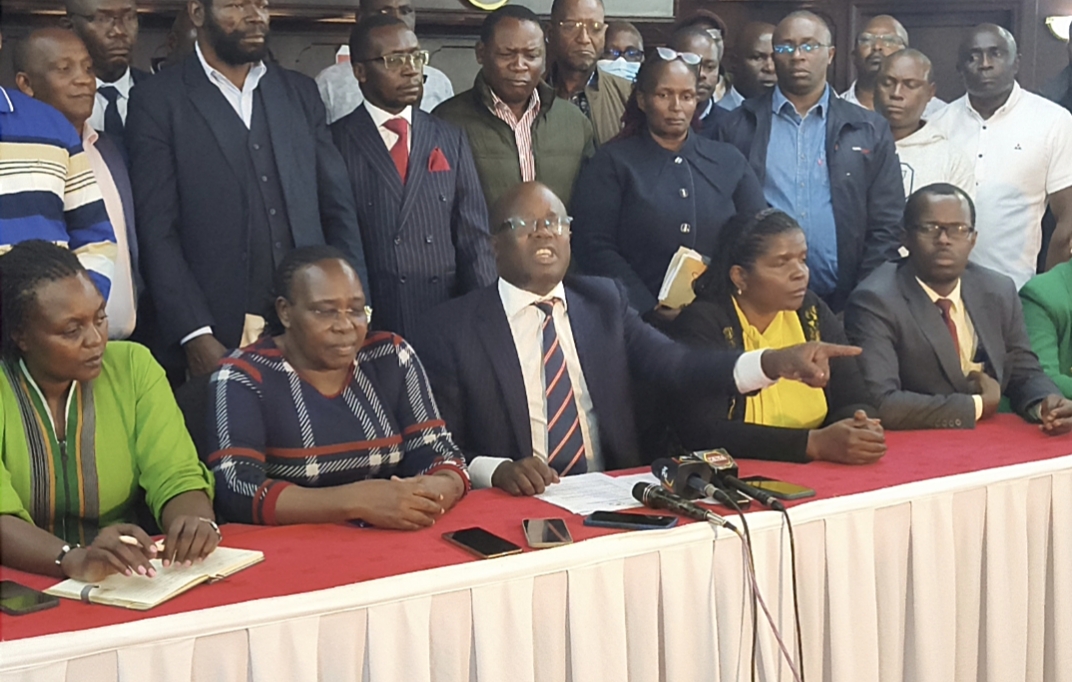
UASU Secretary-General Dr Constantine Wasonga said the union would issue a seven-day strike notice on October 18, 2026, if negotiations on the CBA remain unresolved. He called on university academic staff to converge on the same day as the union considers its next course of action.
Wasonga said the union had given the government another month to resolve the outstanding issues, arguing that prolonged delays were worsening challenges facing academic staff in public universities.
According to the union, the sector is already grappling with inadequate funding, staff shortages, increased reliance on part-time lecturers and heavy workloads. Wasonga also raised concerns over the implementation of provisions on the retirement age contained in previous agreements.
He said UASU expected the government and other parties involved in the negotiations to use the additional time to reach an agreement instead of allowing the dispute to drag on.
The union also questioned the role of the Inter-Public Universities Councils Consultative Forum (IPUCCF) in the negotiations. Wasonga alleged that some of the university representatives sent to negotiate did not support the CBA process and accused them of delaying progress.
He further alleged that there had been coordination between IPUCCF and the Salaries and Remuneration Commission (SRC) on issues affecting university staff. Wasonga said the SRC should provide independent advice while allowing employers and unions to negotiate within the framework provided by law.
The UASU official cited Article 41 of the Constitution, which provides for fair labour practices and recognises workers’ rights to fair remuneration, reasonable working conditions and collective bargaining.
Wasonga also rejected suggestions that universities should rely on students’ fees to finance the salaries and benefits of academic staff. He maintained that lecturers employed in public universities are public employees whose salaries should be funded through the Exchequer.
He also challenged the continued use of the “money follows the student” funding model, saying it should not be used to shift the responsibility of paying academic staff onto students.
A major concern raised by the union was the growing use of part-time lecturers as universities struggle with staffing levels. Wasonga cited examples of institutions where, according to figures he presented, the number of full-time academic staff was significantly lower than the student population.
He said some universities had advertised hundreds of part-time teaching positions while operating with relatively small numbers of permanent academic staff. The union argues that the situation is contributing to excessive workloads and could affect the quality of teaching and learning.
Wasonga also opposed any plans to declare academic staff redundant, saying universities require adequate numbers of lecturers to teach and support students. He argued that financial difficulties within institutions should first be addressed through better management and accountability.
He pointed to reports by the Auditor-General, which he said highlight financial management challenges in some public universities. Rather than reducing academic staff, he called for university management to address the financial and administrative problems identified in the reports.
The latest warning comes amid a prolonged dispute over university staff CBAs and outstanding financial commitments. UASU’s official website identifies Wasonga as the union’s National Secretary-General and CEO.
With the October deadline approaching, the union has called on the government to intervene and ensure the 2025–2029 CBA is negotiated, signed, registered and implemented. The outcome of the negotiations will determine whether the threatened industrial action proceeds.