
KEHPHPU Warns Ebola Could Spread Fast as Public Health Strike Weakens Surveillance
By Peace Muthoka
NAIROBI, Kenya, September 7, 2026 — Kenya faces a heightened risk of a rapid spread of Ebola Virus Disease because critical public health services remain disrupted by the ongoing nationwide strike by Public Health Officers, Specialists and Technicians, the Kenya Environmental Health and Public Health Practitioners Union (KEHPHPU) has warned.
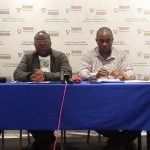
Speaking at Upperhill Gardens in Nairobi today, KEHPHPU Secretary General and Chief Executive Officer Brown Ashira, accompanied by other health workers, said the confirmation of an Ebola case had exposed serious weaknesses in the country’s public health preparedness and disease surveillance systems.
Ashira said the union welcomed the Ministry of Health’s notification of Kenyans about the confirmed case but warned that public communication must be matched with an effective response system capable of detecting cases, tracing contacts and containing transmission.
“Clear and transparent communication forms the first line of defense in any outbreak,” the union said, stressing that keeping the public informed is critical to maintaining trust and cooperation during a health emergency.
KEHPHPU also urged Kenyans and its members to strictly follow public health protocols, including hygiene measures, contact tracing and timely reporting of suspected cases.
However, the union said the country’s ability to implement these measures effectively is being undermined by the ongoing strike, which it said has paralysed key functions including disease surveillance, contact tracing, investigations and community mobilisation.
Ashira said the situation was particularly worrying because public health workers are among those expected to play a frontline role in preventing the spread of infectious diseases within communities.
The union expressed concern that the government had not demonstrated sufficient urgency in resolving the strike, leaving the country exposed at a time when an infectious disease requiring rapid detection and response had been confirmed.
KEHPHPU also questioned the delay in officially informing the public about the confirmed Ebola case.
According to the union, there was a four-day delay before the Ministry of Health publicly reported the confirmed case. It further raised concern over reports that the patient had been seeking treatment elsewhere for about a month before confirmation and arrival into the country.
The union said the circumstances raise questions about the effectiveness of early detection and rapid response mechanisms, particularly when dealing with viral haemorrhagic fevers.
Border surveillance was another major concern raised by the health workers.
KEHPHPU said the apparent failure to intercept the case at various border control points and points of entry exposed vulnerabilities in Kenya’s disease surveillance system.
The union attributed the situation to the absence of public health personnel because of the strike, shortages of qualified Public Health Officers at border points and inadequate screening and response infrastructure.
Ashira and the health workers also criticised what they described as the limited involvement of public health specialists in Ebola preparedness and management.
The union said the situation was reflected during the Ministry of Health’s address on the outbreak, where the Cabinet Secretary was flanked mainly by clinical doctors rather than public health specialists.
According to KEHPHPU, preventing and controlling outbreaks requires the expertise of public health professionals alongside clinical teams.
The union further warned that the Ebola case had exposed wider gaps in Kenya’s national health security.
It said the country needed to strengthen its public health surveillance system urgently to ensure suspected cases are detected early and appropriate action taken before diseases spread within communities.
KEHPHPU also recalled Kenya’s experience during the COVID-19 pandemic, noting that the country’s first case entered through an airport.
The union said the experience should prompt the government to strengthen surveillance at points of entry and adopt a targeted approach to containing Ebola.
Meanwhile, the health workers raised concerns about the level of Ebola preparedness at county and community levels.
KEHPHPU said recent capacity-building and training programmes conducted by the Ministry of Health and the Kenya National Public Health Institute had mainly targeted county management teams and County Rapid Response Teams.
The union said the training had not been adequately cascaded to frontline public health workers at community level, creating what it described as a critical preparedness gap.
“This critical gap leaves frontline practitioners at extreme occupational risk and places entire communities in danger,” the union said.
The availability of isolation facilities was also questioned, with KEHPHPU saying some counties have designated rooms for isolation but lack essential testing equipment and other requirements needed for effective outbreak management.
The union further raised concerns about shortages of personal protective equipment for frontline healthcare workers.
It said inadequate PPE could expose workers to infection as they carry out their duties, particularly when dealing with suspected cases.
Beyond equipment and training, the union said the welfare and morale of public health workers also needed attention.
KEHPHPU cited poor remuneration and the absence of an enhanced risk allowance for Public Health Officers as factors contributing to low morale among professionals who are expected to respond to public health emergencies.
The union also raised concerns over what it termed an institutional governance bias towards clinical tracks within public health institutes and the proposed Centres for Disease Control.
Ashira said the country must treat the Ebola case as a warning to close existing gaps rather than wait for further cases before strengthening its response.
KEHPHPU called for greater involvement of public health practitioners in Ebola preparedness and response, stronger surveillance at points of entry, adequate protective equipment and properly equipped isolation facilities.
The union also wants the government to address the ongoing public health workers’ strike, saying restoring full public health operations is critical to strengthening surveillance, contact tracing, investigation and community mobilisation.
With Ebola requiring swift detection and coordinated action, the health workers said Kenya could not afford weaknesses in the systems designed to protect the public from infectious disease outbreaks.