
Konza, NMK Partner to Launch Kenya’s First Science Museum
By Editorial Team
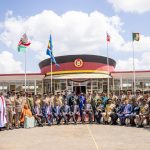
Nairobi, Kenya – February 17, 2026 – Konza Technopolis and National Museums of Kenya have signed a landmark Memorandum of Understanding to establish Kenya’s first Science Museum at Konza.
The agreement sets the stage for the creation of the Science Museum of Kenya, a bold project that seeks to merge the country’s rich ancestral heritage with the power of the Fourth Industrial Revolution.
The partnership brings together NMK’s world-class curatorial expertise and Konza’s digital infrastructure. By anchoring NMK’s 50-million-year-old paleontological collections within Konza’s smart-city ecosystem, the two institutions aim to transform Kenya’s heritage into a driver of scientific research, digital innovation, and STEM education.
Unlike traditional museums that mainly preserve and display artifacts, the proposed facility will operate as a “Living Lab.” It will serve as a dynamic hub for research, learning, and innovation. Visitors will not simply observe history; they will experience it.
Through the integration of Artificial Intelligence, Digital Twins, and Virtual Reality platforms, the museum will allow students, tourists, and researchers to interact with Kenya’s scientific and cultural collections in immersive 3D environments. This approach will open new pathways for education and collaboration.
A key highlight of the project is the Digital Twin strategy. Under this model, delicate and globally significant artifacts, including hominid fossils from the Turkana Basin, will be digitized in high resolution. Scholars in cities such as London, Tokyo, and Nairobi will study the same specimen simultaneously without risking damage to the original fossil.
Beyond exhibition, the MOU outlines a broad framework for joint planning and execution across several strategic areas. Central to this vision is the development of innovation ecosystems and incubation programs. The partnership will support joint research and development initiatives designed to commercialize heritage-based knowledge.
Through Konza’s innovation ecosystem, the institutions plan to nurture a new generation of “heritage-preneurs.” These startups will draw inspiration from traditional knowledge, including ethnobotany, to drive breakthroughs in pharmaceuticals, material science, and green technology.
Education also forms a cornerstone of the agreement. The museum will align its programs with Kenya’s Competency-Based Education curriculum. Through innovation hubs and mentorship initiatives, learners will gain hands-on exposure to AI-driven archaeology, digital conservation, and sustainable resource management. The goal is to equip young Kenyans with practical skills while deepening their appreciation of national heritage.
Recognizing the scale of the project, Konza and NMK will jointly seek funding and strategic partners. They plan to position the Science Park as a global destination for venture capital and institutional investors interested in biotechnology, archaeology, and sustainability.
The infrastructure will include smart heritage conservation solutions such as 3D scanning and virtual preservation platforms. A “Digital Vault” will safeguard Kenya’s priceless collections against physical deterioration and environmental risks.
John Paul Okwiri, CEO of Konza Technopolis, described the partnership as a bridge between history and the future. He said hosting the Science Museum of Kenya demonstrates that Konza is not only a hub for hardware and software but also a center for culture and intellectual inquiry.
Professor Mary Gikungu, Director General of the National Museums of Kenya, emphasized the data-driven opportunities the collaboration presents. She noted that digitizing NMK’s extensive collections will unlock new research potential and place Kenya’s heritage at the center of technological advancement.
Beyond research and innovation, the partnership also carries a strong national branding dimension. Joint campaigns and international exhibitions will showcase Kenya as both the Cradle of Mankind and a leader in the digital frontier. The institutions aim to attract high-value tourists, researchers, and tech investors to Konza.
As Kenya accelerates its shift toward a knowledge-based economy, the Science Museum of Kenya represents more than a cultural project. It signals a strategic decision to anchor the country’s technological future in the strength of its historical legacy.