
Kenya Rethinks Its Environmental Future as Review of the National Environment Policy Begins
By Peace Muthoka
Kenya has opened a fresh chapter in its environmental journey, signaling a renewed commitment to protect nature while safeguarding livelihoods. The Ministry of Environment, Climate Change and Forestry has kicked off a comprehensive review of the National Environment Policy, a framework that has guided environmental protection and natural resource management for years. The review comes at a moment when the country is grappling with climate shocks, mounting environmental pressure and fast-changing global realities.
From the outset, the mood was reflective yet hopeful. Government officials, development partners and conservation actors gathered with a shared understanding that the environment is no longer a distant policy concern. Instead, it touches everyday life, from farms struggling through prolonged drought to families displaced by floods and communities living alongside polluted rivers. As discussions unfolded, one message stood out clearly. Kenya must adapt its environmental governance to match the urgency of the times.
The ministry explained that the policy review responds to major shifts in the environmental landscape. Climate change, biodiversity loss and pollution now pose interconnected threats that demand coordinated action. At the same time, emerging areas such as the circular economy, carbon markets, digital innovation and new technologies are reshaping how countries pursue sustainable development. Kenya’s growing engagement in regional and global environmental agreements has also reinforced the need to align national policy with constitutional and international obligations.
Addressing participants, Evelyn Koech, the Team Leader for the Environment and Resilience Unit at the United Nations Development Programme, praised the ministry for steering what she described as a timely and strategic process. She said it was a privilege for the organization to support the review from the very beginning, noting that environmental policy now sits at the center of Kenya’s development pathway.
“We are meeting at a time when environmental challenges are no longer abstract,” Koech said. “Floods, droughts, pressure on water towers and pollution are realities that affect livelihoods, our economy and our national resilience.”

She noted that while the challenges are growing, Kenya has also demonstrated leadership in climate action, biodiversity restoration and green investment. Since the policy was first adopted, the country has put in place several laws and strategies that now shape environmental governance. According to her, the updated National Environment Policy must act as an overarching anchor, bringing coherence to these frameworks and ensuring they work together.
Koech emphasized the importance of firmly grounding the review in the Constitution, where the right to a clean and healthy environment is clearly protected. She observed that strong institutions remain essential in translating constitutional commitments into everyday practice. Without clarity and coordination, she warned, even well-designed policies risk losing public confidence.
She also underscored the need for policy coherence as environmental mandates continue to expand across sectors such as land use, water, climate, biodiversity and pollution control. “This review gives us a chance to ensure environmental governance works as one system rather than parallel processes,” she said, adding that inclusive participation would strengthen trust among communities, institutions and markets.
Drawing from UNDP’s experience in forest restoration, climate planning and nature-based solutions, Koech said progress follows when institutions are aligned. Where coordination is weak, results tend to stall. For that reason, she called for a whole-of-government and whole-of-society approach that reflects the scale and complexity of the challenge.
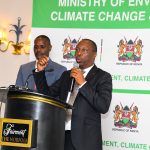
Permanent Secretary Doctor Eng Festus Ng’eno echoed those views, describing the review of the National Environment Policy as more than a routine exercise. He said Kenya’s environmental governance has undergone significant transformation, revealing complex issues such as biodiversity loss, land degradation, waste management, the blue economy and green financing.
“This review is a strategic repositioning of our nation,” Ng’eno said. “It responds to contemporary challenges while opening doors to new opportunities in the environmental sector.”
He explained that global commitments and development goals continue to place environmental sustainability at the heart of economic transformation. As a result, the revised policy will prioritize areas that directly improve lives, including job creation through green and circular economy opportunities, with a strong focus on youth and women.
Ecosystem restoration also featured prominently in his remarks. Ng’eno reaffirmed the government’s commitment to restoring forests, protecting key water towers and promoting sustainable use of natural resources. He said the country must move from reactive disaster response to proactive risk reduction, ensuring communities are protected before crises strike.
In addition, the policy review seeks to strengthen environmental education, research and innovation while enhancing climate resilience and adaptation at both national and local levels. According to Ng’eno, addressing climate change, biodiversity loss and pollution requires integrated solutions supported by sustainable financing and credible monitoring systems.