
German-Backed Capital Pumps $1.88 Billion into Africa’s Startups as New Report Launches in Nairobi
By Peace Muthoka
Nairobi, February 13, 2026 – Africa’s startup story gained fresh momentum in Nairobi after a landmark report revealed that founders across the continent have secured $1.88 billion in German-backed deals over the past decade.
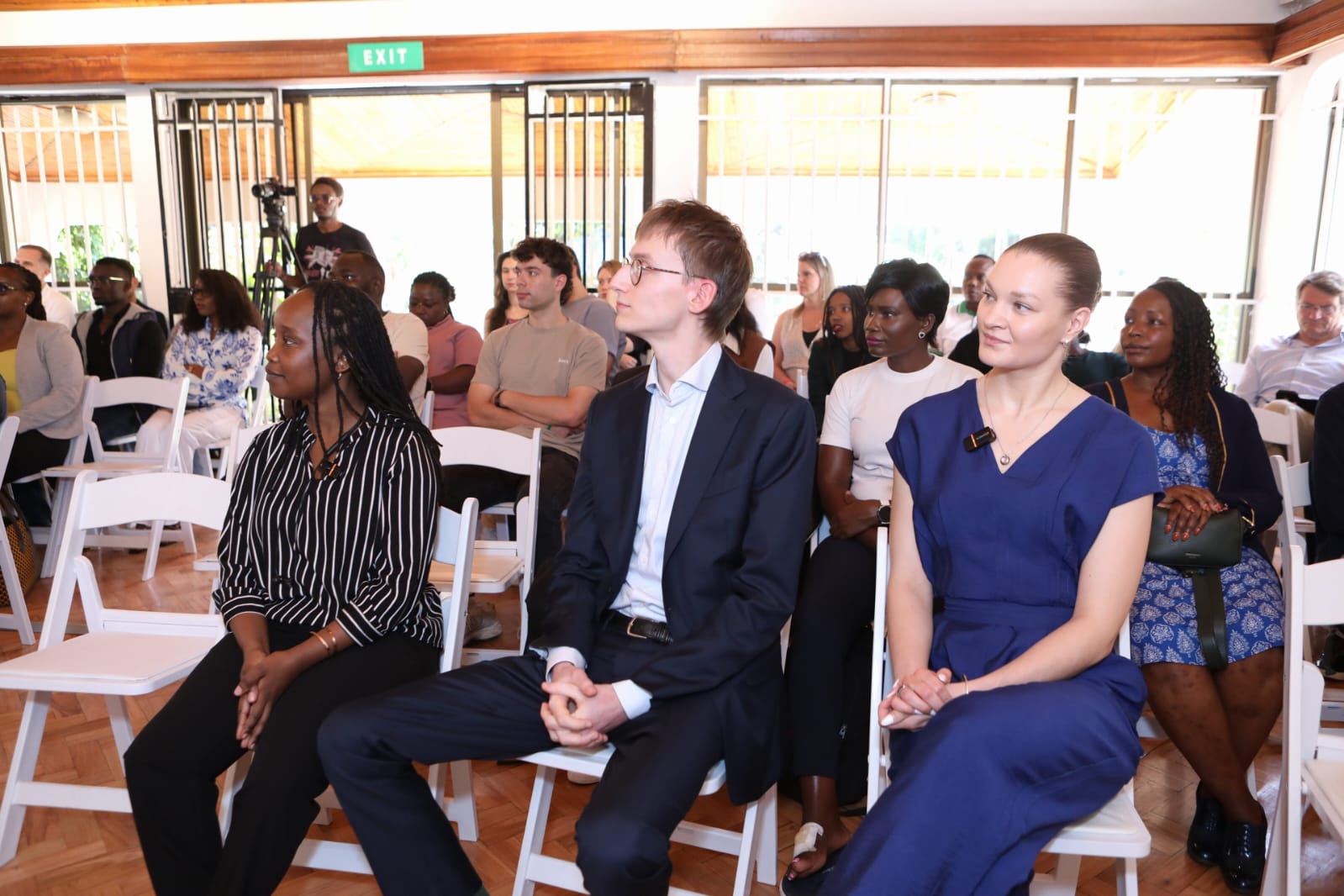
The Germany-Africa Investment Report: A Decade of Capital Flows & Ecosystem Growth (2015–2025) was unveiled at the Friedrich Naumann Foundation offices in Gigiri. The study, released by the Africa Investment Bridge initiative, paints a vivid picture of how structured partnerships between German investors and African fund managers have reshaped the continent’s innovation landscape.
Over ten years, startups in 19 African countries attracted funding through German-backed syndicates. Even more striking, German deal participation grew by 784 percent between the foundation phase of 2015–2019 and the scale phase of 2020–2025.
That growth tells a deeper story. African founders are no longer seen as high-risk experiments. Instead, they are building practical solutions in agriculture, finance, healthcare, and climate adaptation—solutions that are drawing global attention.
“The data tells a clear story: African founders are building solutions that work in agriculture, financial services, health, and climate adaptation,” said Sebastian Gentry, Head of Programs at the Westerwelle Foundation.
He added, “This report is designed to reduce the information asymmetry that keeps international capital on the sidelines. When investors engage through trusted local partners and proven structures, they access not just returns, but participation in one of the most significant economic transformations of our time.”
Kenya stood out as the biggest beneficiary of German-backed deals. Over the decade, the country attracted 50 transactions, more than any other African market. That performance cements Nairobi’s status as East Africa’s leading innovation hub and a gateway for global investors seeking exposure to the continent.
Nigeria followed with 34 deals, while Tanzania surprised many observers with 24 deals, signaling that investors are increasingly looking beyond the traditional “Big Four” markets. South Africa recorded 19 deals, and Ghana secured 17. Together, Kenya, Nigeria, Tanzania, South Africa, and Ghana accounted for 77 percent of all German-backed transactions on the continent.
Sector-wise, agriculture and financial technology dominated the deal flow. AgTech and Fintech startups captured 51 percent of the transactions. This trend reflects Africa’s global leadership in mobile money innovation and its urgent need to modernize agriculture, which employs millions across the continent.
At the same time, HealthTech and Education startups gained ground between 2020 and 2025. Investors increasingly recognized that Africa’s young and rapidly growing population requires better healthcare systems and stronger education platforms. As a result, capital began to align more closely with long-term development priorities.
The timing of the report is significant. Africa remains the fastest-growing region globally, with projected GDP growth hovering around 4 percent annually. Meanwhile, the African Continental Free Trade Area is connecting 1.3 billion people, forming the world’s largest free trade zone by population. By 2030, one in five people on the planet will be African.
Yet despite this promise, African startups received only 0.6 percent of global venture capital in 2024. That gap reveals both a challenge and an opportunity. On one hand, global capital still overlooks the continent. On the other, the market remains underpriced for investors willing to build structured, long-term partnerships.
The report also highlights market cycles. German syndicate exposure peaked at $565.5 million in 2023 before declining sharply. However, the authors attribute that drop to the concentration of mega-deals rather than a weakening ecosystem. In fact, African startup funding rebounded strongly in 2025, reaching $3.8 billion. Funding volumes rose by 32 percent, while deal counts increased by 8 percent. These figures suggest a maturing market with broader participation rather than reliance on a few oversized transactions.
Beyond the numbers, the report offers a roadmap for the future. It urges African fund managers to strengthen communication with limited partners, improve transparency in reporting, and expand co-investment networks. By doing so, they can unlock more international capital and build stronger bridges between local founders and global investors.
The Africa Investment Bridge program is implemented by the Westerwelle Foundation in partnership with GIZ SPARK. It is commissioned by the German Federal Ministry for Economic Cooperation and Development and co-financed by the European Union.
As the Nairobi launch concluded, one message rang clear: Africa’s startup ecosystem is no longer emerging it is evolving. And with structured global partnerships gaining strength, the next decade could see even greater flows of capital into businesses built by African founders for African realities.