
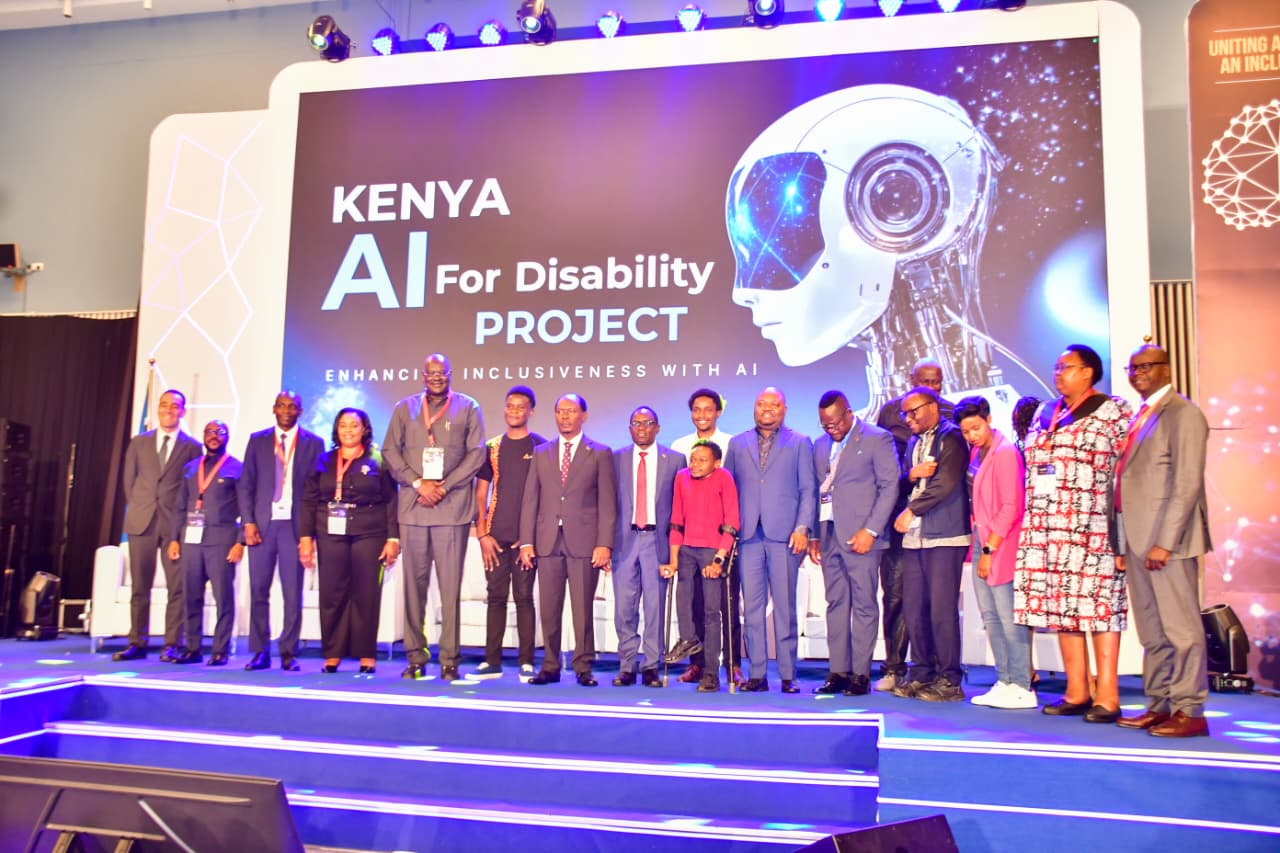
CS Kabogo, PS ISaboke, Project Partners and Kenyan Students who have developed inclusive assistive solutions powered by AI
By Peace Muthoka
Nairobi, April 30, 2026 — The Ministry of Information, Communications and the Digital Economy, working with the Kenya Institute of Special Education, Qhala, inABLE, Assistive Technologies for Disability Trust, and Huawei, has launched the Kenya AI for Disability Project.
The project was unveiled during the closing ceremony of the Connected Africa Summit 2026 at the Edge Convention Centre in Nairobi.
The initiative marks a major step in Africa’s digital transformation, placing inclusion at the center of technology, infrastructure, and innovation. It shifts the focus from policy promises to practical solutions designed to address real challenges faced by persons with disabilities.
The launch also reflects a strong multi-stakeholder approach. The government is working closely with technology and innovation partners to co-design assistive tools that can scale and deliver impact.
Cabinet Secretary for Information, Communications and the Digital Economy William Kabogo said the project shows Kenya’s commitment to building an inclusive digital economy.
He urged African countries to move from treating inclusion as an aspiration to making it a core design principle.
“As Africa advances its digital agenda, we must remain deliberate. Africa must be at the table, not on the menu, in shaping solutions powered by emerging technologies,” he said.
Kabogo added that the project delivers on commitments made during the summit, especially in expanding digital skills, building AI capacity, and improving access to digital infrastructure.
“This initiative ensures every Kenyan can participate in the digital economy through innovation, jobs, or business. We are moving from commitments to delivery,” he said.
Secretary for ICT, E-Government and Digital Economy, Mary Kerema, underscored that the project represents a structural shift in how government designs and delivers digital services.
“The AI for Disability Project marks a decisive shift from inclusion as an aspiration to inclusion by design. It brings together a powerful coalition of disability experts, innovation leaders, and global technology partners to address real, lived challenges faced by persons with disabilities,” she said.
She noted that MoICDE is not only facilitating the initiative but is actively co-engineering solutions with partners.
“As government, we are deliberately re-engineering our systems to be inclusive embedding accessibility into our digital infrastructure, platforms, and services from the outset, rather than retrofitting it later,” she added.
Ms. Kerema further highlighted that the initiative is anchored within Kenya’s national AI strategy and leverages key national infrastructure including the Konza Technopolis Data Centre and a growing network of digital hubs across the country, aimed at expanding access, training, and innovation at scale.
inABLE Founder Irene Mbari-Kirika welcomed the partnership, saying it will help break long-standing barriers in education, employment, and digital participation.
“For too long, persons with disabilities have been left out, not due to lack of ability, but because systems ignored their needs. This initiative changes that,” she said.
She added that inclusive technology is both a rights issue and an economic opportunity that can unlock untapped talent.
The project brings together partners with expertise in disability inclusion, AI development, assistive technology, and infrastructure.
It also aligns with the Connected Africa Summit 2026 Ministerial Communiqué, which calls for faster and measurable implementation of Africa’s digital transformation agenda.
Key priorities include expanding digital skills and AI training, strengthening inclusive infrastructure, building a trusted digital ecosystem, and promoting public-private partnerships.
The summit ended with a strong call for Africa to move from strategy to action to ensure no one is left behind.
The AI for Disability Project now stands as one of the first major initiatives under this push, positioning Kenya as a leader in inclusive digital innovation.