
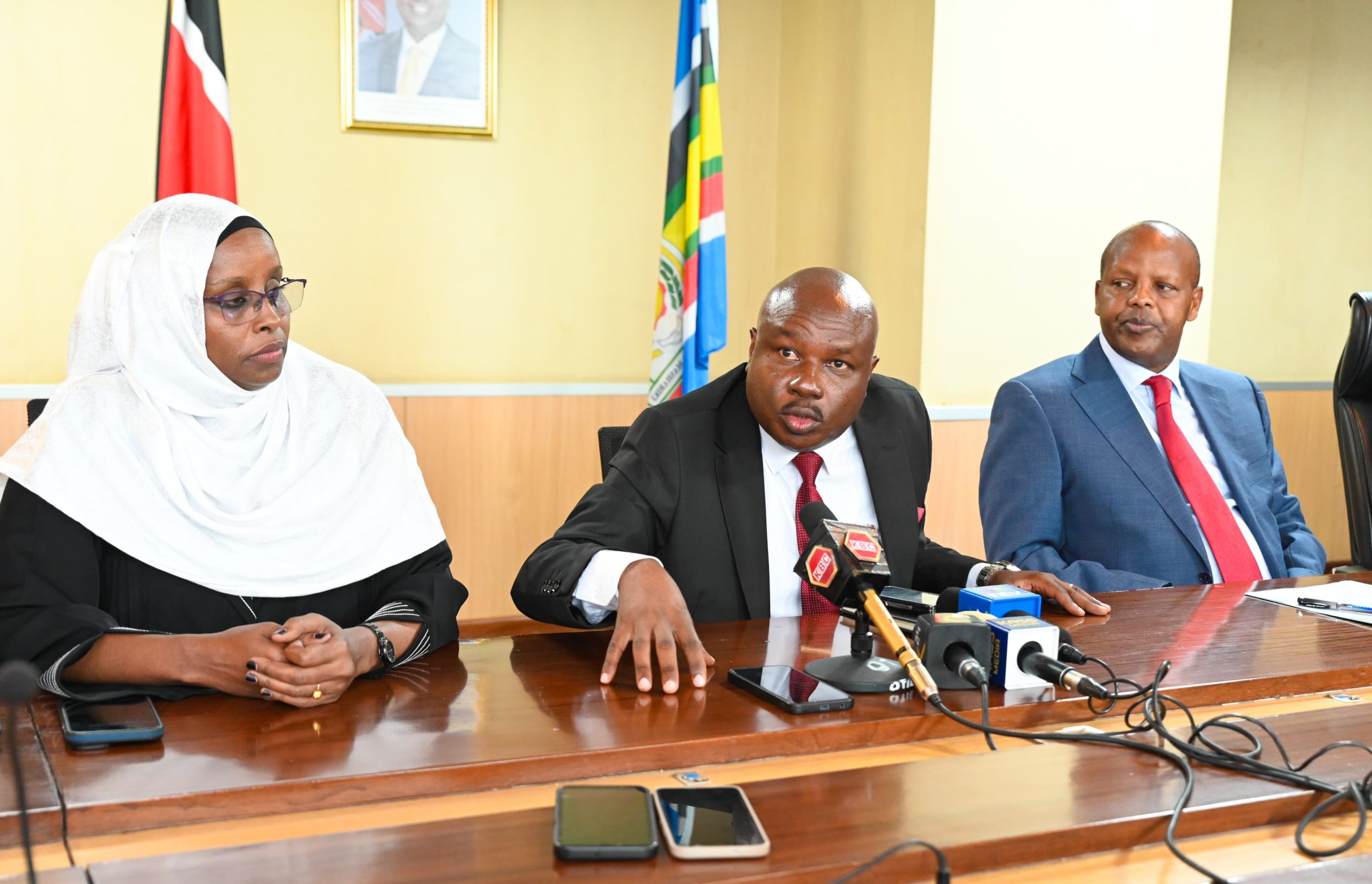
(L-R) NITA Director-General Dr Rukia Atikiya,Labour and Skills Development Principal Secretary Shadrack Mwadime and The chairman of the National Social Security Fund (NSSF) in Kenya David Kariuki Njeru.
Nairobi, September 3, 2026 — Thousands of Kenyans who have spent years working as mechanics, plumbers, masons, electricians and other skilled workers without formal certificates are set to receive recognition for their skills.
A total of 3,727 Kenyans from all 47 counties will graduate on September 7 under the National Industrial Training Authority’s (NITA) Recognition of Prior Learning (RPL) programme.
The programme gives people who acquired skills through work experience a chance to have those skills assessed and formally certified.
Speaking during a press confrence ,Labour and Skills Development Principal Secretary Shadrack Mwadime said the government was stepping up the programme to reach more young people working in the informal sector.
“Many of our young people have skills that they have gained through experience as they work in various sectors, but they do not have certificates to prove that they have those skills,” Mwadime said.
Under the programme, applicants document their work experience and undergo practical and other assessments. Those who demonstrate the required skills receive certificates confirming their competence.
Mwadime said the certificates could make it easier for workers to secure employment, particularly as the government seeks opportunities for skilled Kenyans beyond the local market.
He said Kenya was working with the World Bank and the Canadian government to help 100 RPL graduates access opportunities in Canada.
The initiative, he added, was intended to show young Kenyans that their skills could open doors internationally when backed by recognised certification.
Targeting 20,000 workers
The government now wants to expand the programme significantly, with a target of certifying 20,000 skilled workers within the next one to two years.
Mwadime said the need was particularly urgent in the informal sector, which employs millions of Kenyans.
He noted that certification could also help build confidence among customers seeking services from informal businesses.
For instance, a motorist looking for a mechanic would have greater assurance when dealing with a technician whose skills had been assessed and certified.
The programme covers a range of occupations, including mechanics, plumbing, electrical work, masonry, beauty services, information technology and other trades.
NITA Director-General Dr Rukia Atikiya said the 3,727 candidates comprise 2,165 men and 1,562 women, with the candidates spread across 48 trades.
She said the programme was also showing a gradual shift in traditionally male-dominated occupations.
Among those assessed and certified are 17 female masons, 46 female plumbers and 15 female light vehicle mechanics.
Atikiya said the candidates would receive certification at different levels depending on their skills and assessment results.
“We want to reach all skilled youth out there across the different trades and have them liaise with NITA so that we can take them through the Recognition of Prior Learning process,” she said.
Fundi Locator to link workers with customers
At the same event, the government will launch the Fundi Locator App, a digital platform designed to connect skilled workers with customers looking for their services.
Mwadime urged technicians to register on the platform, saying their skills would be verified before they are listed.
The app is expected to cover workers such as plumbers, mechanics, electricians and IT technicians, giving customers an easier way to find skilled service providers.
The government hopes the platform will also help skilled workers who struggle to find customers turn their experience into more sustainable livelihoods.
Push for more savings
The September 7 event will also mark the launch of a digital savings platform targeting workers in the informal sector.
The chairman of the National Social Security Fund (NSSF) in Kenya David Kariuki Njeru ,said the programme aims to bring more kenyans into formal retirement savings.
The broader target is to grow retirement savings to Sh1 trillion by the end of the 2026/27 financial year, he said.
The new platform will allow Kenyans to save using a mobile application and USSD service, making it possible to contribute directly from their phones.
Njeru said the pilot programme had already attracted more than 300,000 members, with the full rollout expected to bring millions more workers into the savings system.
The initiative comes as the government looks beyond formal employment to increase retirement savings among people earning a living in the informal economy.
For Mwadime, expanding skills certification and encouraging savings are part of a wider effort to give informal sector workers better opportunities to grow their incomes and participate more fully in the economy.
As the government prepares to certify the first 3,727 graduates, it is also setting its sights on a much bigger group of Kenyans whose skills have long remained largely unrecognised.