
How Northern Rangelands Trust is Redefining Coastal Economies
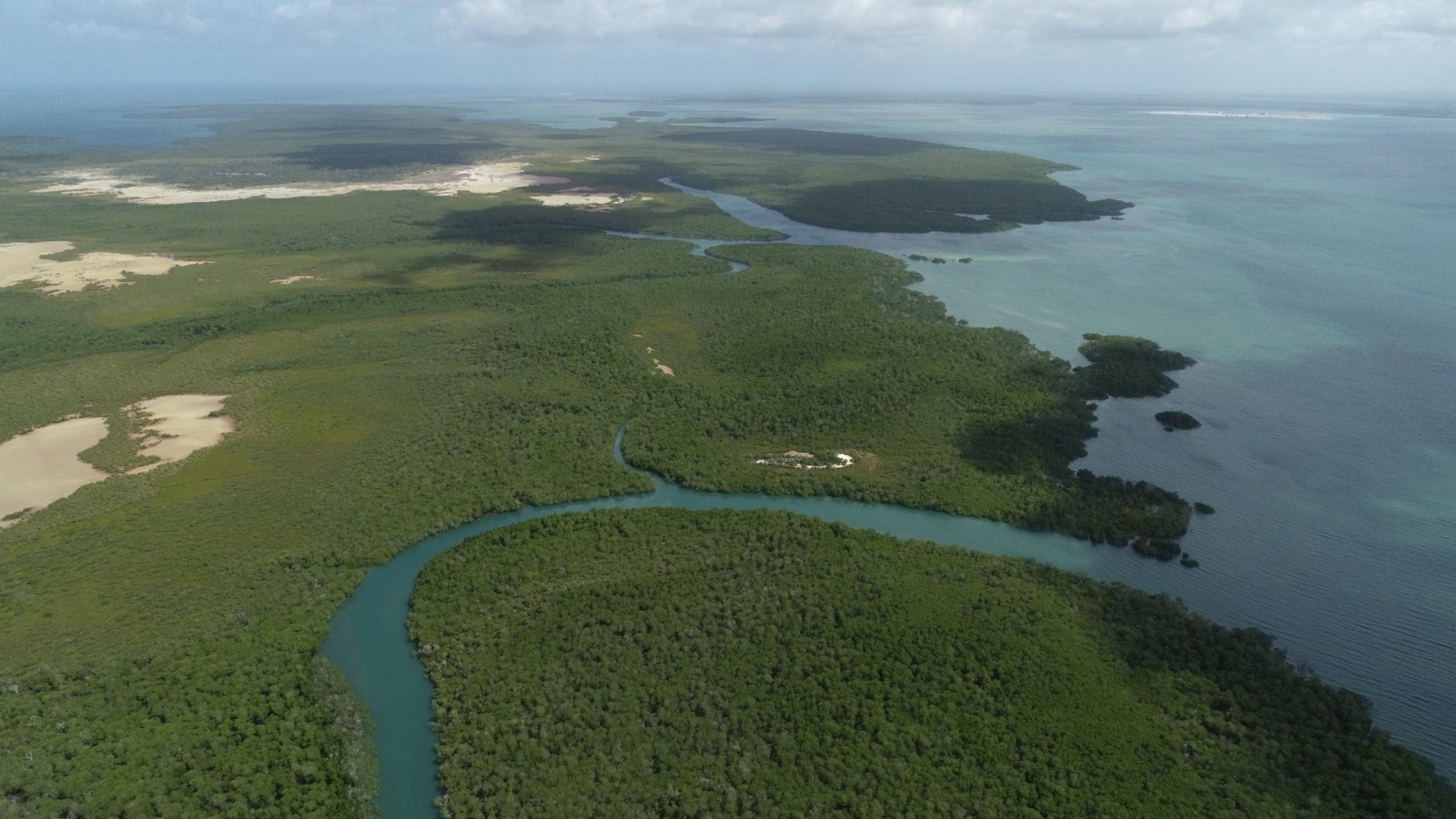
At first glance, the work of the Northern Rangelands Trust (NRT) is often associated with the drylands of northern Kenya—vast landscapes of grazing systems, wildlife corridors, and pastoral livelihoods. But along Kenya’s coastline, a different story is unfolding, one shaped not by rangelands, but by tides, reefs, mangroves, and fisheries.
Here, conservation meets the ocean—and increasingly, it is reshaping local economies.
Across the Lamu–Tana seascape, community conservancies supported by NRT are demonstrating that marine conservation and economic development are not competing priorities. Instead, they are becoming mutually reinforcing systems, where ecological recovery is directly linked to improved livelihoods.
The scale of this shift is significant.
Over 550,000 hectares are now under conservation management across NRT Coast landscapes, with more than 92,000 community members directly benefiting. These are not isolated interventions—they form part of a coordinated approach to managing fisheries, forests, and coastal ecosystems through locally governed institutions.
At the centre of this transformation are community-led fisheries systems.
For decades, coastal fishing communities faced declining catches, destructive fishing practices, and limited access to fair markets. In many cases, fishers remained locked into low-value supply chains, earning little from increasingly fragile ecosystems.
That model is now shifting.
Through the Fish-to-Market initiative, fishers are accessing premium markets and earning up to 35% higher prices, with nearly 30 tonnes of fish sold in 2025, generating over KES 5.3 million.
But the shift is not just economic it is behavioural.
To access these markets, fishers must adopt sustainable practices, comply with co-management rules, and participate in governance systems that regulate fishing pressure and protect breeding zones.
As Hassan Yusuf, Director – NRT Coast, explains:
“What we are seeing along the coast is a shift from extraction to stewardship. Communities are not just fishing—they are managing the resource. And when they see the value of doing it sustainably, both the ocean and their incomes begin to recover together.”
Supporting this are locally managed marine areas (LMMAs) zones where fishing is restricted or rotated to allow ecosystems to regenerate. Seasonal closures, particularly for species like octopus, are already showing measurable ecological and economic returns.
Fish stocks are stabilising. Reef systems are recovering. And critically, communities are beginning to see conservation not as a limitation, but as a strategy.
Beyond fisheries, another ecosystem is quietly underpinning this transformation: mangroves.
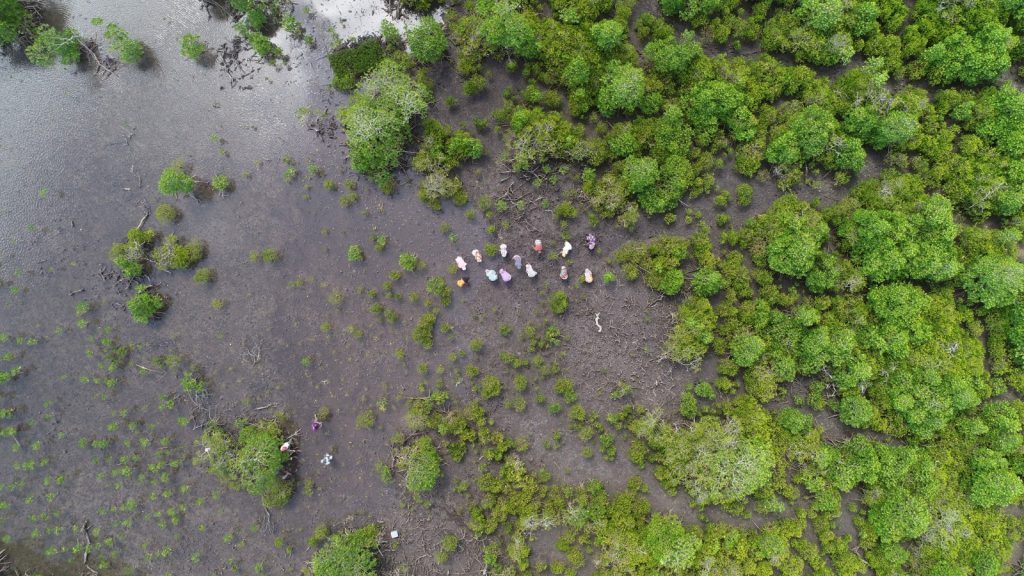
Across the NRT Coast landscape, more than 40,000 hectares of mangroves are under improved management, with over 800 hectares restored. These forests serve as nurseries for marine life, buffers against coastal erosion, and powerful carbon sinks.
But their value is not only ecological.
Mangroves support fisheries productivity, create opportunities for eco-tourism, and contribute to emerging blue carbon markets. For communities, they are both a protective barrier and an economic asset.
As Vishal Shah, Chief Executive Officer of Northern Rangelands Trust, notes:
“The future of conservation lies in models that connect ecosystems to economies. What is happening along the coast is a clear example—where protecting natural systems is directly improving livelihoods. That alignment is what makes conservation sustainable at scale.”
Complementing these efforts are livelihood diversification programmes.
Through microfinance initiatives, more than 2,000 community members primarily women have accessed financial support, enabling small businesses and reducing dependence on fishing alone. Skills training programmes are equipping youth with alternative income pathways, from technical trades to service-based enterprises.
This diversification is not incidental.
It is strategic.
Because conservation systems are most resilient when communities are not solely dependent on a single resource.
For Tom Lalampaa, Chief Partnerships and Growth Officer at NRT, the significance is clear:
“Sustainability is not just about protecting ecosystems—it’s about creating viable economic systems around them. When communities can earn, invest, and plan for the future, conservation stops being a project and becomes part of how economies function.”
What emerges along Kenya’s coast is not a series of interventions, but a connected system.
Fisheries management supports income. Mangroves sustain ecosystems. Governance structures ensure accountability. Livelihood programmes reduce pressure on resources. Each component reinforces the other.
And at the centre of it all is community governance.
Beach Management Units, Community Forest Associations, and conservancy boards drive decision-making, enforce regulations, and manage benefits. These institutions are locally led, increasingly inclusive, and central to how the system operates.
Globally, the blue economy is gaining attention as a pathway for sustainable development. Yet many models remain fragmented—focused either on conservation or economic growth.
Northern Kenya’s coastline offers a different perspective.
It shows that when communities are placed at the centre, when governance systems are strong, and when economic incentives align with sustainability, conservation and development can move in the same direction.
This is not a finished model.
Infrastructure gaps remain—particularly in cold storage and market access. Funding constraints continue to shape scale. And the work requires continuous adaptation.
But the trajectory is clear.
Across Kenya’s coast, conservation is no longer defined solely by protection.
It is being redefined by participation, by economic relevance, and by systems that recognise the interconnected nature of ecosystems and livelihoods.
And in doing so, it is positioning NRT not just as a land-based conservation organisation, but as a multi-landscape institution contributing to global conversations on climate, oceans, and community-led development.