
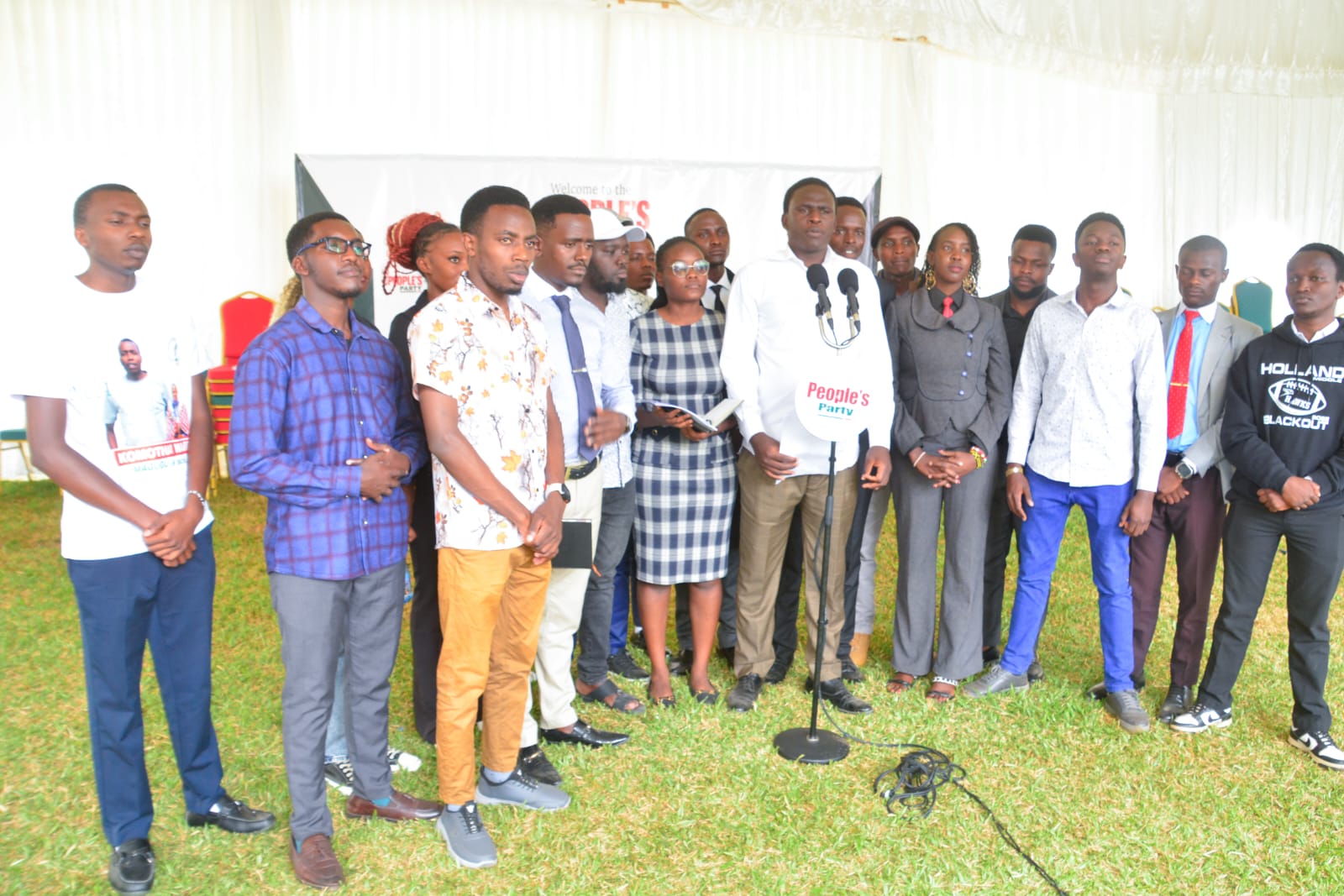
PPK Youth League Rejects Tertiary Education Funding Bill in Current Form
By Peace Muthoka
Nairobi, September 22, 2026– Student and youth leaders have rejected the Tertiary Education, Placement and Funding Bill, 2026 in its current form, warning that the proposed financing framework could leave young Kenyans with heavy education debts before they have secured stable employment.
The leaders also want the Government to publish the report of the committee that reviewed the New Funding Model and provide a clear roadmap for implementing its recommendations.
The position was read on Tuesday by Wainaina Gichere, the National Youth Leader of the People’s Party of Kenya (PPK), who spoke on behalf of student leaders and other youth leaders.
The Bill is currently before the National Assembly Departmental Committee on Education, with public participation scheduled to continue until October 2, 2026.
In their statement, the youth leaders said the proposed legislation raises serious concerns about the affordability, accessibility and long-term sustainability of tertiary education for millions of Kenyan students.
They said the experience of the New Funding Model had already demonstrated the financial pressure that education financing could place on students and their families. They expressed concern that the proposed law could entrench a system in which a substantial proportion, potentially up to the full cost of education, is financed through repayable loans.
“We cannot accept a system that leaves young Kenyans graduating from universities and other tertiary institutions with substantial financial obligations before they have had a reasonable opportunity to establish themselves in the labour market,” Gichere said while reading the statement.
The youth leaders said education financing should expand opportunities rather than create a long-term debt burden for graduates.
They are calling for the Bill to retain meaningful scholarship and grant components, particularly for students from vulnerable and economically disadvantaged backgrounds.
They also want the recommendations of the Presidential Working Party on Education Reform and the findings of the review of the New Funding Model to inform reforms to tertiary education financing.
“Education financing should not become synonymous with debt. A student’s economic circumstances should never determine whether they can access higher education,” the statement said.
The leaders further called for the complete removal of interest charges on education loans, arguing that young Kenyans should not have to pay interest on loans intended to help them acquire education and skills necessary to participate in the economy.
They also want graduates to be given a three-year grace period after completing their studies before they are required to begin repaying their education loans.
According to the leaders, the grace period would give graduates adequate time to transition from education into employment, entrepreneurship or other productive economic activity.
They are also opposed to graduates being listed with Credit Reference Bureaus (CRBs) during the first three years after graduation because of failure to repay their education loans.
The leaders argued that graduates who are unable to secure employment or establish sustainable sources of income during that period should not face adverse consequences for circumstances beyond their immediate control.
“Young people should not be punished for circumstances arising from non-payment during that period, particularly in an economy where the transition from graduation to stable employment can be difficult,” the statement said.
Call to publish New Funding Model report
Gichere also called on President William Ruto to make public the report of the committee that reviewed the New Funding Model.
Gichere said he was a member of the New Funding Model Review Committee and urged the President to release its report without further delay.
“As a member of the New Funding Model Review Committee, I now formally call upon His Excellency the President to make the Committee’s report public without further delay and to provide a clear roadmap for the implementation of its recommendations,” he said.
The leaders said making the report public would provide an opportunity for students, parents, universities and other education stakeholders to understand the findings and recommendations of the review.
They also urged the National Assembly Departmental Committee on Education, Members of Parliament and the Executive to listen carefully to the concerns of students, parents, universities, education stakeholders and young Kenyans before passing legislation that could have long-term consequences for the country’s human capital.
The leaders said Kenya’s ambition to build a knowledge-based economy must be supported by an education financing system that makes tertiary education accessible without placing graduates under unsustainable financial obligations.
“The question before the country is not simply how students will repay their education. The bigger question is: What kind of Kenya do we want to build — one where education opens doors, or one where education begins a lifetime of debt?” the statement said.
The Peoples Party Youth League and the youth leaders therefore called for substantial amendments to the Tertiary Education, Placement and Funding Bill, 2026, saying the financing framework should be based on fairness, affordability, accountability and opportunity.
They said the interests of Kenyan students and the country’s long-term human capital development should remain at the centre of decisions on tertiary education financing.