
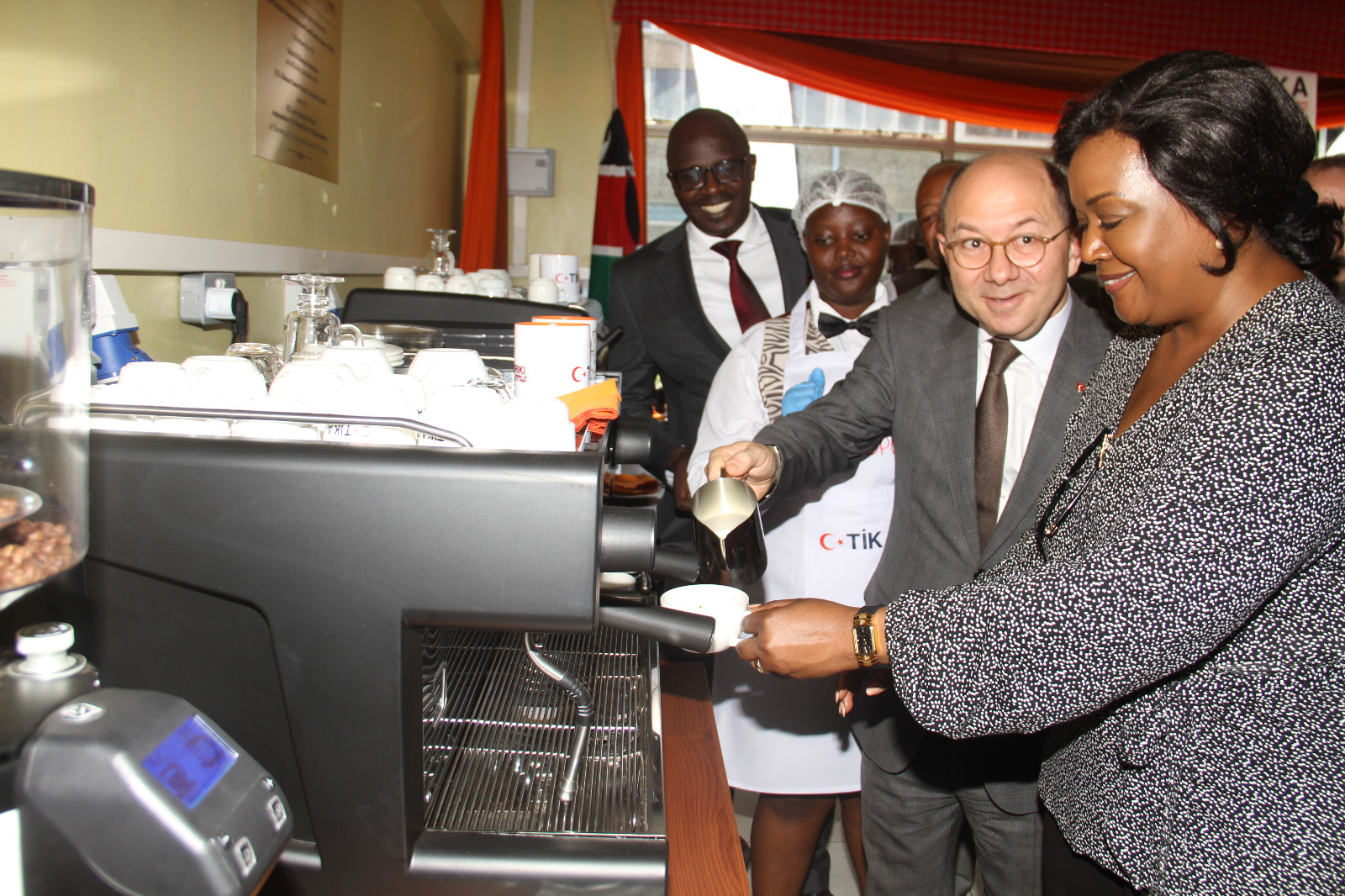
Ushiriki Wema Foundation Chair Tessie Musalia (right) and Turkish Ambassador Subutay Yüksel sample coffee during the handover of state-of-the-art barista machines to Kenya Utalii College on January 29, 2026.
By Peace Muthoka.
Nairobi, January 29, 2026 – Kenya and Türkiye officially launched and handed over state-of-the-art barista machines to Kenya Utalii College, strengthening vocational training in the hospitality and coffee value chain. The initiative brings together the Turkish Cooperation and Coordination Agency, TİKA, the Ushiriki Wema Foundation and Kenya Utalii College in a partnership focused on skills, employment and sustainability.
Speaking during the event, TİKA Country Coordinator Kenan Yigit said the programme reflects a long-standing relationship built on shared development priorities. He noted that Türkiye has supported hundreds of projects across Kenya, spanning education, water, health and vocational training.
He said the handover responds directly to Kenya’s strengths in tourism and coffee production. However, he stressed that sustaining leadership in these sectors depends on a skilled and well-trained workforce, especially among young people.
Many graduates, he observed, leave school with ambition but lack hands-on experience. This often limits access to jobs in hospitality, a sector that continues to grow while demanding high service standards. Coffee, one of Kenya’s most valued exports, also offers strong opportunities when value addition happens locally.
The barista machines are designed to close that gap.
With modern equipment and practice-based learning, trainees will now gain practical skills across the coffee journey, from preparation to presentation. They will learn espresso techniques, cold beverages and professional service standards, building confidence to compete locally and internationally.
“This support strengthens vocational training and promotes sustainable employment for youth,” Yigit said. He added that it also introduces Türkiye’s vocational training approach while deepening ties between the two countries.
Turkish Ambassador Subutay Yüksel described the handover as a timely response to real economic needs. Standing alongside Utalii College leadership and Ushiriki Wema Foundation founder Tessie Mudavadi, he said skills development remains central to Türkiye’s cooperation agenda.
“Kenya is a leading tourist destination and a globally respected coffee producer,” he said. “To unlock this potential fully, we must invest in skilled professionals who can add value across the hospitality and coffee sectors.”
He noted that through TİKA, Türkiye continues to support people-centred development across Africa by investing in skills, knowledge and long-term impact.
“This initiative will improve service quality, create jobs and strengthen cooperation between our two nations,” he said.
Attention later turned to the trainees, some of whom had already begun using the new machines. Their confidence and excitement reflected the practical impact of the programme.
For Ushiriki Wema Foundation Chair Tessie Mudavadi, the handover symbolised dignity through skills. She said empowering young people and women through practical training remains central to social and economic transformation.
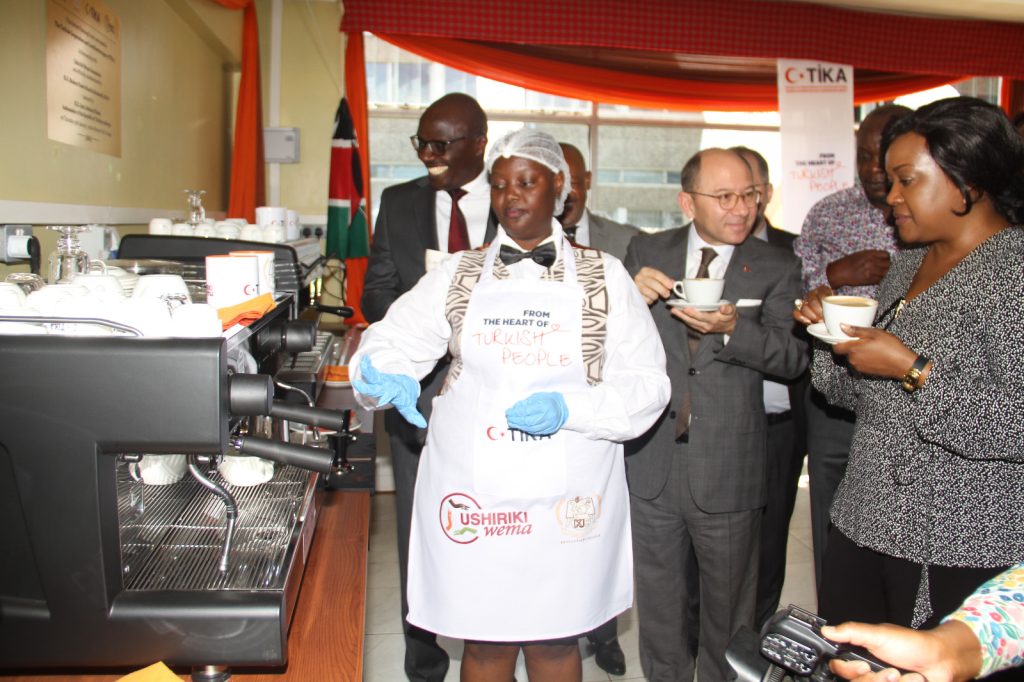
“Skills lead to income, independence and dignity,” she said. “Vocational training is not a second option. It is a strategic response to today’s economy.”
She added that barista training opens doors locally and globally, especially in a country celebrated for world-class coffee. Turning to the trainees, she encouraged them to see themselves as ambassadors of Kenya’s coffee heritage.
Utalii College officials welcomed the machines, saying they will significantly enhance training quality. Students will now practise on equipment similar to what is used in top hotels, cafés and international chains, narrowing the gap between training and employment.
The launch and handover go beyond equipment. They align education with opportunity, strengthen partnerships that respond to real needs and empower young people who choose preparation over waiting.
For Kenya’s youth, the machines represent more than coffee. They offer a skill to earn a living, a path to independence and a future worth brewing.