
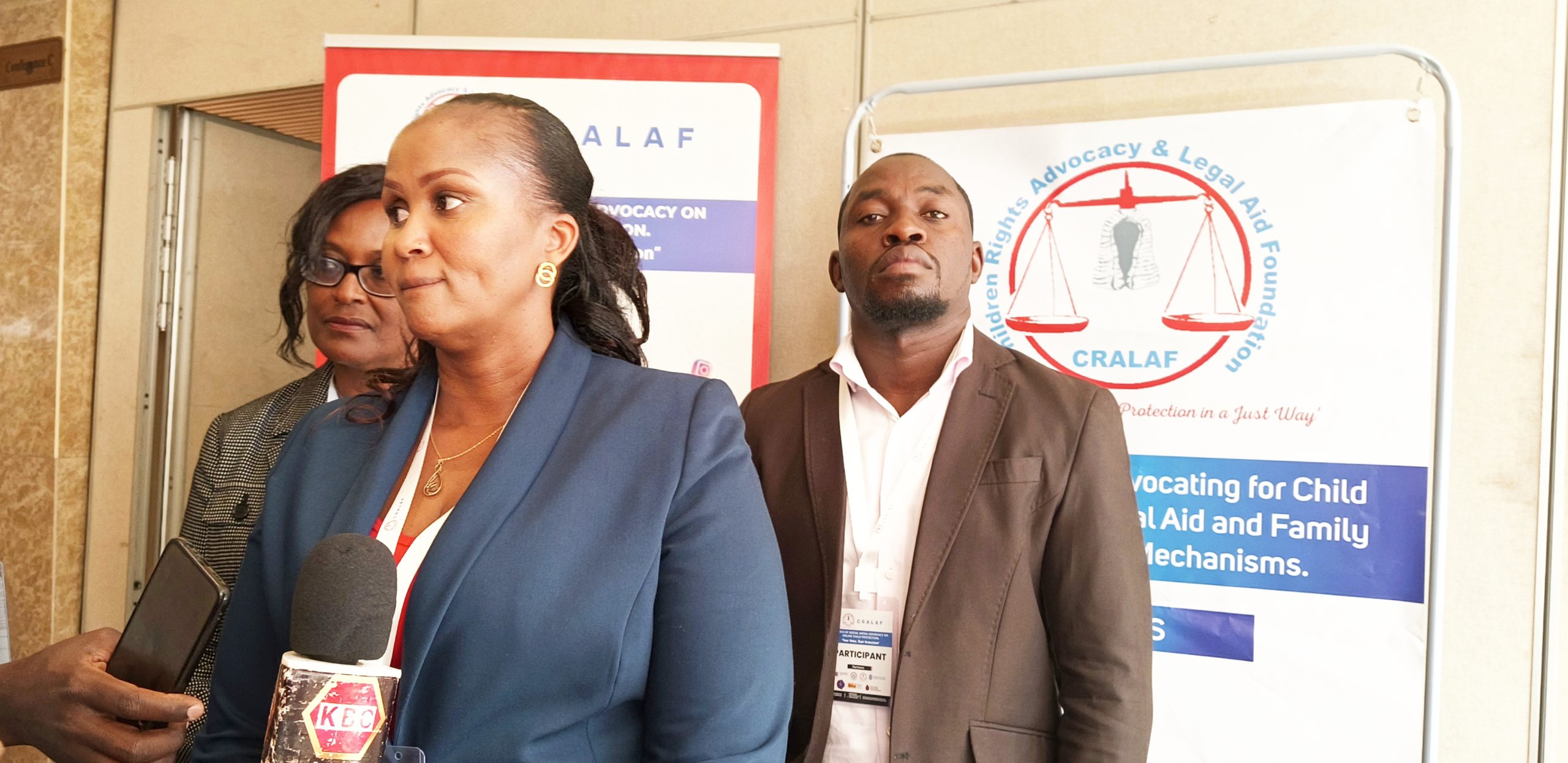
Phoebe Kithinji, the Executive Director of CRALAF
By Peace Muthoka.
Kenyan child protection organisations have issued a strong warning over the growing dangers facing children in the digital world. They say the country is now dealing with a serious online safety crisis that demands urgent action. The warning came today during the World Children’s Day, where experts met to discuss how to strengthen online child protection and launch a nationwide advocacy campaign.
During the session, Dennis Ratemo, the Regional Programme Officer for East Africa at Terre des Hommes Germany, urged stakeholders to act quickly. He explained that Kenya has almost 24 million children, making up 43 percent of the entire population. Out of this number, over 70 percent are active internet users. However, most of them lack the digital skills and awareness needed to stay safe online. Ratemo said this gap in knowledge exposes millions of children to abuse, exploitation and manipulation.
As the discussion continued, Ratemo highlighted several risks that have grown sharply in recent years. He pointed to global data showing more than 1.2 billion cyberbullying attempts recorded by June this year alone. He warned that Kenyan children face similar dangers daily. Many encounter harmful content, child sexual abuse material, grooming attempts and serious data privacy violations.
Ratemo also raised concern about the rising levels of digital addiction among children. He said many spend long hours online without supervision because parents lack the skills to monitor them. As a result, more children now struggle with isolation, poor social interaction and emotional distress. He emphasized that at least 13 percent of children have already experienced online abuse, yet most choose silence. According to him, many fear stigma, punishment or disbelief from their caregivers due to strict and authoritarian parenting styles.
“Children have moved from playgrounds to platforms,” Ratemo said. “We must now guide them, support them and protect them as they navigate this new world.”
The event was organised by CRALAF Kenya, a child rights advocacy and legal aid foundation. It brought together journalists, influencers, bloggers, civil society groups, government officers and online platform providers. The aim was to create a unified strategy that uses media and community networks to promote online safety. Participants discussed how social media can amplify awareness, expose abuse and encourage ethical reporting.
Phoebe Kithinji, the Executive Director of CRALAF, said the digital world is changing faster than Kenya’s laws. She argued that policymakers must now anticipate risks instead of reacting to them. Kithinji noted that when the Children’s Act 2022 was drafted, lawmakers had not yet considered the impact of artificial intelligence on children’s safety. She said this gap shows how fast technology evolves and why constant updates are necessary.
“We are fighting an enemy that keeps mutating,” she said. “If technology changes, policies must also change. We must prepare for future threats before they reach our children.”
Throughout the conversation, participants agreed that online platform providers must design safer systems for young users. They also agreed that the media can play a central role in protecting children by highlighting risks and reporting incidents responsibly.
As the country marked World Children’s Day, the organisations renewed their call for a safer digital environment. They said every child deserves to explore the online world freely, learn confidently and interact without fear. They urged all stakeholders to work together and build a digital space where children can thrive, not suffer.