
Kenya Rolls Out Bold 10-Year Plan to Restore Mau Forest and Boost Livelihoods
By Peace Muthoka.
Nairobi – Kenya has unveiled an ambitious 10-year programme to restore the Mau Forest Complex, the country’s largest water tower and a lifeline for millions of people across East Africa.
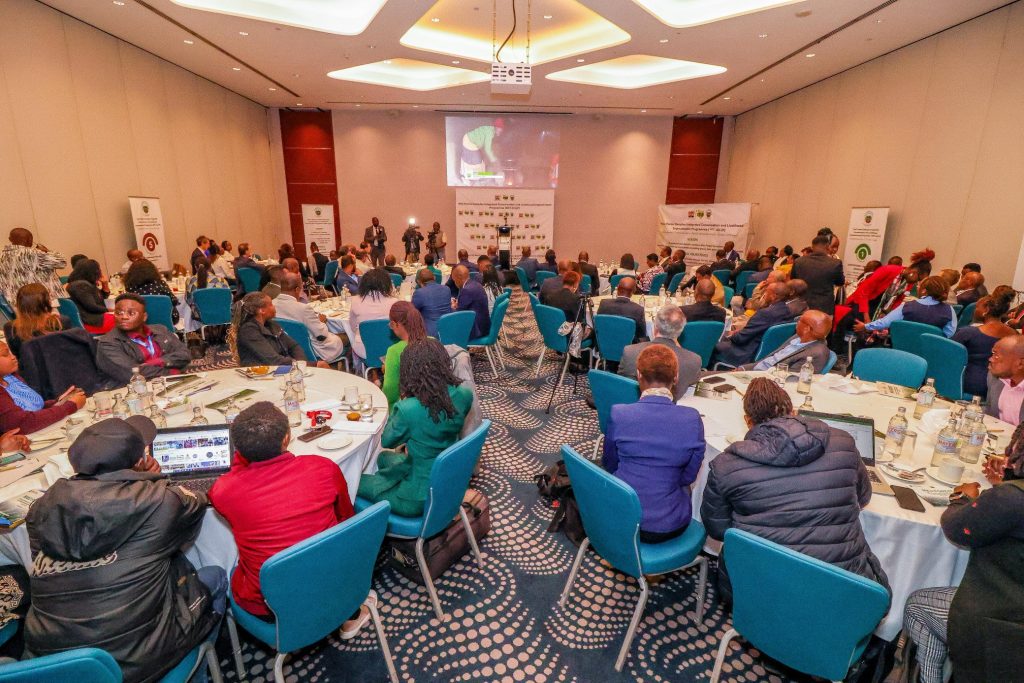
The Mau Forest Complex Integrated Conservation and Livelihood Improvement Programme (MFC-ICLIP) was introduced during a media and partners’ roundtable held in Nairobi on Tuesday. The event was hosted by Environment and Climate Change Principal Secretary Dr. Eng. Festus K. Ng’eno, who also serves as the patron of the initiative.
Cabinet Secretary for Environment, Climate Change and Forestry, Dr. Deborah Barasa, presided over the meeting, which brought together senior government officials, development partners, and private sector representatives.
The programme will focus on four sub-counties Molo, Njoro, Kuresoi North, and Kuresoi South. It will be implemented through five components: sustainable landscape management, community livelihood improvement, circular economy innovations, environmental education and research, and governance and resource mobilisation.
Dr. Ng’eno said the initiative was personal to him, as he grew up in the Mau Forest and witnessed its steady destruction. “I am a product of the Mau Forest Complex. This programme is a game-changing legacy initiative and a model for the rest of the country,” he noted.
He explained that the Mau Forest is vital at community, national, regional, and global levels. Locally, it secures water for households, farming, and livestock while supporting jobs and cultural heritage. Nationally, it contributes nearly 600 megawatts of hydropower, sustains food security, and underpins tourism hotspots such as Lake Nakuru and the Maasai Mara, which generates more than KES 2.5 billion annually. Regionally, it feeds the Nile Basin, benefiting countries like Uganda, South Sudan, Sudan, and Egypt. Globally, it supports biodiversity, iconic wildlife migrations, and serves as a major carbon sink.
However, the forest faces mounting threats from illegal logging, land encroachment, and climate change. To counter these challenges, the MFC-ICLIP will directly contribute to Kenya’s 15 billion tree-growing initiative while aligning with international climate and biodiversity commitments.
The first phase of the programme will be officially launched on October 24, 2025. It aims to restore 3,313 hectares of degraded land by planting four million tree seedlings. Already, over 150,000 seedlings have been planted in Eastern Mau through weekly tree-planting drives.
Dr. Ng’eno stressed that partnerships would be at the centre of the initiative. “We are deliberately combining government leadership, community participation, private sector investment, and development partner expertise. The establishment of a Mau Water Fund and regular coordination forums will ensure sustainability,” he said.
He also called on the media to amplify the Mau story. “You are not just observers but partners who inspire action and build a global movement for restoration,” he added.
As the October launch nears, the government is rallying more stakeholders to join the effort under the clarion call “Linda Mau, Boresha Maisha.” Dr. Ng’eno urged partners to bring in resources, ideas, and networks to secure a greener, more resilient future for Kenya and the region.