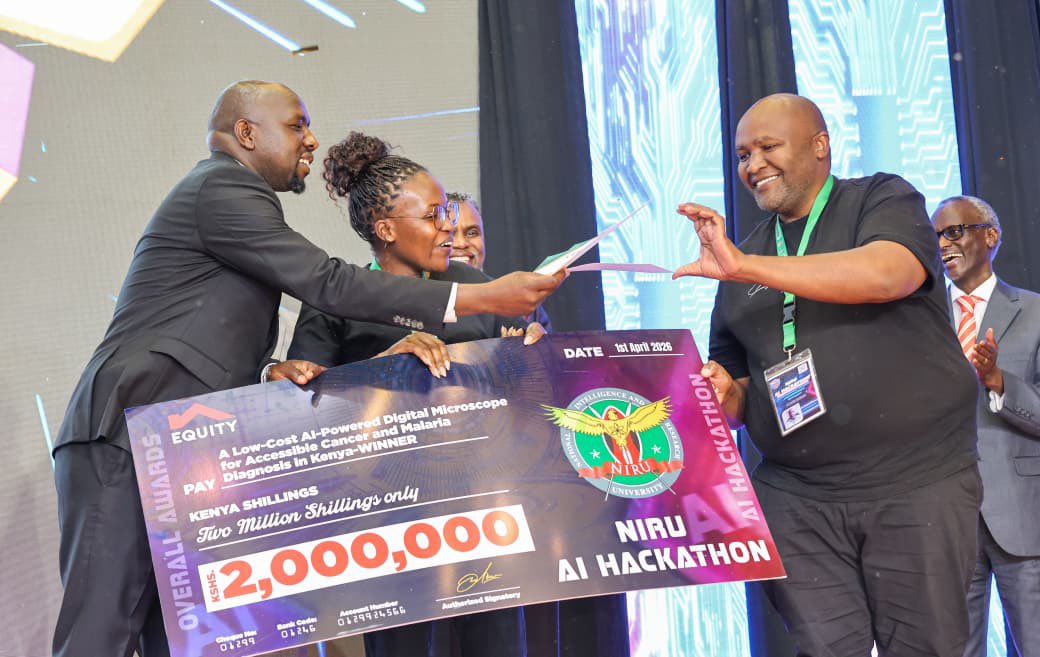
Onesimus Kipchumba Murkomen presents an award to one of the innovators during the NIRU national AI hackathon in Nairobi, recognizing outstanding solutions aimed at strengthening national security through technology.
By Peace Muthoka
NAIROBI, April 1, 2026 — Kenya’s push to integrate artificial intelligence into national security gained fresh momentum as the National Intelligence and Research University (NIRU) crowned top innovators at the end of a high-impact programme.
Interior Cabinet Secretary Onesimus Kipchumba Murkomen presided over the awards, applauding winners of the national AI hackathon while calling for stronger collaboration between government, academia and industry.
He said innovation and technology now sit at the heart of nation-building, economic growth and security.
“National security is no longer limited to territorial integrity and physical threats. It now includes cyber threats, protection of digital infrastructure and economic resilience,” he said.
He added that artificial intelligence is rapidly reshaping how governments deliver services and respond to emerging threats, urging Kenya to embrace the shift to remain competitive.
At the same time, Murkomen emphasized the need to bridge the gap between universities and industry so that innovations move from theory to real-world solutions.
The six-month programme drew massive interest nationwide, with more than 2,500 proposals submitted after the hackathon portal opened in October 2025.
From these, 185 ideas were developed into minimum viable products, while 65 finalists advanced to the final stage.
NIRU Vice-Chancellor James K. Kibon said the initiative reflects Kenya’s growing ability to develop home-grown solutions to complex security challenges.
“We have seen inspiring projects and determined innovators ready to build essential AI solutions,” he said.
Director-General of the National Intelligence Service Noordin Mohamed Haji noted that the innovations could cut reliance on costly imported technologies, saving the country millions.
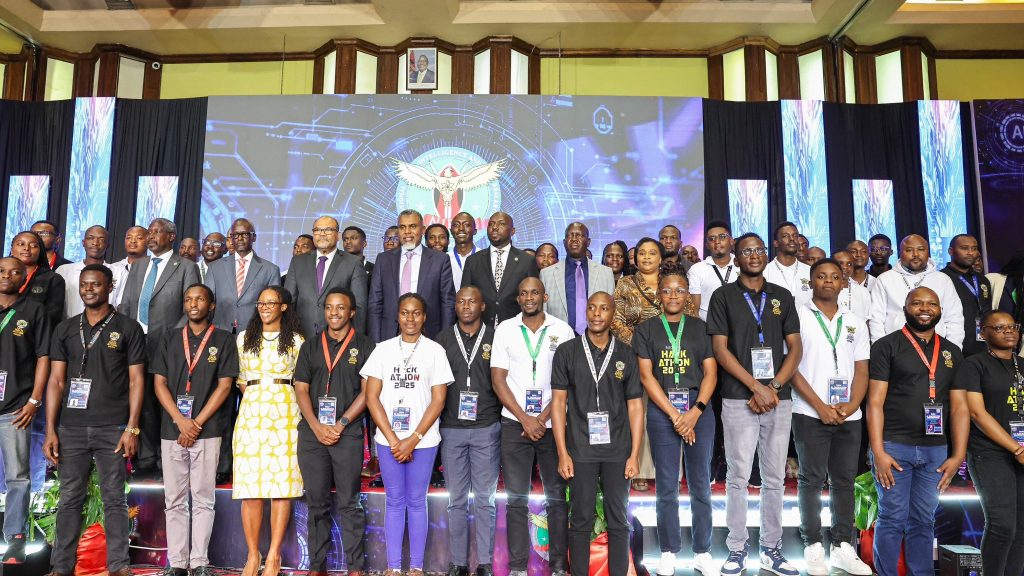
Director of Public Prosecutions Renson M. Ingonga described artificial intelligence as a critical tool for the future, saying the programme exceeded expectations.
Meanwhile, Principal Secretary Shaukat Abdulrazak highlighted AI’s economic potential, noting it is projected to contribute nearly 15 trillion US dollars globally by 2030, with Africa expected to account for about 1 trillion dollars.
He added that Kenya currently invests about 0.8 percent of its GDP in science, technology and innovation, with plans to increase this to 2 percent.
Supreme Court Judge Isaac Lenaola, however, cautioned against the risks linked to AI, including misinformation and misuse, and called for responsible regulation.
Speakers agreed that Kenya has the talent and innovation ecosystem to deliver practical solutions locally. They urged sustained investment and partnerships to ensure ideas move from concept to real-world impact.
The event called for renewed commitment to harness artificial intelligence as a key driver of national security and economic growth.