
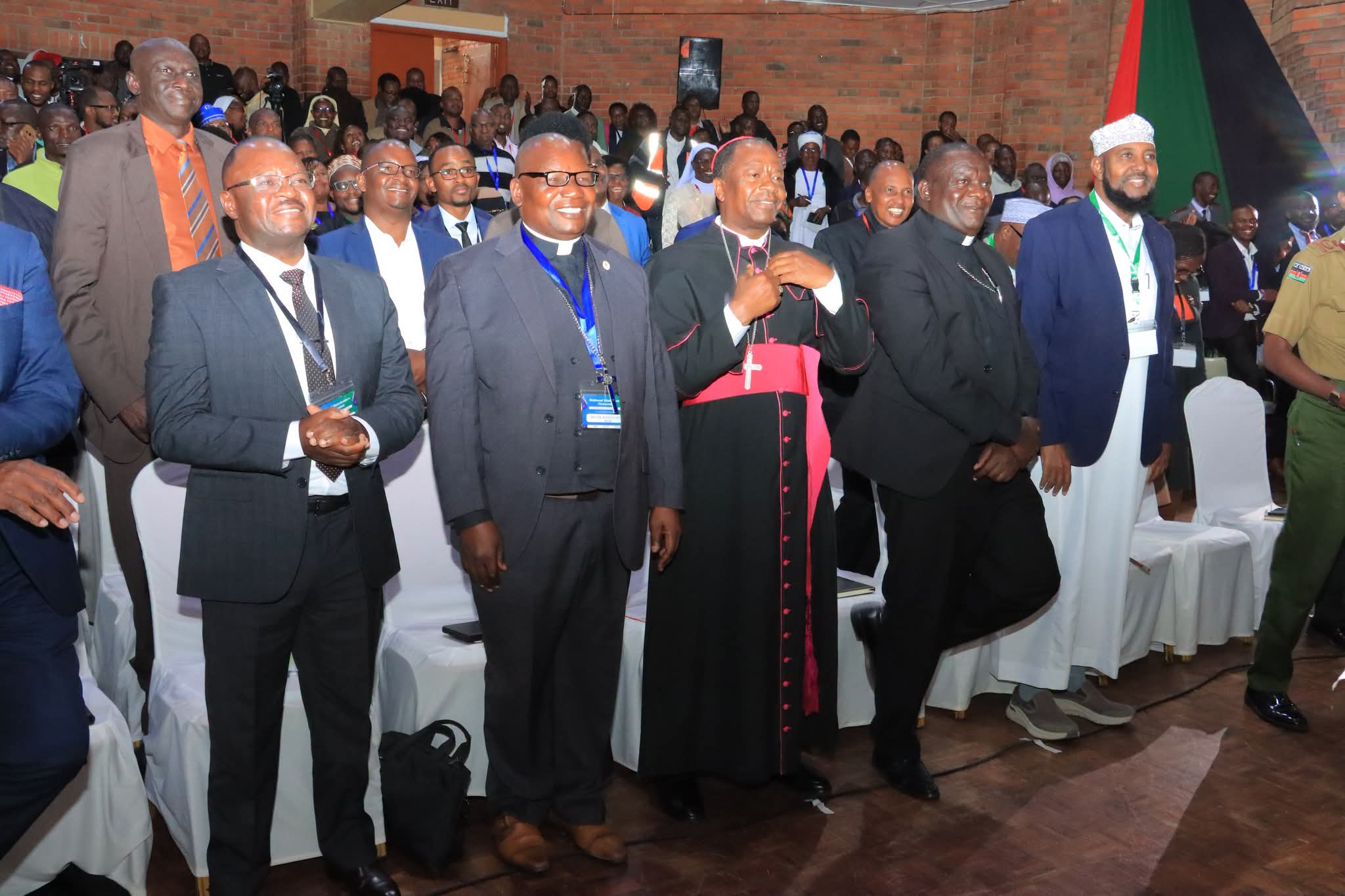
Religious Leaders Sound Alarm Over 2027 Election Violence, Political Bribery
NAIROBI, September 3, 2026 — Religious leaders and civil society organisations have warned of growing political tension ahead of Kenya’s 2027 General Election, urging Kenyans to reject violence, political bribery and attempts to manipulate public institutions.
The warning came after a two-day National Stakeholders Convention held at Ufungamano House in Nairobi on September 2 and 3.
The meeting brought together representatives of religious organisations, constitutional agencies, professional bodies and civil society groups to assess the country’s preparedness for the 2027 elections and discuss ways of preventing violence.
The stakeholders said anxiety was already rising as the country approaches the polls, with memories of violence witnessed during the 1997, 2007 and 2017 elections still fresh.
They identified political violence, abuse of state power, illicit campaign financing, misinformation and the exclusion of young people, women and persons with disabilities as some of the biggest threats to the next election.
Warning over political violence
The religious leaders expressed concern over the continued use of violence and organised groups during political activities.
They said selective policing and political protection of violent groups could undermine peaceful elections and warned that those who finance or organise violence must face the law.
The leaders pledged to campaign for the investigation and prosecution of people who fund political violence, saying the country must deal with those behind violence rather than only arresting or beating up individuals involved in it.
They pointed to recent violence in Homa Bay County as an example of the danger posed by political violence.
‘Do not sell your vote’
The stakeholders also delivered a strong message to voters: reject money offered during political campaigns in exchange for political support.
They said the increasing use of money in Kenyan politics was threatening democracy and allowing wealthy individuals and political financiers to influence elections and government decisions.
The leaders warned that some politicians use money from questionable sources to win votes and later reward their financiers through government contracts.
They urged Kenyans to look beyond campaign handouts and consider the record, character and ability of candidates before voting.
Churches and mosques urged to resist politicians
The religious leaders also raised concern over politicians making donations to religious institutions, saying such contributions could compromise the independence of churches and mosques.
They said religious institutions should not become platforms for politicians seeking public approval or legitimacy.
The umbrella religious bodies pledged to encourage anonymous giving in places of worship and limit the use of religious platforms by political actors.
Fake news and ethnic politics a threat
The stakeholders further warned against misinformation, hate speech and political messages designed to divide Kenyans along ethnic lines.
They said political actors could use false information and “us-versus-them” narratives to turn communities against one another during the election period.
Religious leaders pledged to promote messages of peace and national unity and work with other stakeholders to develop fact-checking mechanisms to help Kenyans distinguish credible information from false claims.
Youth and women still locked out
The convention also raised concern over the low number of young people, women and persons with disabilities in leadership.
The stakeholders said young people below 35 make up about 75 per cent of the population but hold only about four per cent of elected parliamentary positions.
Women make up about half of the population but occupy roughly 23 per cent of National Assembly seats, while persons with disabilities remain severely underrepresented.
The religious leaders pledged to use their networks to encourage more young people, women and persons with disabilities to seek elective and appointed positions.
Call for Kenyans to protect their future
The stakeholders urged Kenyans not to allow fear, intimidation or political handouts to determine their participation in the 2027 elections.
They said citizens must take responsibility for choosing leaders who will protect public resources and serve the interests of the country.
They also warned that accepting money from politicians during elections could contribute to a cycle in which public resources are later used to recover campaign costs or reward political financiers.
The convention concluded with a call for collective action to protect Kenya’s democracy and peace.
The communiqué was signed by Rt Rev Simon Peter Kamomoe of the Kenya Conference of Catholic Bishops (KCCB), Bishop Dr Calisto Odede of the Evangelical Alliance of Kenya (EAK), Sheikh Abdullah Salat of the Supreme Council of Kenya Muslims (SUPKEM), and Rev Dr Elias Agola of the National Council of Churches of Kenya (NCCK).
The leaders said building a better Kenya was not the responsibility of politicians alone, but of every citizen.
With 2027 approaching, they urged Kenyans to reject violence, refuse to sell their votes and actively participate in protecting the country’s democratic future.