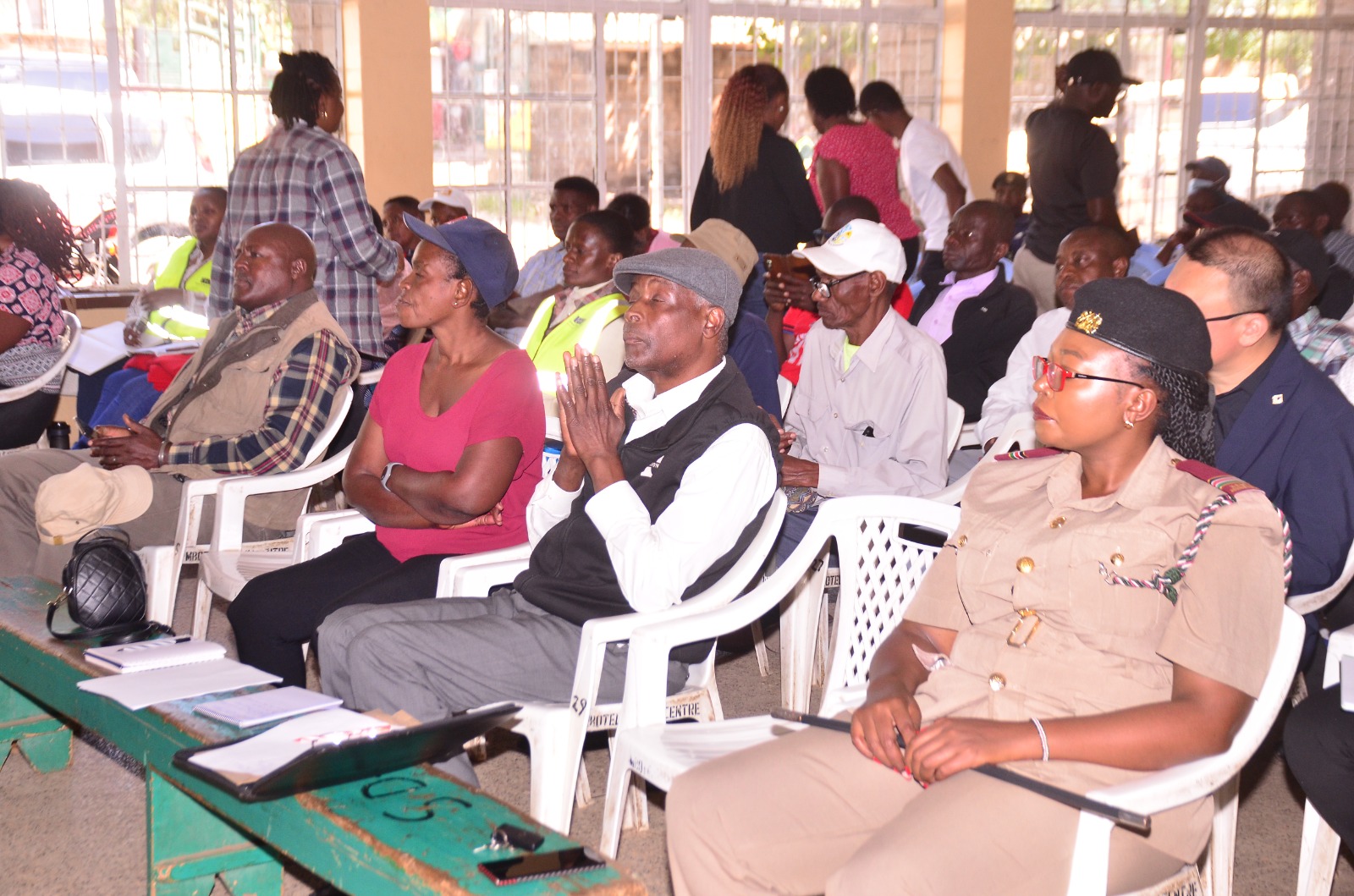
Participants follow the proceedings at the Mbotela Social Hall
By Jones Kimanzi
Nairobi, January 26, 2026: Nairobi’s ageing water pipes will soon get a quiet but powerful upgrade as the Athi Water Works Development Agency rolls out a trenchless rehabilitation project across the city.
The agency unveiled the plan to residents at Mbotela Social Hall in Makadara Sub-County, marking the soft launch of the Central Nairobi Water Network Rehabilitation Project. The KES 1.6 billion project begins in February 2026 and will run until November 2027.
Unlike past upgrades that dug up roads and disrupted lives, this project takes a different path. AWWDA will use Horizontal Directional Drilling, a technology that installs pipes underground without opening trenches on the surface.
The method allows engineers to replace old pipes while roads remain open and businesses continue operating. As a result, residents avoid dust, noise, and blocked access to homes and shops.
AWWDA Sociologist Mohammed Koech compared the process to modern medicine. He said the city can now replace failing water arteries without damaging its surface.
The project targets worn-out asbestos-cement pipes that often burst and contaminate water. It also aims to reduce water losses and improve pressure balance across the city.
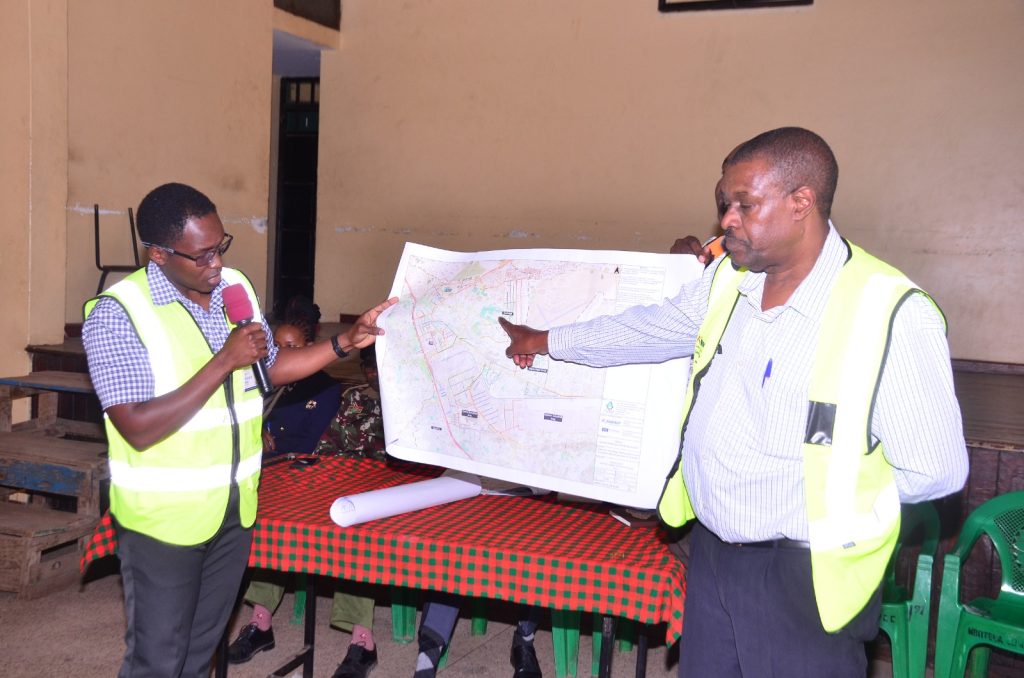
Project engineers explain to the participants the route and reach of the new water pipeline during the public engagement
Deputy County Commissioner Philip Koima said the project places people at the centre of implementation. He stressed that safety, access, and livelihoods remain top priorities throughout construction.
To support this promise, AWWDA has introduced a Livelihoods Restoration Plan for small traders and informal businesses. The agency has also appointed a community liaison consultant and set up a formal grievance system.
These measures aim to protect daily income earners who depend on steady foot traffic in Nairobi’s busy neighbourhoods.
Beyond pipe replacement, the project supports long-term water security. It will connect seamlessly with the Northern Water Collector Tunnel, which supplies 140,000 cubic metres of water daily to Nairobi and nearby counties.
The French Development Agency is funding the rehabilitation, strengthening Kenya’s push for sustainable urban infrastructure.
During the forum, residents asked questions and received clear timelines and safeguards. Many welcomed the approach, saying it showed respect for communities often left out of major projects.
As work begins, AWWDA says the drilling may stay unseen, but the results will speak loudly. The agency believes the project will restore trust, improve reliability, and show how cities can renew themselves without disruption.