
African Indigenous Pastoralists Find One Voice in Nairobi to Defend Land, Climate Justice and Africa’s Food Future
By Peace Muthoka
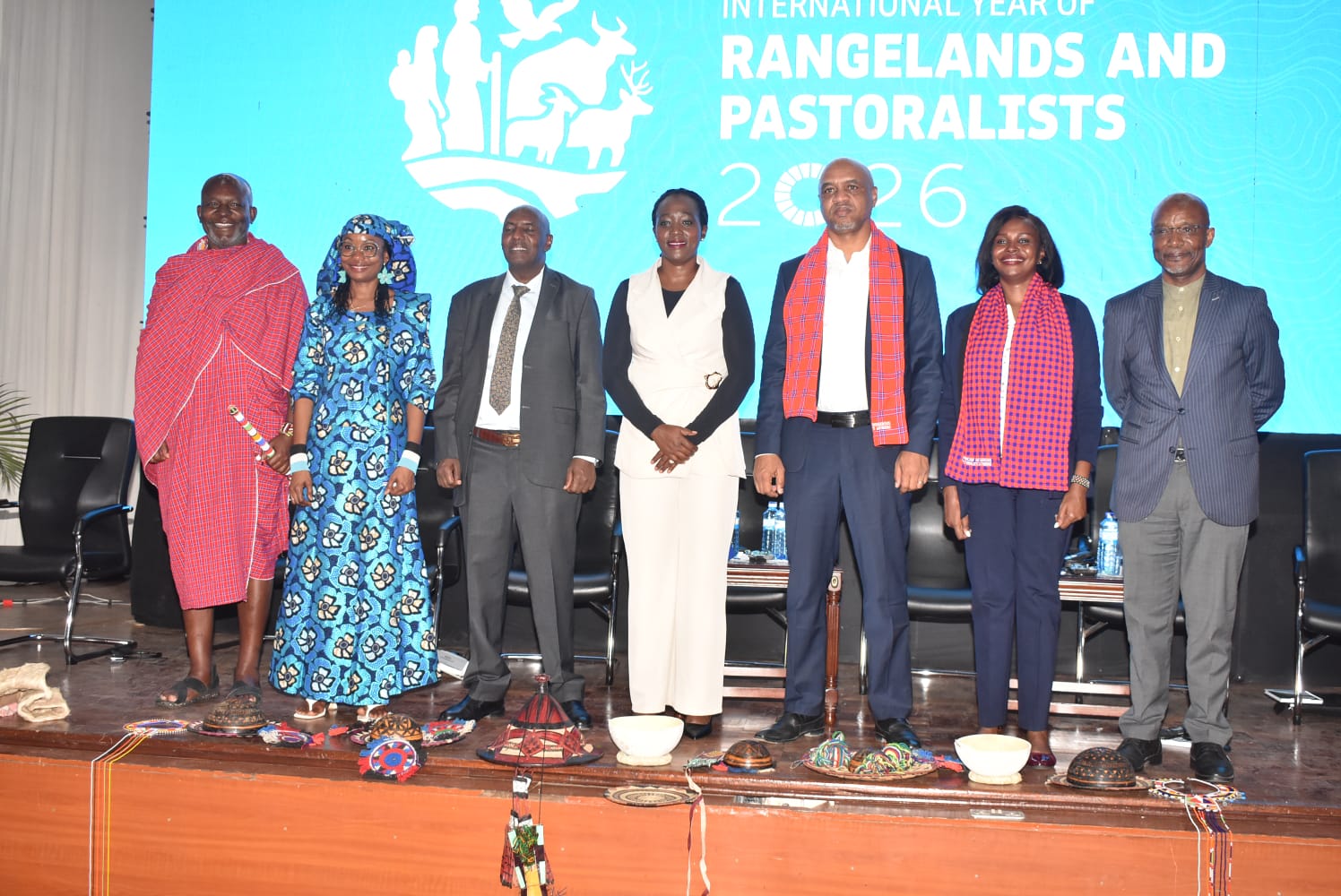
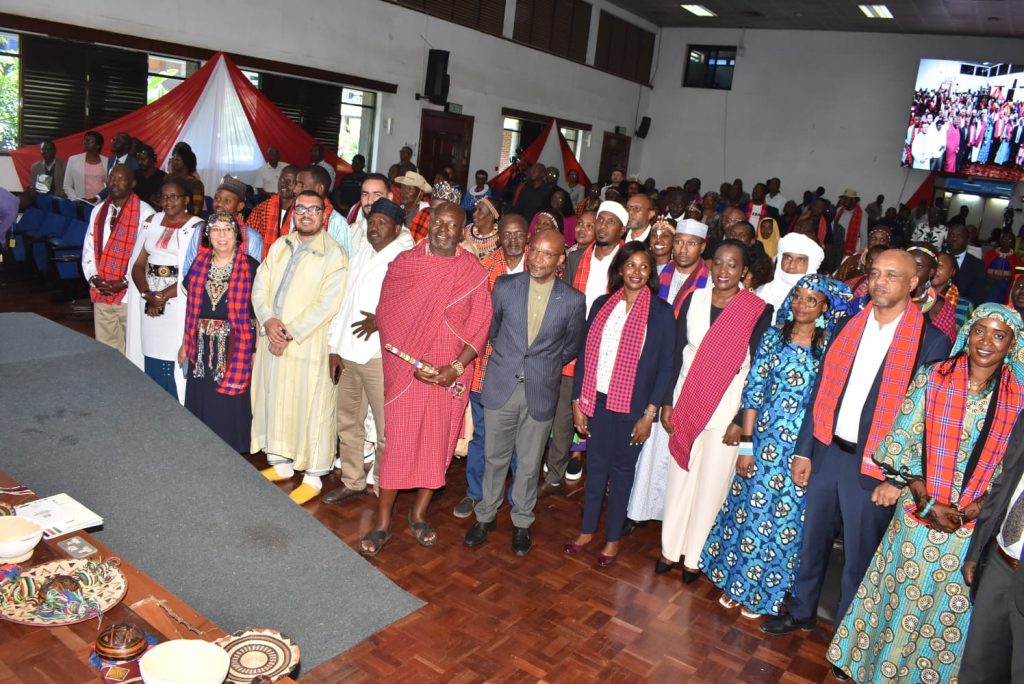
African Indigenous Pastoralists from North, West, Central, Southern and East Africa have converged at the Kenya School of Monetary Studies to shape a common continental agenda ahead of the International Year of Rangelands and Pastoralists (IYRP) and the UNCCD COP17 summit in Mongolia. Convened by IMPACT and AFPAT, with support from the Government of Kenya and regional partners, the gathering brought together elders, women, youth, government leaders and grassroots voices to demand climate justice, secure land rights and recognition of pastoralism as a sustainable livelihood and a foundation of Africa’s food systems.
Malih Ole Kaunga, Director of IMPACT said that, “We are here because we are organizing ourselves,” he said, his voice steady but firm. “We are learning from all the pastoralists in the African region because this year is the International Year of Rangelands and Pastoralists.”
Ole Kaunga spoke not only as an organizer but as a witness to decades of neglect. He reminded the room that pastoralists have remained on the margins for far too long, despite caring for some of Africa’s most fragile ecosystems. “For many years, pastoralists have been marginalized, neglected and pushed to the periphery,” he said. “Yet we are custodians of wildlife, stewards of arid and semi-arid lands and contributors to national heritage.”
He outlined the gathering’s core messages with clarity. “This is about climate justice. It is about the right to land. It is about traditional knowledge. It is about the future of pastoralism,” Ole Kaunga said. He stressed that pastoral communities play a central role in food systems because they “know how to manage lands and ecosystems that are very fragile.”
Still, the challenges remain heavy. Ole Kaunga pointed to recurring droughts sweeping across Kenya and the region. “Every time there are gains, drought diminishes those gains,” he said. “That is why pastoralism must be fully recognized as a sustainable livelihood system and respected.”
Even so, he acknowledged progress. He cited Sessional Paper No. 8 on Northern Kenya and other arid lands and a recently passed policy roadmap for ethnic minorities, indigenous and marginalized communities. “These are steps in the right direction,” he said, before adding, “there is still a lot the government needs to do, especially on land security, ecosystem restoration and meaningful support.”
Representing the Kenyan government, Harsama Kello, Principal Secretary for the State Department for Arid and Semi-Arid Lands and Regional Development, spoke with personal conviction. “For many years before and after independence, pastoralist communities were treated as second-class citizens,” he said. “Their practices were despised and seen as primitive.”
Kello, who hails from Marsabit, spoke not just as a policy maker but as someone shaped by pastoral life. “The present government has changed that situation,” he said. “The lives of pastoralist communities have improved.”
He pointed to increased representation of pastoralists in senior government positions as a sign of that shift. “I am one of them,” he said. “My appointment recognizes the rights of pastoral communities, just like many other appointments in this government.”
Yet his tone turned somber when he spoke about climate change. Between 2020 and 2022, he said, pastoralists lost more than 2.5 million head of livestock. “Droughts have seriously affected our people,” Kello said.
In response, he explained, the government has invested in resilience. Boreholes now dot previously dry landscapes. Dams serve both households and livestock. Education access in ASAL counties has improved. “We are trying to correct the situation,” he said.
Kello emphasized that recognizing community land has strengthened nomadic pastoralism. “We are protecting community lands from encroachment and land grabbing,” he said. He also highlighted improved cross-border movement under IGAD and East African Community frameworks, allowing pastoralists to migrate peacefully in search of pasture and water.
At the same time, he urged economic diversification. “We are encouraging agro-pastoralism,” Kello said, revealing plans to develop mega dams in 23 ASAL counties to support irrigation. “This will help communities cope with climate change.”
As government voices spoke of policy, Hindou Oumarou Ibrahim brought the room back to the human story of movement, identity and survival. An indigenous nomadic woman from Chad and a co-organizer representing AFPAT, Ibrahim described a life defined by motion. “My people are still 100 percent nomadic,” she said. “We move across six countries.”
Her words carried both pride and urgency. “My people are the legacy of land protection and food security,” she said.
She explained why Kenya felt like the right place to convene the continent’s pastoral voices. “Kenya has many indigenous pastoralist communities that can represent the rest of Africa,” Ibrahim said. “That is why we chose to be here.”
She painted a vivid picture of the gathering’s diversity. “We have English speakers, French speakers, Arabic speakers,” she said. “We have camel elders, sheep elders, cattle elders. We have women, youths and elders.”
For Ibrahim, inclusion meant more than attendance. It meant respect for knowledge often ignored. “This is where we discuss how to restore land, protect water and ensure healthy food on our tables,” she said. “Food that comes from our communities, not contaminated food.”
Looking ahead to COP17 in Mongolia, Ibrahim stressed the need for a unified African voice. “We want one key message that we can carry together,” she said. “Decisions already exist at the international level. Now we want those decisions to become national policies that benefit communities.”
She also spoke passionately about climate finance. “It does not matter if our grandmothers never went to school,” she said. “They know how to manage land and cattle. They deserve direct access to finance.”
Her voice rose as she challenged harmful narratives. “Pastoralists are not enemies of the environment,” Ibrahim said. “We are not enemies of security. We live in harmony with nature. We are the solution. We are the future.”
The strongest political endorsement came from Defence Cabinet Secretary Soipan Tuya, the chief guest at the event. She pointed to concrete steps taken to address historical land injustices, including the return of Amboseli National Park’s management to Kajiado County.
“Justice is not only about future policies,” Tuya said. “It is about correcting the wrongs of the past.”
She described the move as a response to long-standing petitions from the Maasai community and a recognition that indigenous custodians protect wildlife best. “Those who live closest to wildlife are not enemies of conservation,” she said. “They are its first and most vital defenders.”
Tuya also highlighted growing indigenous representation in government. “The voice of indigenous peoples is now louder in the halls of power,” she said. She cited pastoralists serving as cabinet secretaries, principal secretaries and senior officials, guided by the principle of “nothing for us without us.”
As Kenya prepares for COP17, she urged stronger partnerships. “Let us move together,” Tuya said. “Between government, civil society and the private sector. Only then can we achieve sustainability.”