
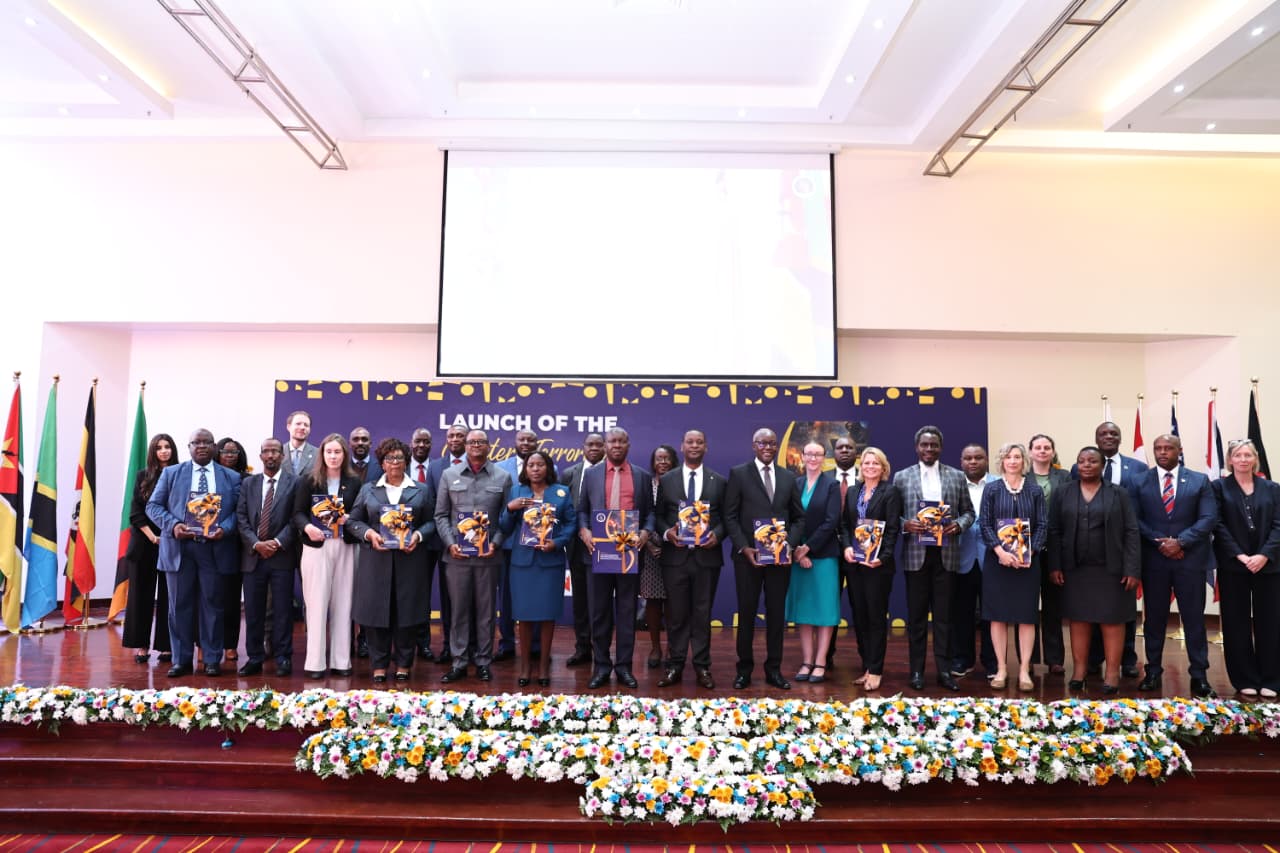
Kenya Launches Landmark Counter Terrorism Prosecution Curriculum to Strengthen Rule of Law
By Peace Muthoka
Nairobi, February 23, 2026 — Kenya has taken a bold step in the fight against terrorism after the Office of the Director of Public Prosecutions officially launched the Counter Terrorism and Counter Financing of Terrorism Prosecution Curriculum.
The curriculum now becomes the cornerstone guide for investigating and prosecuting terrorism-related cases across the country. More importantly, it signals Kenya’s determination to confront violent extremism while firmly upholding the Constitution.
Director of Public Prosecutions Renson Mulele Ingonga, CBS, OGW, presided over the launch and described the curriculum as a defining moment for the justice sector. He said the manual will strengthen prosecutorial capacity in one of the most complex and sensitive areas of law.
“Terrorism cases demand technical expertise, strong evidence handling, and strict adherence to constitutional safeguards,” Ingonga said. “This curriculum ensures our prosecutors remain guided by fairness, transparency, and public interest.”
He emphasized that prosecution is not merely about securing convictions. Instead, it is about ensuring justice is done fairly and in line with Kenya’s constitutional values. According to him, the new framework will standardize how terrorism and terrorism financing cases are handled nationwide.
At the same time, representatives from the Judiciary reaffirmed their support for the initiative. Speaking on behalf of Chief Justice Martha Koome, Lucy Njuguna noted that the ODPP plays a central and independent role in Kenya’s justice architecture.

She observed that terrorism presents unique evidentiary and procedural challenges. Moreover, financing networks often operate through hidden and sophisticated systems that require sharp financial intelligence and meticulous legal standards.
“This curriculum reflects foresight, institutional maturity, and a deep commitment to safeguarding our nation under the rule of law,” she said.
She further pointed to the establishment of the Kahawa Law Courts as a specialized court for terrorism and related offences. The court, she explained, enhances expertise, efficiency, and consistency in handling complex security cases. Through targeted judicial training and improved infrastructure, the Judiciary aims to facilitate speedy trials without compromising fairness.
Meanwhile, international partners hailed the curriculum as a regional milestone.
A representative of the United States government revealed that the manual took 15 prosecutors three years to complete. The United States provided significant funding to support its development.
“This is likely the only curriculum of its kind in Africa,” the representative said. “It reflects our shared commitment to combat terrorism while upholding justice.”
She added that competent, speedy, and fair trials demonstrate respect for humanity and the rule of law. According to her, effective prosecutions send a strong message that terrorism-related crimes will face serious legal consequences.
Similarly, Rose Cave, Deputy High Commissioner at the British High Commission Nairobi, described the launch as a major step forward for Kenya and the wider region.
She noted that the curriculum stands out not only for its scale but also for its depth and practical value. Designed with case studies, scenario-based exercises, and applied legal analysis, the manual aims to shape day-to-day prosecutorial practice.
“What makes this curriculum truly groundbreaking is its strong focus on countering terrorism financing,” she said. “This is an evolving threat that demands specialized skills.”
Cave commended the ODPP working group for balancing heavy caseloads while dedicating evenings and weekends to develop the document. She also underscored that the initiative aligns with the UK-Kenya Strategic Partnership and strengthens the entire criminal justice chain, from investigation to prosecution and detention.
Beyond policy statements and partnerships, the launch carried a human message. Speakers consistently stressed that the fight against terrorism must never erode the very constitutional order it seeks to defend.
Under the framework of the National Council on the Administration of Justice, justice sector actors pledged to continue coordinating efforts. They agreed that terrorism cannot be addressed in isolation. Instead, it requires shared planning, mutual respect for institutional mandates, and accountability at every stage.
As the curriculum rolls out across the country, prosecutors will begin using it in training and in active case preparation. In doing so, they will breathe life into the document through their actions in courtrooms and communities.