Mongabay Launches Swahili Platform to Expand Conservation Reporting
By Peace Muthoka
Mongabay, an international conservation news outlet, has officially launched its Swahili platform targeting more than 200 million speakers across East Africa and millions more around the world.
The hybrid event themed “Truth in the Age of Noise: Conservation Journalism, Disinformation and the Promise of Artificial Intelligence” took place in Nairobi. Nearly 200 participants attended, including journalists, conservationists, scientists, communicators, indigenous community representatives, and officials from the United Nations Environment Programme.
Speaking during the launch, David Akana, Director of Programs for Mongabay Africa, emphasized the importance of using local languages to communicate environmental issues in ways communities understand.
He said that while English remains important in the region, local languages allow communities to engage more effectively with information that affects their daily lives.
“This new platform is an important step toward making environmental and climate reporting more accessible in one of Africa’s most widely spoken languages,” he said. “It will strengthen conversations around nature, conservation and sustainable development across East Africa.”
Mongabay’s reporting focuses on the relationship between people and nature, covering issues such as biodiversity, climate change, pollution, land degradation and oceans, and how they affect communities. Its African team also highlights solutions while holding governments and institutions accountable for their environmental commitments.
During the event, former BBC journalist Ann Ngugi said information loses meaning if it does not reach the people who need it most.
She noted that using widely understood languages such as Swahili allows vulnerable communities to access climate information on time and better prepare for disasters and environmental changes.
“Information justice means that a farmer, a motorbike rider, a pastoralist and a fisherman should have the same access to climate information as a scientist anywhere in the world,” she said. “That is the opportunity offered by Mongabay Swahili.”
Ngugi added that environmental reporting should simplify technical terms such as carbon credits, ecosystem degradation and biodiversity loss so communities can understand and act on the information.
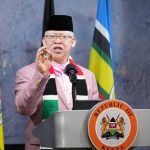
The launch was presided over by .Mr Stephen Isaboke, EBS, Principal Secretary, State Department for Broadcasting and Telecommunication.
In a speech read on his behalf by Temesi Mukani, Secretary for Information and Broadcasting, Tanui highlighted the importance of credible, science-based journalism in helping the public make informed decisions in the digital age.
He noted that Africa now has more than 400 million social media users, creating fertile ground for the spread of disinformation.
“This makes credible journalism more important than ever, especially in languages widely understood by communities in cities, informal settlements and the grassroots,” he said.
Tanui added that the launch of the Mongabay Swahili platform marks a significant step in strengthening environmental journalism in the region.
“Language determines who can access knowledge and participate in public conversations. Reporting environmental issues in Swahili helps bring science and biodiversity issues closer to communities most affected,” he said.
Mukani also highlighted the growing influence of technology and artificial intelligence in the production and distribution of information.
He said that although artificial intelligence can be misused to spread manipulated or misleading content, it also offers powerful tools for fact-checking, translation, data analysis and wider dissemination of knowledge.
“When used responsibly, technology can significantly strengthen the quality and reach of environmental reporting,” he said.
Also speaking at the event, Andy Kagwa, Operations Editor at Standard Group, urged journalists to embrace technology, particularly artificial intelligence, because it is already shaping communication.
However, he warned that AI can also generate misleading narratives, images and fake stories aimed at attracting online clicks.
“AI will shape the future of journalism. It will not replace journalists, but the core values of journalism must remain strong,” he said.
Kagwa stressed that journalists must continue verifying information and remain accountable to their audiences.
“Even as we pursue speed and accuracy, editors and reporters must ensure that what we publish is credible,” he said.
Speakers agreed that traditional media still plays a crucial role in shaping public understanding of environmental and conservation issues. However, they noted that media organizations must adapt to the changing digital landscape while upholding responsible journalism.
Besides Swahili, Mongabay publishes content in several other languages, including English, Indonesian, Spanish, French, Hindi, Portuguese and Bengali.