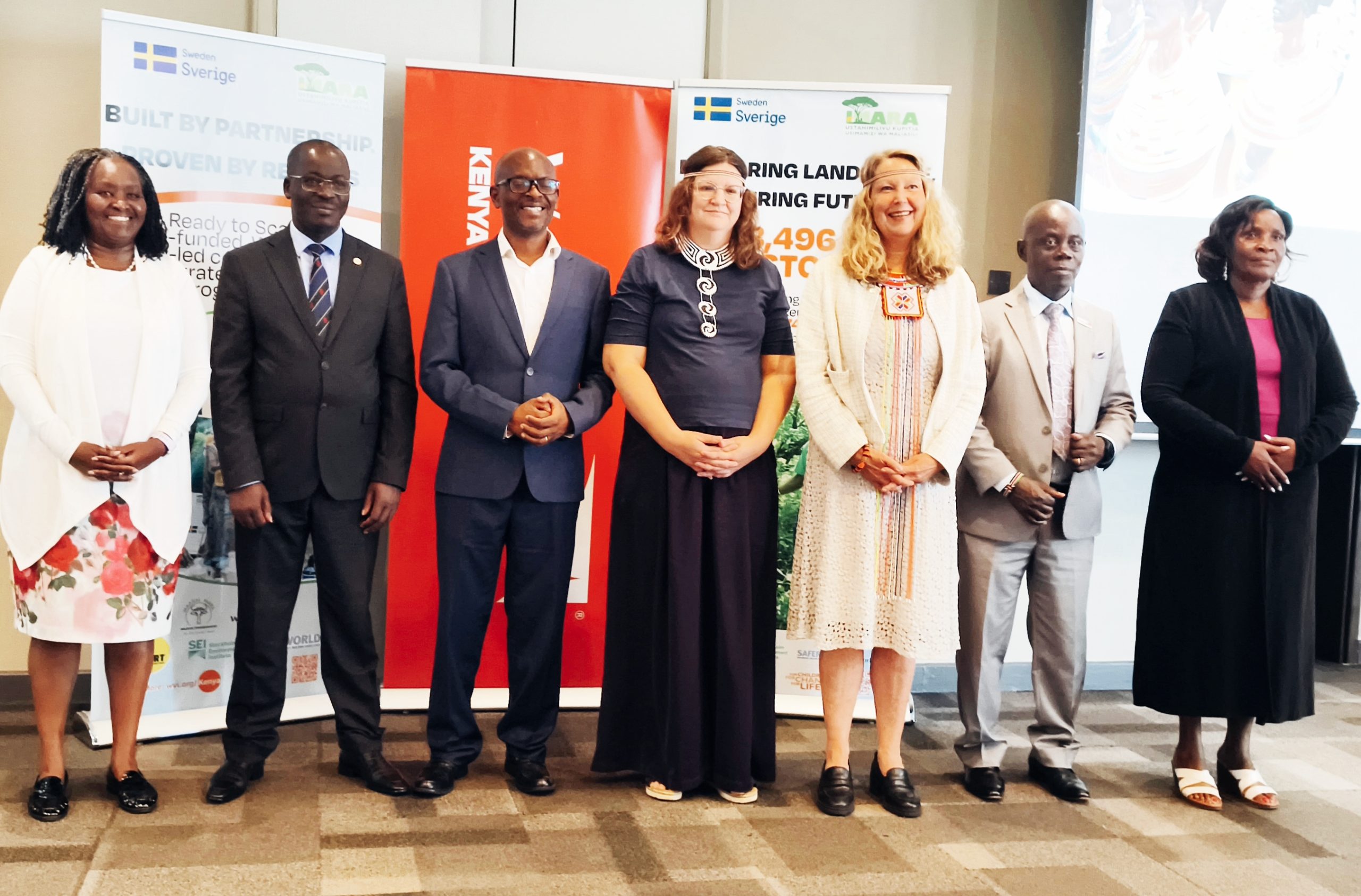
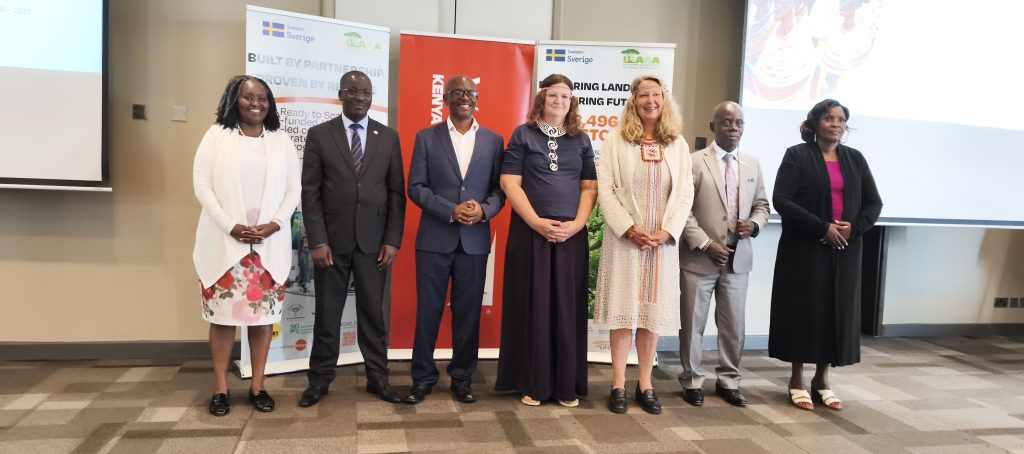
Officials and partners pose for a group photo during the close-out of the IMARA programme in Nairobi, marking seven years of collaboration that restored over 23,000 hectares of land and improved livelihoods across nine ASAL counties.
By Peace Muthoka
Nairobi, April 15, 2026 — A seven-year climate resilience programme funded by the Government of Sweden has transformed livelihoods across Kenya’s arid and semi-arid lands, restoring over 23,000 hectares of degraded land and reaching nearly 73,000 people.
The Integrated Management of Natural Resources for Resilience in ASALs (IMARA) programme, implemented by World Vision Kenya with support from the Swedish International Development Cooperation Agency and co-funding from World Vision Australia, has been running since 2018 in Baringo, Elgeyo Marakwet, Isiolo, Laikipia, Marsabit, Narok, Samburu, Turkana and West Pokot.
Delivering the keynote address, Marie Ottosson, Head of Development Cooperation at the Embassy of Sweden in Nairobi, said the initiative has delivered tangible results on the ground.
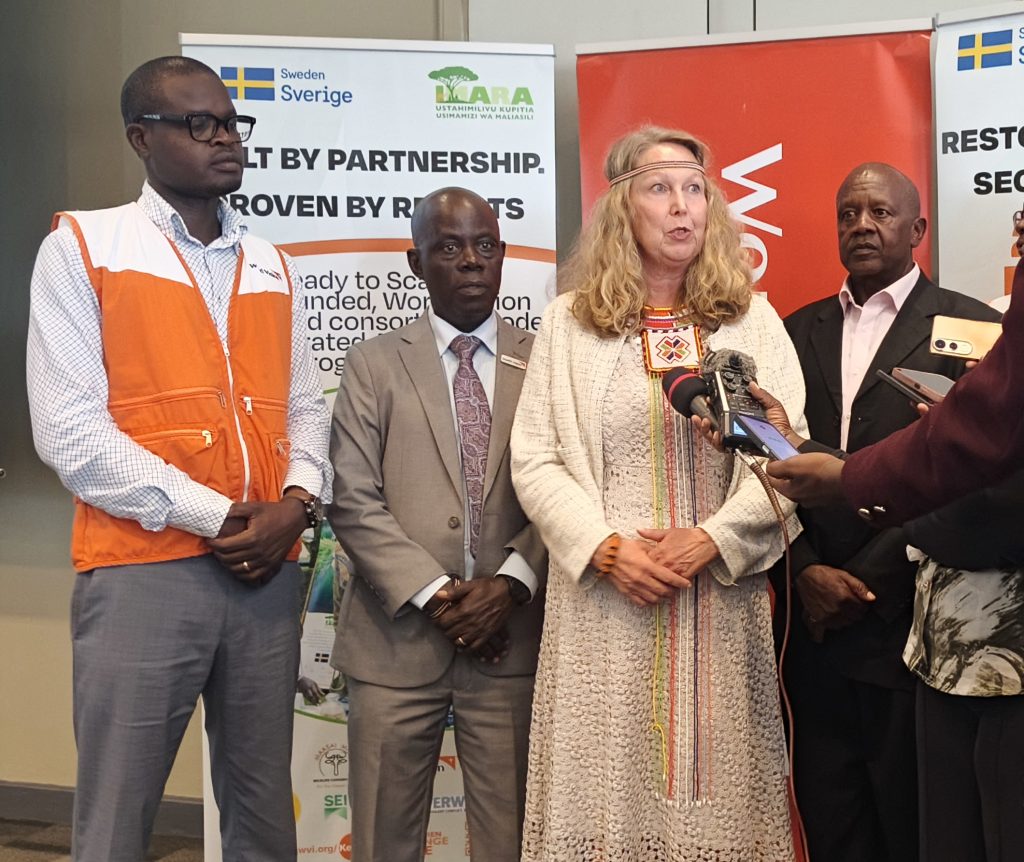
“This programme was set up to increase the resilience of marginalized households to climate-related shocks through diversified livelihoods and improved natural resource management,” she said.
She noted that the outcomes reflect years of sustained collaboration among partners, governments and communities.
“We have seen thousands of households improve their livelihoods, with more than 93 percent reporting increased income. That is a remarkable achievement,” Ottosson added.
She also pointed to gains in environmental restoration and peacebuilding, noting that the programme exceeded its initial land restoration targets and strengthened community-led conflict resolution structures.
At the same time, she emphasized the critical role of young people in sustaining progress.
“Young people are the drivers of change. They are the innovators and protectors of their land and heritage. The future of these landscapes depends on their leadership and commitment,” she said.
Meanwhile, Susan Brit from the State Department for Forestry called for stronger partnerships to scale up the gains.
“We ask the private sector to scale up investments in restoration and value chains, and all actors to strengthen coordination across sectors and align with the national framework,” she said.
She added that the government remains committed to creating an enabling environment for inclusive and resilient forest and landscape restoration.
“We have developed a number of policies, initiatives and strategies. I encourage stakeholders to explore the vast opportunities within the forestry sector, which contribute significantly to the country’s economic development,” Brit noted.
She further commended communities and partners, saying the future of resilience lies in both the land and the people who manage it.
At the same event, Dr Heglon Kitawi said the programme has demonstrated that resilience in dryland areas must be approached holistically.
“IMARA was built on a simple but powerful premise that resilience in dryland communities requires the environment, economy and peace to be addressed together, not in isolation,” he said.
According to Kitawi, the programme restored 23,496 hectares of land and supported the survival of 1.24 million trees, while enabling households to shift from crisis response to long-term planning.
“Families are now investing in education, enterprises and productive assets. Nearly 78 percent of households are participating in savings platforms, with about 77 percent of members being women,” he added.
He also lauded the Government of Sweden for its long-term commitment, noting that sustained funding enabled deeper, system-wide change.
Beyond environmental gains, the programme delivered strong economic results. The proportion of households reporting increased income rose sharply from 29 percent at the start to over 93 percent at the end.
This growth has been driven by diversified, nature-based enterprises such as honey, coffee, gum arabic, poultry and mango value chains.
In addition, 428 community savings groups were established with a combined portfolio of more than USD 88,000, helping families build financial resilience and avoid distress livestock sales during droughts.
Peacebuilding efforts also paid off, with livestock theft declining by 78 percent and areas like the Teren Triangle recording a full year of peace.
Access to water improved significantly as well, with 69 water projects completed and distances to water sources reduced from about two kilometres to as little as 200 metres in some areas.
As the IMARA programme comes to an end, stakeholders say it offers a proven model for building resilience in Kenya’s drylands, while calling for sustained investment and partnerships to scale up the gains.