New Science Lab and Dignity Packs Bring Hope to Kibera Learners
By Peace Muthoka
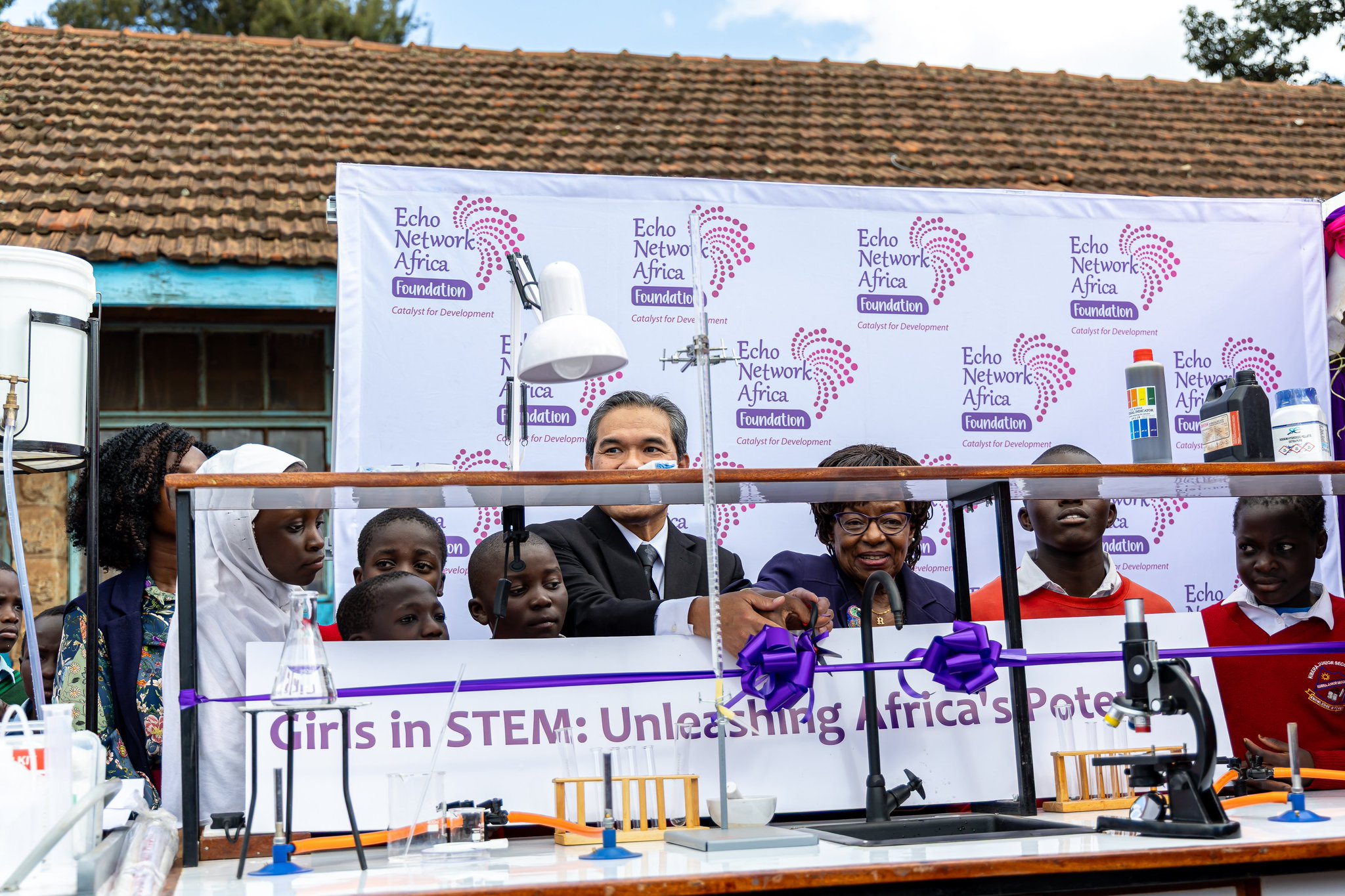
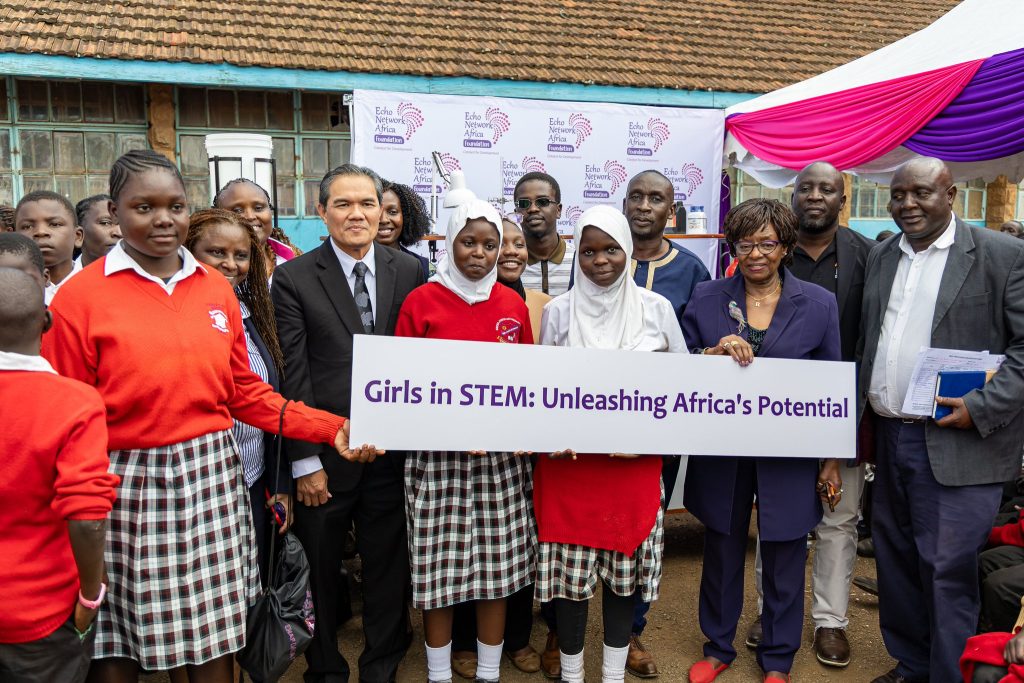
Kibera, 28th May 2026 – Students at Kibera Primary and Junior School are set to experience improved science learning and better menstrual health support following the unveiling of a mobile science laboratory and distribution of dignity packs by the Echo Network Africa Foundation (ENAF) in partnership with the Malaysian High Commission in Kenya.
The initiative, launched on Thursday during the global observance of Menstrual Hygiene Day, marked the official handover of ENAF’s 18th mobile science laboratory in Kenya. The project aims to strengthen practical learning under the Competency-Based Education (CBE) curriculum while addressing challenges that hinder girls from staying in school.
Speaking during the handover ceremony, Malaysian High Commissioner to Kenya Ruzaimi Mohamad said the mobile laboratory would help bridge learning gaps by giving students access to practical science lessons that many had previously missed.
“Before this, many students could not fully understand science because they did not have a proper laboratory. We hope this mobile science lab will help them better understand science, which is very important for their future success,” said Mohamad.
He noted that science education plays a crucial role in shaping future careers, adding that access to practical learning remains essential in helping students compete equally regardless of their background.
At the same time, ENAF Chief Executive Officer Dr. Jennifer Riria said many schools across the country continue to face enormous pressure in implementing the new curriculum due to inadequate resources, poor infrastructure and teacher shortages.
“Nobody is against the curriculum, but the challenges are many. Schools are struggling with inequality in terms of equipment and infrastructure. This is where we, as a community, must come together and do more,” said Dr. Riria.
She emphasized that quality education cannot be achieved without adequate funding, trained teachers and proper learning facilities.
“There is no way a school can run effectively without adequate money, enough teachers and continuous training to keep up with what we want to achieve in education today,” she added.
Besides supporting science learning, the event also focused on menstrual hygiene through the distribution of dignity packs containing sanitary towels, soap, oil and undergarments to schoolgirls.
Dr. Riria said period poverty remains one of the hidden challenges affecting girls’ education, revealing that some students are forced into risky situations just to access sanitary products.
“It came to us as a shock that there is something called ‘sex for pads.’ Some girls are exposing themselves to dangerous situations simply because they cannot afford sanitary towels,” she said.
She explained that many girls miss nearly five days of school every month due to menstruation, making it difficult for them to keep up with learning.
“We want girls to stay in school and continue learning with dignity. These packs are meant to help end the struggles many girls go through every month,” she said.
Furthermore, Dr. Riria called for stronger partnerships between communities, organizations and development partners to support schools facing resource shortages.
“There is still so much to be done. We cannot do this alone. Kenyans must come together and support our schools and children,” she said.
The ENAF CEO also raised concern over student safety in schools following recent fire tragedies reported in learning institutions, describing the loss of children as heartbreaking.
“It is painful to lose children through fire or any tragedy in school. In a modern society, this should not happen. We need systems and infrastructure that protect children,” she said.
She urged the government to ensure school dormitories meet proper safety standards, including emergency exits and adequate supervision to avoid preventable disasters.
Kibera Primary and Junior School Headteacher Samuel Onyango welcomed the support, saying the school’s population of about 1,800 learners stands to benefit greatly from the initiative.
He noted that many girls in the school struggle to access sanitary towels, while supplies occasionally received from the Ministry of Education remain insufficient.
“At times we get support from the ministry, but it is never enough. That is why we are very grateful whenever partners come in to support our learners,” Onyango said.
While acknowledging government efforts in supporting the Competency-Based Education system through teacher training, Onyango said staff shortages in junior secondary remain one of the biggest challenges schools continue to face.
“The major challenge, especially after learners moved to junior secondary, has been the lack of enough teachers to handle them,” he said.
The partnership between ENAF and the Malaysian High Commission marks a growing effort to tackle education inequality, strengthen STEM learning and ensure vulnerable learners, especially girls, remain in school despite economic and social barriers.