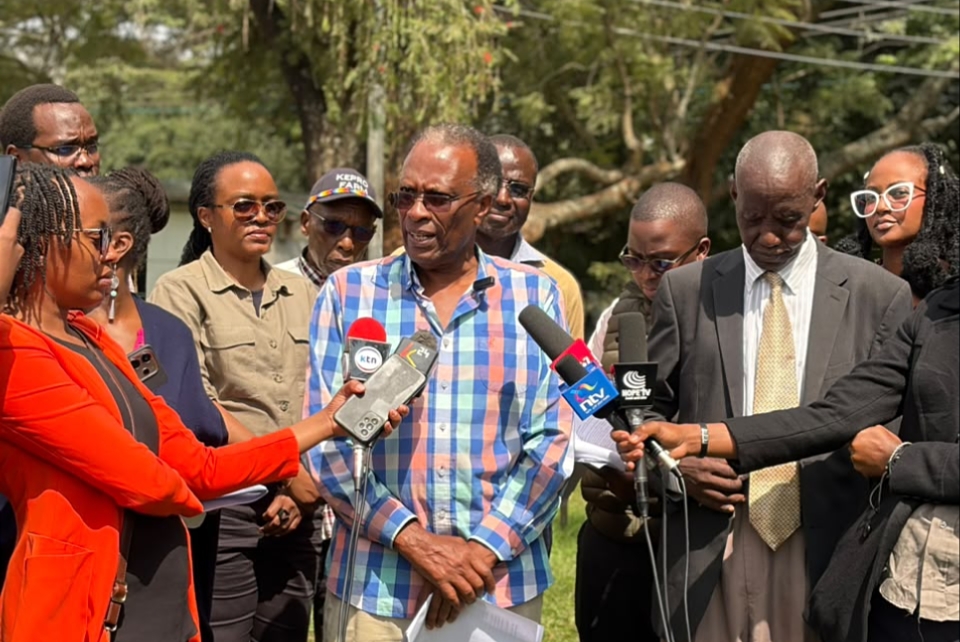
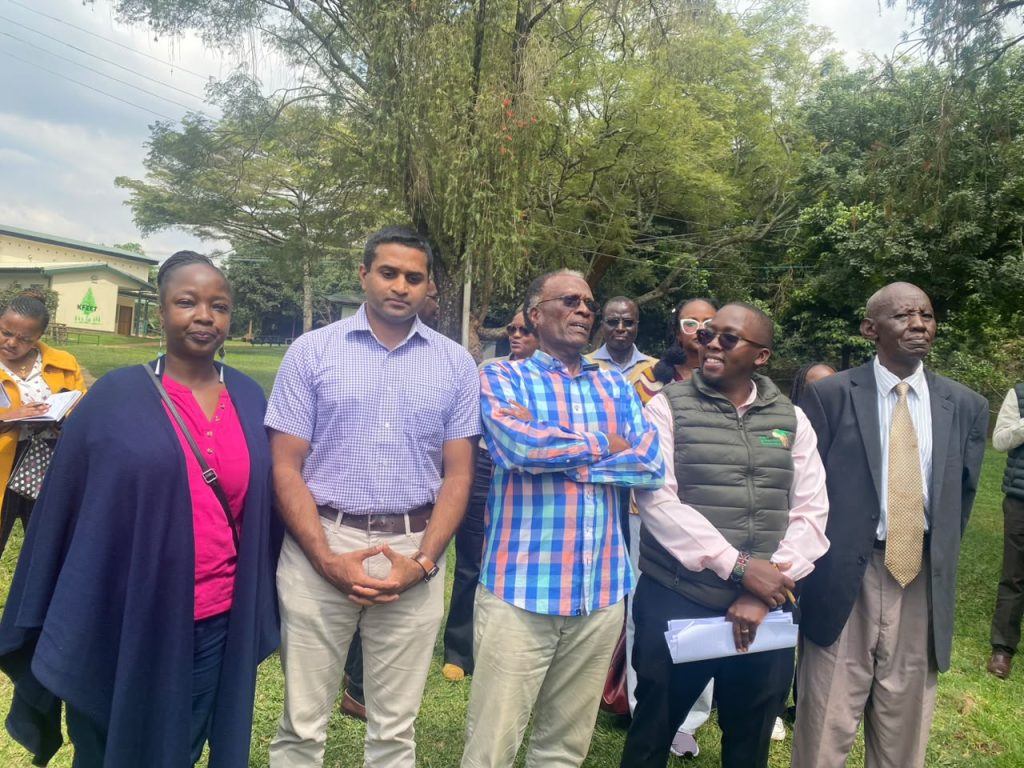
Friends of Karura Forest Prof. Karanja Njoroge (Centre) addressing the media in Nairobi on July 9, 2026.
By Peace Muthoka
NAIROBI, July 9, 2026 — Environmental conservation groups have called on the government to stop allocating public forests and green spaces for infrastructure and commercial developments, warning that Kenya’s ambitious campaign to plant 15 billion trees by 2032 will lose its meaning if the country’s remaining indigenous forests continue to disappear.
Addressing the media in Nairobi on Thursday, representatives from Friends of Nairobi’s Forests and Green Spaces, the Green Belt Movement, Friends of Karura Forest and Friends of City Park said the country was sending contradictory signals by promoting large-scale tree planting while allowing mature forests, national parks and public green spaces to be cleared for development projects. They argued that true climate leadership begins with protecting forests that already exist, rather than replacing them after they have been destroyed.
The conservationists said Kenya’s indigenous forests are irreplaceable ecosystems that have taken decades—and in some cases centuries—to develop. Beyond providing tree cover, they regulate temperatures, protect rivers and water catchments, recharge groundwater, absorb carbon emissions, reduce flooding, improve air quality and support wildlife. Losing these forests, they warned, would have lasting consequences for communities, biodiversity and the country’s ability to withstand the effects of climate change.
“We cannot plant billions of trees while destroying the forests we already have,” the groups said. “Protecting existing forests is just as important as growing new ones.”
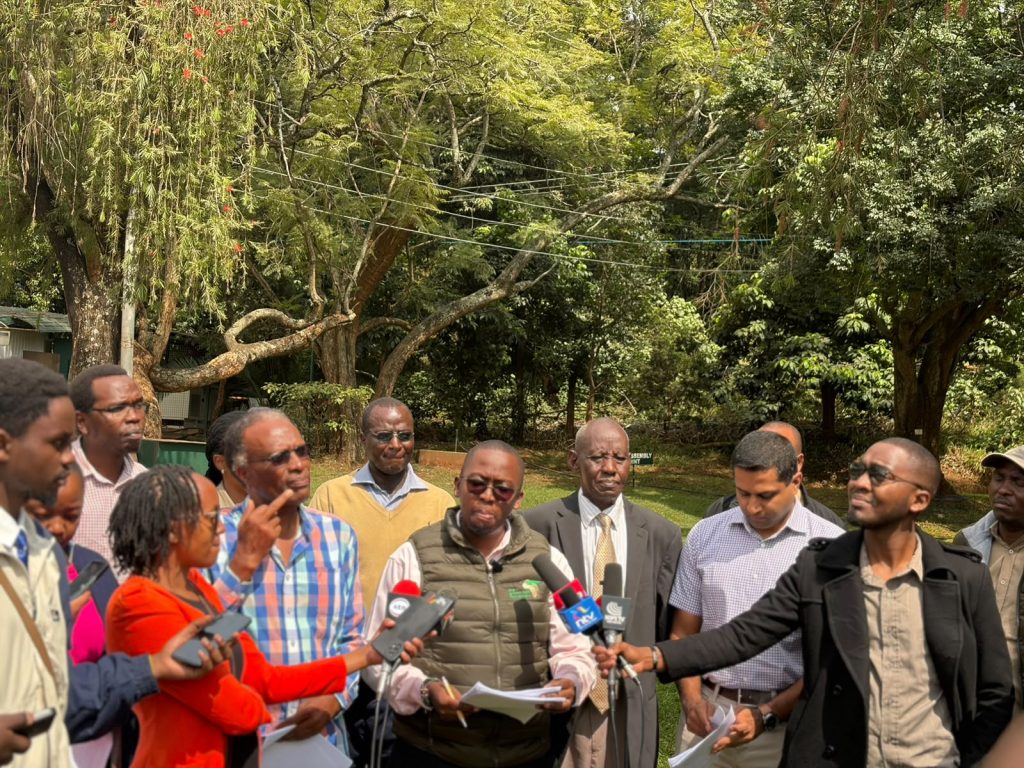
Job Mwangi, Communications, Advocacy and Partnerships Manager at the Green Belt Movement, said the government’s conservation agenda risks losing credibility if development projects continue to consume protected forests while Kenya presents itself as a global champion of climate action.
He noted that the country has committed itself to international environmental agreements, including the Paris Agreement, the Convention on Biological Diversity, the African Forest Landscape Restoration Initiative and the Bonn Challenge. Kenya has also pledged to increase its tree cover to at least 30 percent and plant 15 billion trees by 2032. However, Mwangi questioned how those commitments could be fulfilled if public forests and green spaces continue to be sacrificed for roads, commercial developments and other projects.
According to Mwangi, mature indigenous forests cannot simply be replaced by planting seedlings elsewhere because they perform ecological functions that only develop over many years. He warned that once such ecosystems are destroyed, the environmental services they provide are lost for generations.
He added that Kenya is already witnessing the effects of shrinking green spaces, particularly in urban areas where rising temperatures, worsening air pollution and increased flooding are becoming more common. Every hectare of indigenous forest lost, he said, makes cities hotter, weakens rivers and leaves the country more vulnerable to climate change.
The conservationists also expressed concern over what they described as the growing disregard for court orders in cases involving public forests. They cited Ngong Road Forest and Upper Imenti Forest as examples where construction activities have reportedly continued despite High Court orders suspending the projects until ongoing legal cases are concluded. Respecting the rule of law, they said, is essential to safeguarding Kenya’s natural heritage.
Friends of Karura Forest Prof. Karanja Njoroge singled out Ngong Road Forest as one of the country’s most threatened indigenous forests. He said multiple projects proposed within the forest—including a luxury tented camp, the Riruta-Ngong Town Meter Gauge Railway, a road linking Talanta Stadium to the proposed Bomas International Conference Centre, a contractor’s camp and land earmarked for Talanta Sports City—pose a serious threat to one of Nairobi’s few remaining green lungs.
Although the government had previously announced that the luxury tented camp project had been stopped, Njoroge said construction activities continue within the forest. While each project may appear manageable in isolation, he warned that together they are steadily fragmenting the ecosystem and setting a dangerous precedent where protected forests are increasingly viewed as land available for development.
Njoroge also raised concern over continued encroachment into Nairobi National Park, saying the protected area has gradually lost wildlife habitat to roads, railways, electricity transmission lines and urban expansion. He opposed plans to construct a new Nairobi Animal Orphanage and a 1,300-vehicle parking facility near Bomas of Kenya, arguing that the development would further reduce habitat in the world’s only national park bordering a capital city.
He said the park’s ecological, tourism and conservation value far outweighs the short-term benefits of additional infrastructure and warned that continued encroachment would weaken Kenya’s standing as a global conservation leader.

Attention also turned to Upper Imenti Forest, where Friends of City Park Board Secretary Cynthia Wambaa said ongoing construction of an airstrip, State Lodge and golf course threatens one of Kenya’s most important water towers. She warned that the developments could damage biodiversity, disrupt wildlife corridors and affect thousands of households that rely on the forest for water, rainfall regulation and agriculture.
“Our water towers are national assets and must remain protected,” Wambaa said, adding that development should never compromise ecosystems that sustain both people and wildlife.
Wambaa also criticised plans to expand State House Road, saying the project could lead to the removal of mature trees along State House Road and Dennis Pritt Road. She noted that the decades-old trees provide shade, absorb carbon dioxide, reduce urban temperatures and filter pollutants, making them an essential part of Nairobi’s urban environment.
Rather than cutting them down, she urged planners to embrace engineering solutions that preserve the trees while improving transport infrastructure. She noted that many cities across the world are investing heavily in expanding urban tree cover, and said Kenya should not move in the opposite direction.
The conservationists further opposed proposals to take part of Uhuru Park for the expansion of Uhuru Highway. Wambaa described the park as one of Nairobi’s most important public spaces and a symbol of Kenya’s democratic history. She recalled how the late Nobel Peace Prize laureate Wangari Maathai successfully fought to protect the park from private development, saying that legacy should continue guiding decisions on public green spaces.
They also called for urgent action to restore City Park, saying years of unresolved land ownership disputes, weak governance and neglect have left the historic park vulnerable to encroachment and degradation. The groups proposed a comprehensive management plan that would secure its boundaries, resolve ownership disputes, restore degraded sections and strengthen legal protection.
The organisations urged the Kenya Forest Service, Kenya Wildlife Service, National Environment Management Authority and other government agencies to fulfil their constitutional duty to protect forests and public green spaces. They also appealed to Parliament to strengthen laws against the fragmentation of forests and protected areas while calling on development partners to closely monitor Kenya’s climate and biodiversity commitments.
The conservationists maintained that tree-planting campaigns alone cannot compensate for the destruction of mature forests. They said Kenya’s environmental legacy will ultimately be judged not by the number of seedlings planted but by whether the country had the resolve to protect the forests it inherited.
“If we remain silent today,” they warned, “future generations will inherit hotter cities, drying rivers, disappearing wildlife and a country that traded its natural heritage for short-term gains.”
“Our forests cannot speak for themselves,” they added. “We must speak for them and protect them before it is too late.”