
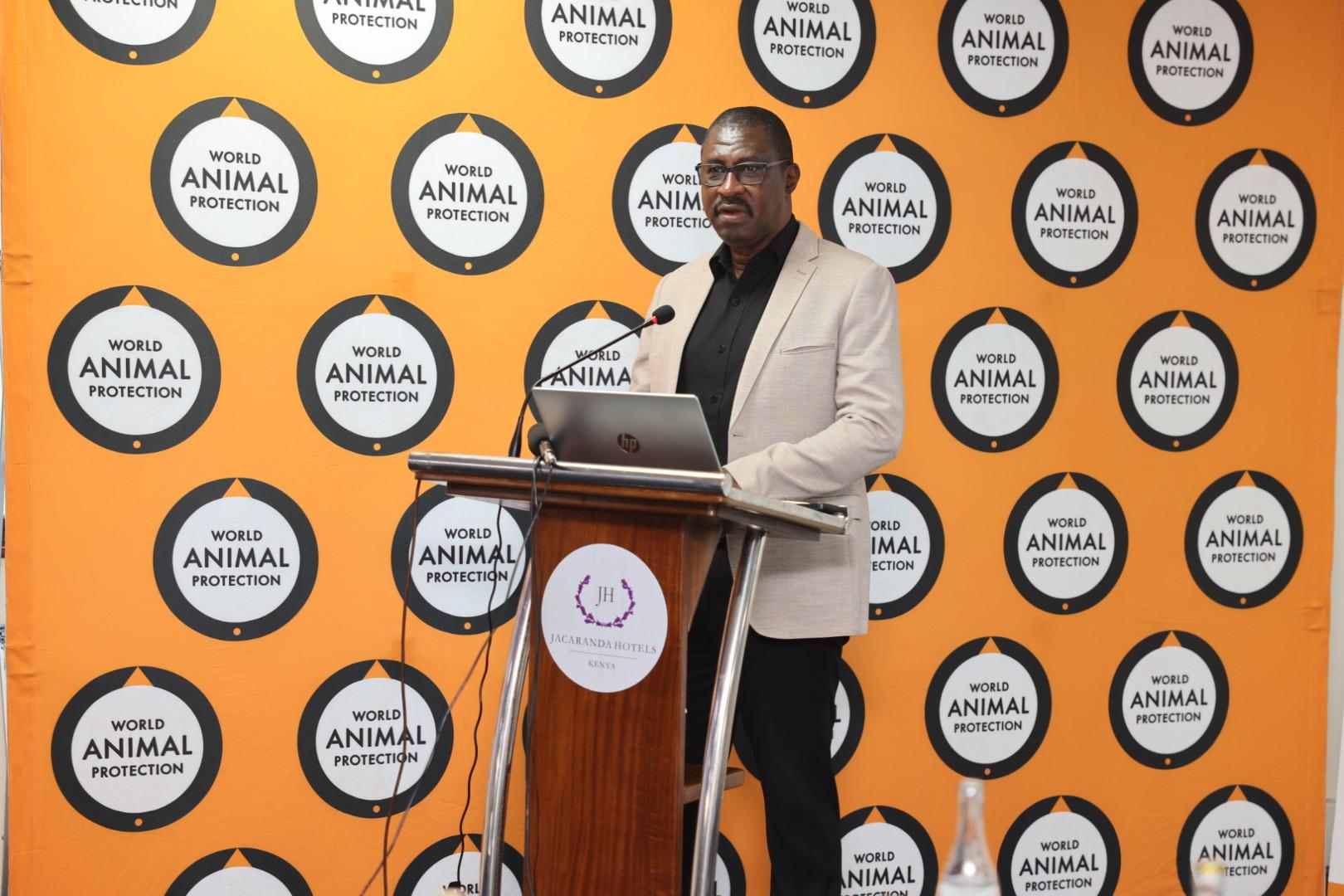
Regional Director at World Animal Protection speaking during a media engagement at Jacaranda Hotel in Westlands, Nairobi.
By Peace Muthoka.
Nairobi, May 14, 2026 – Kenya’s growing trade in live reptiles has come under sharp scrutiny after new findings revealed a dramatic rise in exports over the past decade, raising concerns over animal welfare, biodiversity loss, public health risks, and weak monitoring systems.
During a media engagement hosted by World Animal Protection Africa at Jacaranda Hotel in Westlands, Nairobi, conservation experts warned that the increasing demand for exotic animals in international markets could place immense pressure on wildlife populations and ecosystems if left unchecked.
The organization released fresh data showing that more than 870,000 live animals were exported from Kenya between 2013 and 2023, with reptiles accounting for the vast majority of the trade.
According to findings presented by Dr. Patrick Muinde, the Research and Planning Manager at World Animal Protection Africa, Kenya recorded 886 export records involving captive-bred and ranched species listed under the Convention on International Trade in Endangered Species of Wild Fauna and Flora (CITES).
The exports covered 28 animal taxa across nine different orders. However, reptiles dominated the trade, accounting for more than 81 percent of all export records.
“Most of the exports involved reptiles, while birds and mammals accounted for a much smaller proportion,” Dr. Muinde explained.
The report further showed that the number of export records from Kenya more than doubled over the ten-year period, increasing from 53 records in 2013 to 110 records in 2023.
At the same time, reptile exports alone nearly doubled, rising from 45 export records in 2013 to 88 records in 2023.
Still, the sharpest increase was recorded in the live animal trade.
According to the findings, more than 80 percent of all export records involved live animals, translating to approximately 871,783 live animal exports over the last decade.
Annual exports of live reptiles increased more than tenfold during the same period, rising from 8,551 animals in 2013 to 86,330 animals in 2023.
Reptiles alone accounted for over 96 percent of all live animal exports recorded during the study period.
The organization warned that many of the species involved in the trade have declining or unknown wild populations, raising fears that continued extraction could threaten biodiversity and destabilize ecosystems.
Speaking during the media engagement, the Regional Director at World Animal Protection Africa said Kenya’s wildlife trade decisions carry consequences that extend far beyond economic gains.
“Wildlife trade is not only about economics. It also touches on animal welfare, public health, conservation, and biodiversity protection,” he said.
He noted that the organization, which has worked globally for 75 years to advance animal welfare, remains committed to ending cruelty and suffering against animals while promoting stronger systems that protect wildlife and ecosystems.
At the same time, he praised journalists for their role in amplifying conversations around animal welfare and conservation.
“The stories around animal protection cannot be told without the media. You remain an important part of this journey,” he told reporters.
The organization maintained that both legal and illegal wildlife trade pose serious concerns.
According to the Regional Director, legal trade does not automatically eliminate cruelty, suffering, or sustainability challenges.
“Captive breeding does not necessarily mean cruelty-free,” he said, adding that wild animals often experience stress, trauma, poor welfare conditions, and high mortality risks during breeding, handling, transportation, and export.
Additionally, the organization raised concerns over growing public health risks linked to wildlife trade.
Officials warned that increased movement of wild animals across borders creates pathways for disease transmission between animals and humans.
The Regional Director noted that many infectious diseases affecting humans originate from animals, making wildlife trade not only a conservation issue but also a major public health concern.
“Wildlife trade is also a public health issue because it increases the risk of zoonotic disease transmission,” he said.
He cited lessons from the coronavirus pandemic and other emerging diseases, warning that inadequate controls within wildlife trade systems could expose populations to future outbreaks.
Beyond health concerns, conservation experts also questioned whether the current trade can truly be considered sustainable.
The organization argued that legal trade does not automatically translate into sustainable trade, especially when wildlife continues to be extracted from natural habitats.
“If wildlife continues being removed from the wild without proper safeguards, ecosystems could face serious imbalance,” the director warned.
The report also identified discrepancies between exporter and importer data, raising fresh concerns over transparency, monitoring, and enforcement within the wildlife trade chain.