
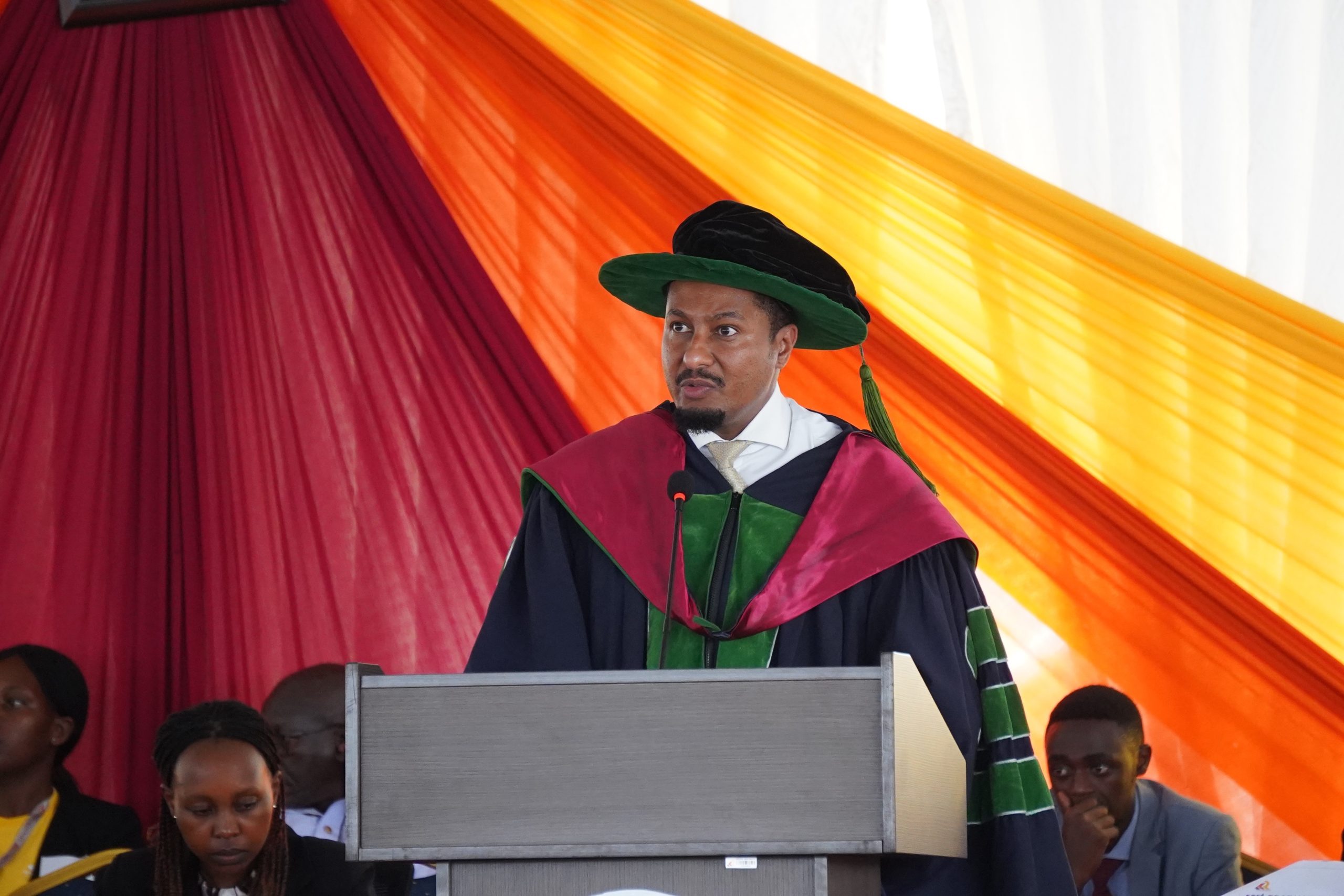
Principal Secretary for Transport Mohamed Daghar.
By Peace Muthoka
NAIROBI, July 9, 2026 — The Railway Training Institute (RTI) marked its 62nd graduation ceremony on Thursday by sending hundreds of graduates into the job market with a challenge to help drive Kenya’s rapidly expanding transport and logistics sector. As the institution celebrated 70 years of excellence in technical training, the government said continued investments in rail, maritime transport and logistics would create new opportunities for skilled professionals while strengthening the country’s economic growth.
Addressing graduates, parents, lecturers and industry stakeholders at the ceremony, Principal Secretary for Transport Mohamed Daghar said Kenya’s ambitious transport infrastructure programme has increased the demand for competent engineers, technicians, logistics experts and transport managers. He noted that graduates from RTI are well positioned to support the country’s modernisation agenda because they possess practical skills tailored to the evolving needs of the industry.
Daghar congratulated the Class of 2025/2026 for successfully completing their studies, describing the graduation as the beginning of a new chapter rather than the end of an academic journey. He also recognised the role played by parents, guardians, sponsors and lecturers, saying their sacrifices had enabled the graduates to reach an important milestone. He urged the graduates to uphold professionalism, integrity and innovation as they pursue careers in an increasingly competitive global economy.
The ceremony also coincided with two historic milestones for Kenya’s transport sector. While RTI celebrated seven decades of producing skilled professionals, Kenya Railways marked 130 years since railway development began in the country in 1896. According to Daghar, the anniversaries demonstrate that sustainable economic growth depends not only on investing in modern infrastructure but also on developing the human capital needed to operate and improve it.
He said the government remains committed to equipping young people with market-driven skills under the Bottom-Up Economic Transformation Agenda (BETA). As part of that strategy, institutions are implementing Competency-Based Education and Training to ensure graduates leave college with practical knowledge that enhances employability, entrepreneurship and productivity. Daghar noted that RTI has embraced the approach by expanding programmes in railway operations, engineering, logistics, marine transport and information technology to meet changing industry demands.
Furthermore, the Principal Secretary said recent reforms that transitioned Kenya Railways into a Government-Owned Enterprise are expected to improve governance, operational efficiency and commercial performance. However, he emphasised that the success of those reforms will depend on the availability of a highly skilled workforce capable of managing and maintaining a modern railway system. “Infrastructure alone cannot transform the transport sector. We must continue investing in people who have the expertise to operate, maintain and improve these systems,” he said.
Daghar added that the government’s continued investment in projects such as the Standard Gauge Railway Phase 2B and Phase 2C, the revitalisation of the metre gauge railway network, inland water transport and logistics infrastructure will generate employment opportunities across the transport value chain. He said the expansion of these projects will require qualified professionals who can support Kenya’s ambition of becoming a regional transport and logistics hub.
RTI Director CHRP Asava Kadima described the graduating class as a generation prepared to shape the future of the country’s transport sector. He said the institute has spent the past 70 years nurturing not only technical competence but also discipline, character and leadership among its students. According to Kadima, the graduates leave the institution equipped to solve real-world challenges in railway engineering, maritime transport and logistics while contributing to national development.
He also commended the institute’s lecturers, staff, Board of Governors and industry partners for continuously improving the quality of training through investments in modern engineering workshops, maritime training facilities and other learning resources. Their collective efforts, he said, have enabled RTI to maintain its reputation as one of the region’s leading transport training institutions.
Kenya Railways Board Chairman Abdi Bare Duale said RTI has remained central to the growth of Kenya’s railway sector since its establishment in 1956. Over the years, he noted, the institution has trained thousands of professionals who now serve in railway operations, logistics, engineering and maritime industries across Kenya, the East African region and beyond.
Duale said the institute has continued to strengthen its capacity through investments in digital learning systems, engineering laboratories, modern workshops, improved security infrastructure and the expansion of its Kisumu campus with support from the World Bank. These developments, he said, have enhanced RTI’s ability to produce graduates who meet international industry standards.
As Kenya Railways continues to modernise infrastructure and expand commuter rail services, Duale said demand for highly skilled professionals will continue to rise. He challenged the graduates to embrace lifelong learning, innovation and ethical leadership as they begin their careers, reminding them that they are joining the workforce at a defining moment in the country’s transport history.
“You graduate during RTI’s 70th anniversary and Kenya Railways’ 130th anniversary,” Duale said. “Carry that legacy with pride and use your knowledge to help build a safer, more efficient and globally competitive transport system for Kenya.”