Civil Society Organizations Demands Fair Global Lending.
By Peace Muthoka
NAIROBI, July 1, 2026 — Civil society organisations have intensified calls for sweeping reforms to the global financial system, warning that Kenya’s mounting debt burden is draining resources from healthcare, education and other essential public services while pushing millions of vulnerable citizens deeper into poverty.
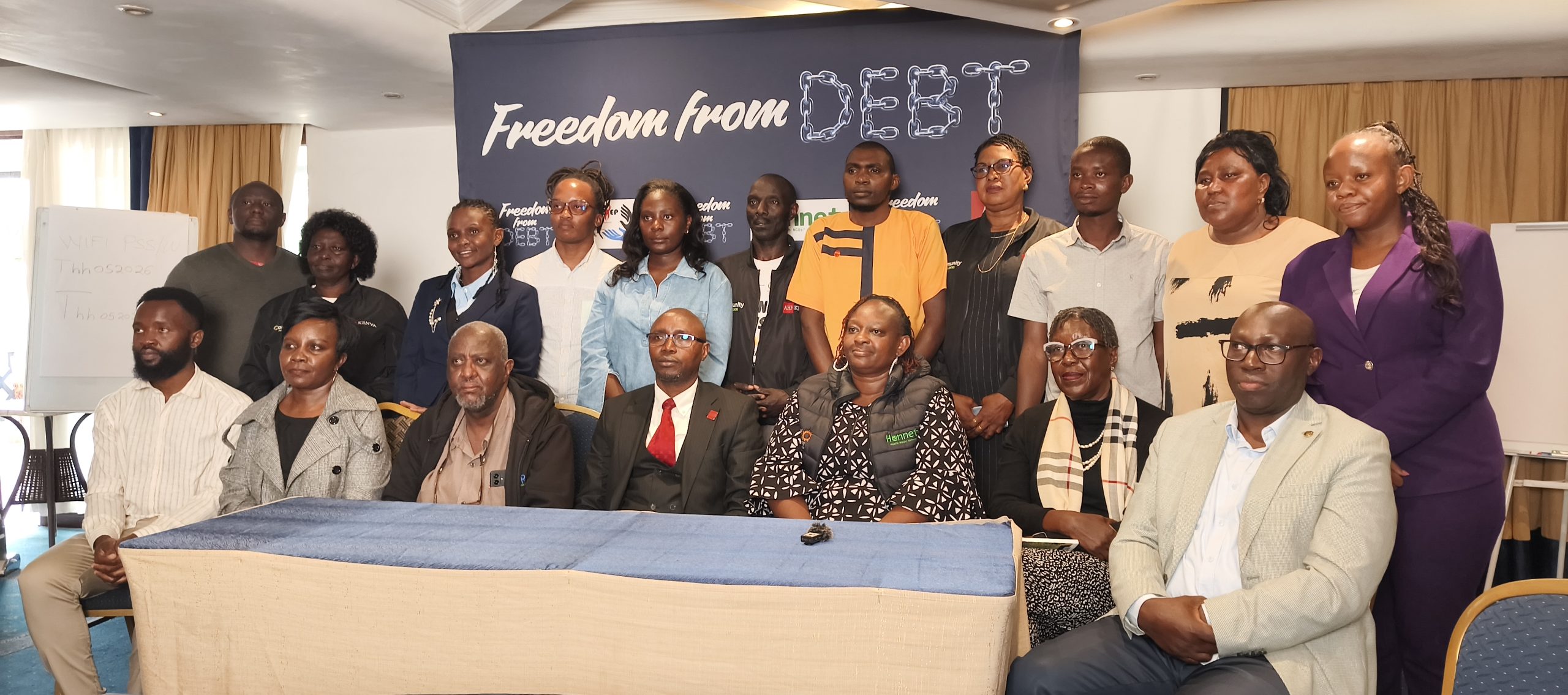
The renewed appeal came during the launch of the Freedom From Debt campaign in Nairobi, where campaigners accused international lenders of trapping developing countries in costly debt cycles that leave governments with little fiscal space to invest in the wellbeing of their people.
Speaking at the event, Dr. Samuel Kinyajui, Country Director of AIDS Healthcare Foundation (AHF) Kenya, said debt servicing has become one of Kenya’s largest financial obligations, forcing critical sectors to compete for increasingly limited public resources.
He said the effects are already evident across the country’s health system, where patients struggle to access essential medicines while health facilities grapple with dwindling supplies.
“We agreed to repay debt, but I don’t think any government agreed to repay debt with the lives of its citizens,” Dr. Kinyajui said.
To illustrate the crisis, he described a mother who walks long distances seeking treatment for her sick child, only to arrive at a health facility that lacks medicines or vaccines because the country cannot adequately finance healthcare.
According to Dr. Kinyajui, Kenya now channels a substantial share of its revenue towards debt repayment, leaving insufficient funds for healthcare, education and social protection programmes.
As a result, he said, vulnerable families continue to shoulder the greatest burden while investments that could improve livelihoods and strengthen public services are pushed aside.
He warned that shortages of HIV commodities have become increasingly severe, with declining supplies of HIV testing kits, antiretroviral medicines and condoms limiting access to lifesaving services.
“Kenya used to procure about 11 million HIV test kits annually. Today, we barely have about four million. That means not everyone who walks into a health facility requesting an HIV test can receive one,” he said.
Consequently, health facilities have been forced to prioritise pregnant women and other high-risk groups, leaving many people unable to access HIV testing because of limited supplies.
Dr. Kinyajui argued that the crisis extends beyond Kenya, blaming an international financial system that imposes high borrowing costs on developing countries while offering favourable lending terms to wealthier nations.
He said expensive loans, unequal credit ratings and restrictive lending conditions continue to widen the gap between rich and poor countries.
“The current sovereign debt system is unjust and an immoral regime of wealth extraction. Poor nations are funding wealthier ones, and the cost is measured in human lives and lost well-being,” he said.
Dr. Kinyajui further claimed that many African countries spend more servicing debt than they receive in development assistance, describing the system as “colonialism disguised as lending.”
To reverse the trend, the campaign called for the establishment of a global borrowers’ forum that would enable developing nations to negotiate collectively for fairer loan terms instead of dealing with creditors individually.
The organisations also backed the creation of an African-owned credit rating agency, arguing that it would provide more balanced assessments of African economies and reduce reliance on international rating institutions.
Additionally, the campaign proposed automatic, interest-free pauses on debt repayments during global emergencies such as pandemics and disease outbreaks to allow governments to prioritise healthcare and other urgent public needs.
Campaigners also urged the international community to dedicate five per cent of global artificial intelligence revenues to debt relief initiatives aimed at strengthening essential public services in developing countries.
“Many people have proposed a one per cent AI solidarity levy. We are saying five per cent because it can make a real difference without significantly affecting the industry’s profitability,” Dr. Kinyajui said.
The campaign also drew support from other health and civil society leaders, who argued that Kenya’s debt burden continues to undermine the country’s ability to finance quality healthcare.
Nelson Otwoma of the Network of People Living with HIV (NEPHAK) said Kenya cannot achieve sustainable healthcare financing while nearly 70 per cent of government revenue is used to service external debt.
He noted that delegates at the recent United Nations High-Level Meeting on HIV agreed that countries should take full responsibility for financing their HIV response. However, he argued that the goal will remain unattainable if debt repayments continue consuming resources meant for hospitals and health programmes.
“The money going outside the country is undermining our capacity to invest in healthcare. HIV prevention programmes are collapsing because there are no resources, yet those resources are being diverted to debt servicing,” Otwoma said.
He urged international lenders to review lending conditions and interest rates, saying developing countries should not be forced to choose between repaying debt and investing in healthcare and education.
Meanwhile, Evaline Kibuchi of Stop TB Partnership Kenya said while governments must ensure borrowed funds are used responsibly, citizens should also be involved throughout the borrowing process to enhance transparency and accountability.
She called for public participation from the time loans are negotiated to their implementation, arguing that Kenyans have a right to know why money is being borrowed, how it will be spent and whether the country can afford to repay it.
Kibuchi also proposed establishing a public debt register that would allow citizens to monitor every loan, its purpose, interest rate and implementation status.
She said such transparency would make it easier for Kenyans to hold leaders accountable for projects financed through public borrowing.
Echoing the concerns, James Kamau, Chief Executive Officer of the Kenya Treatment Access Movement (KETAM), questioned whether the country’s rising debt is delivering value for taxpayers.
He pointed to mounting financial pressure on the health sector, including delayed payments to hospitals and challenges facing the Social Health Authority (SHA), saying greater public participation is needed before major borrowing decisions are made.
At the same time, Dr. Margaret Lubaale, Executive Director of the Health NGOs Network (HENNET), urged citizens to play a more active role in holding elected leaders accountable for borrowing decisions.
She said civil society organisations would intensify public education to help Kenyans understand how the country’s debt burden directly affects healthcare, education and other essential services.
Lubale also proposed developing a citizens’ manifesto on debt management ahead of the next General Election, saying political parties should clearly explain how they intend to tackle Kenya’s debt crisis before seeking votes.
Dr. Kinyajui said the Freedom From Debt campaign is being held simultaneously in nearly 50 countries to build global momentum for reforms that place people before debt obligations.
He urged journalists, civil society organisations and citizens to amplify the campaign, saying meaningful reforms will only be achieved through sustained international solidarity.
“This is not just a Kenyan problem. It affects more than 3.4 billion people worldwide. We must disrupt this cycle before it condemns future generations to deeper poverty and inequality,” he said.