By Peace Muthoka.
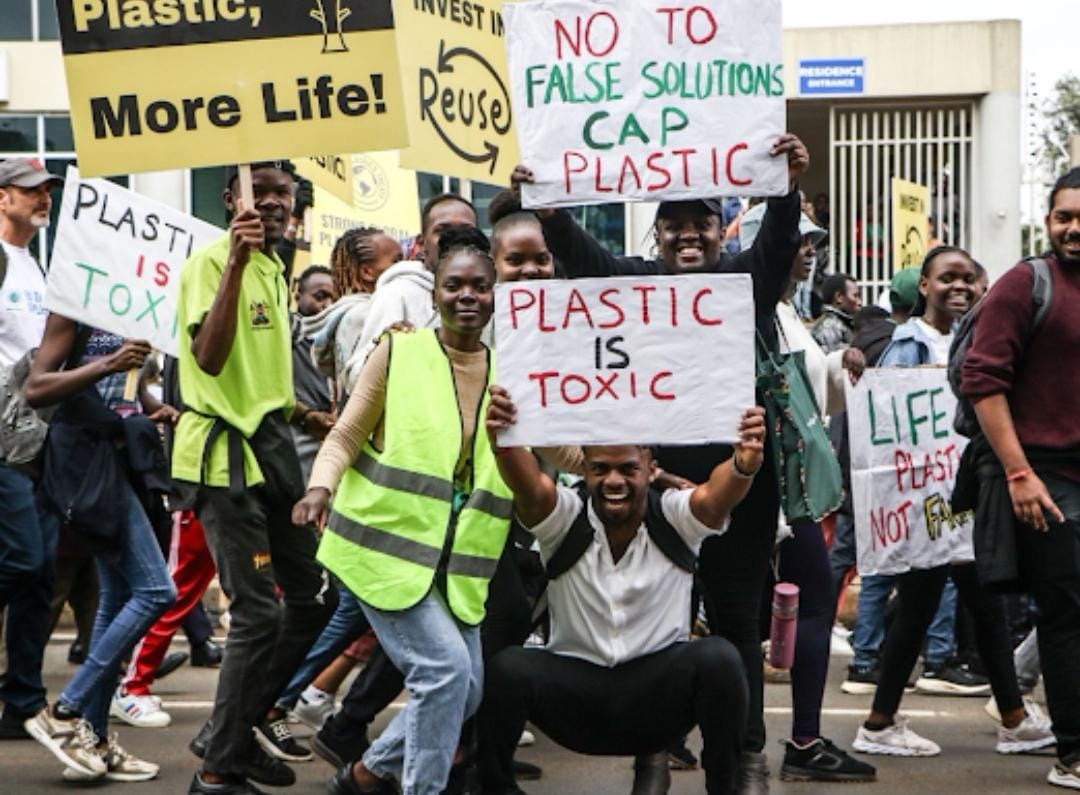
Nairobi, Kenya – July 31, 2025 — Kenyan civil society is leading a rallying cry for African unity and bold action ahead of crucial global talks on plastic pollution. As nations prepare to meet in Geneva next week for the resumed fifth session of the Intergovernmental Negotiating Committee (INC-5.2), campaigners say Africa must push for a legally binding treaty that prioritizes people over profits.
Speaking during a media breakfast in Nairobi, the Kenyan Civil Society Coalition to End Plastic Pollution urged African leaders to speak with one voice and demand a treaty that tackles plastic pollution at its root starting with cutting production.
“This is Africa’s moment to lead,” declared Griffins Ochieng, Executive Director of the Centre for Environmental Justice and Development (CEJAD), co-host of the event alongside the Heinrich Böll Foundation. “We need a treaty shaped by the lived experiences of our communities, not the boardroom agendas of petrochemical giants.”
The Geneva negotiations, set for August 5–14, aim to finalize a global treaty that addresses plastic pollution across its entire lifecycle from production and trade to design, chemicals, and waste management.
While African countries like Kenya have made commendable efforts such as banning single-use plastics activists warn that recycling alone won’t solve the crisis.
“Recycling is not a silver bullet,” said Fredrick Njau of the Heinrich Böll Foundation. “We must shift from managing plastic waste to ending it entirely.”
The coalition painted a grim picture of Africa’s disproportionate burden. A recent CEJAD study, Dangerous Fun, exposed the widespread presence of harmful chemicals in plastic items, linked to cancer, respiratory disease, and reproductive issues.
Greenpeace Africa’s Hellen Dena warned of “false solutions” being pushed on developing nations. “We cannot become a dumping ground for the Global North’s waste,” she said. “Technologies like incineration and waste-to-energy only deepen the problem.”
At the community level, the damage is even more personal. Shalon Muiruri of Safe Dada Kenya highlighted how plastic pollution worsens gender inequalities—especially for rural and Indigenous women.
“From unsafe menstrual products to toxins in food and water, plastics threaten our health, livelihoods, and bodily autonomy,” she said. “We need a treaty grounded in justice and women-led innovation.”
Waste pickers, often ignored in global discussions, are also demanding recognition and protection. “Don’t add us in as an afterthought—start with us,” urged Gisore Nyabuti, Chairperson of the Kenya National Waste Pickers Welfare Association. “A Just Transition means respecting our labor, protecting our rights, and sharing decision-making power.”
The coalition outlined ten key demands, including:
- Legally binding global rules, not voluntary national pledges
- Reduction in virgin plastic production
- Full elimination of toxic chemicals and transparency in plastic composition
- Fair wages, recognition, and protection for informal waste workers
- Strong funding from major polluters under the “Polluter Pays” principle
- Inclusive decision-making with majority voting to break deadlocks
- Global standards for safe, reusable packaging and zero-waste systems
- Full respect for human rights and environmental justice
- An end to “waste colonialism”
- Strong safeguards against corporate influence in treaty talks
As INC-5.2 approaches, African civil society is urging the continent’s leaders to reject weak compromises and deliver a treaty that protects people, the planet, and future generations.
“The world is watching,” said Ochieng. “It’s time for Africa to lead from the front—boldly, unapologetically, and united.”