
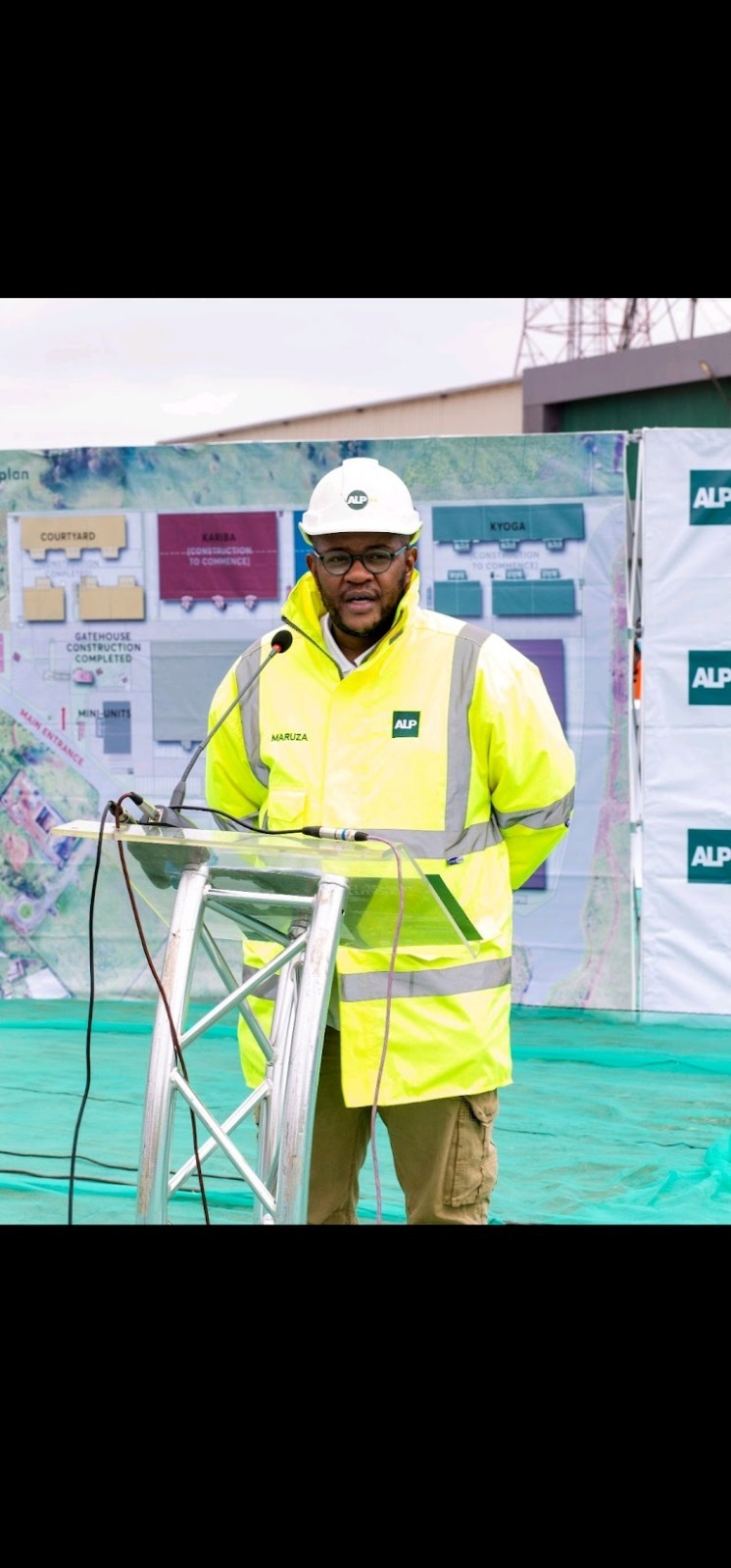
Asbury Maruza, the claimant, at an event organised by Africa Logistics Properties (ALP) when he worked there as a director
By Peace Muthoka
Nairobi, January 28, 2025 – A former senior executive at a Kenya-based industrial real estate firm has gone to court seeking more than three hundred and sixty four million in disputed equity and damages.
Court filings show that Mr Asbury Maruza Chikwanha has sued companies linked to British aristocrat Charles George Barrington, The Lord Tryon, over developments at Tatu City and Tilisi. The projects form part of an industrial portfolio valued at more than Sh thirteen billion.
The case is before the Employment and Labour Relations Court. Mr Chikwanha accuses Africa Logistics Properties Management Kenya Limited and its parent company of unlawful termination, discrimination and breach of contract. He claims the firms acted to avoid meeting equity obligations promised under his employment terms.
According to the pleadings, Mr Chikwanha was headhunted by the company’s former chief executive to lead development operations in Kenya and the wider region. He initially declined the offer, citing a much lower salary than what he earned at AMSCO. He says he later accepted after assurances that he would benefit from a long-term equity incentive plan tied to the portfolio under his watch.
In his witness testimony, Mr Chikwanha told the court that the promise of equity influenced his decision. He said he agreed to the reduced pay after being assured of significant returns from profit sharing linked to future liquidity events from completed projects.
Mr Chikwanha, a Zimbabwean and Australian dual national, also claims the company removed him as a director from nine subsidiaries without following due process. Court records show that the firm’s shareholders include Maris Capital, British International Investment and the International Finance Corporation.
The lawsuit does not accuse any institutional investor of wrongdoing. However, it places the company’s corporate governance under scrutiny. The pleadings raise questions on compliance with company law, fair labour practices, contractual obligations and alleged discrimination.
Mr Chikwanha also disputes information submitted to the Registrar of Companies regarding meetings that led to his removal. He claims he never received notices, saying they were sent to addresses and email accounts he could not access after his exit. He has since reported the matter to Kenyan authorities, with investigations still ongoing.

The dispute further centres on his termination. Mr Chikwanha says the company issued a redundancy notice in April twenty twenty three, later withdrew it while citing talks with a potential investor, then issued another notice in August. He says the firm followed this with a termination letter the next month without meeting legal redundancy requirements.
He also claims the company failed to share details of the promised incentive plan despite repeated requests. In addition, he alleges discrimination and a violation of constitutional protections on fair labour practices. He claims other senior executives of Caucasian ethnicity received better terms.
Mr Chikwanha further alleges delays in payment of his terminal dues, saying the company only made partial payments months later. He also claims authorities cancelled his work permit within days, without sharing official directives, affecting his legal status in Kenya.
Africa Logistics Properties has denied the claims. In its defence, the company says Mr Chikwanha’s contract superseded any earlier representations. It maintains that the redundancy followed a restructuring process aimed at maximising shareholder value. The firm also denies the existence of any binding profit-sharing arrangement, despite Mr Chikwanha stating he was a shareholder at the time, supported by share certificates filed in court.
The parent company has since received approval from the Capital Markets Authority to set up an industrial real estate investment trust. Court documents show that some of the assets expected to seed the trust, including Tatu City and Tilisi developments, were built during Mr Chikwanha’s tenure.
The case remains before the Employment and Labour Relations Court. All claims remain contested as the legal battle continues.