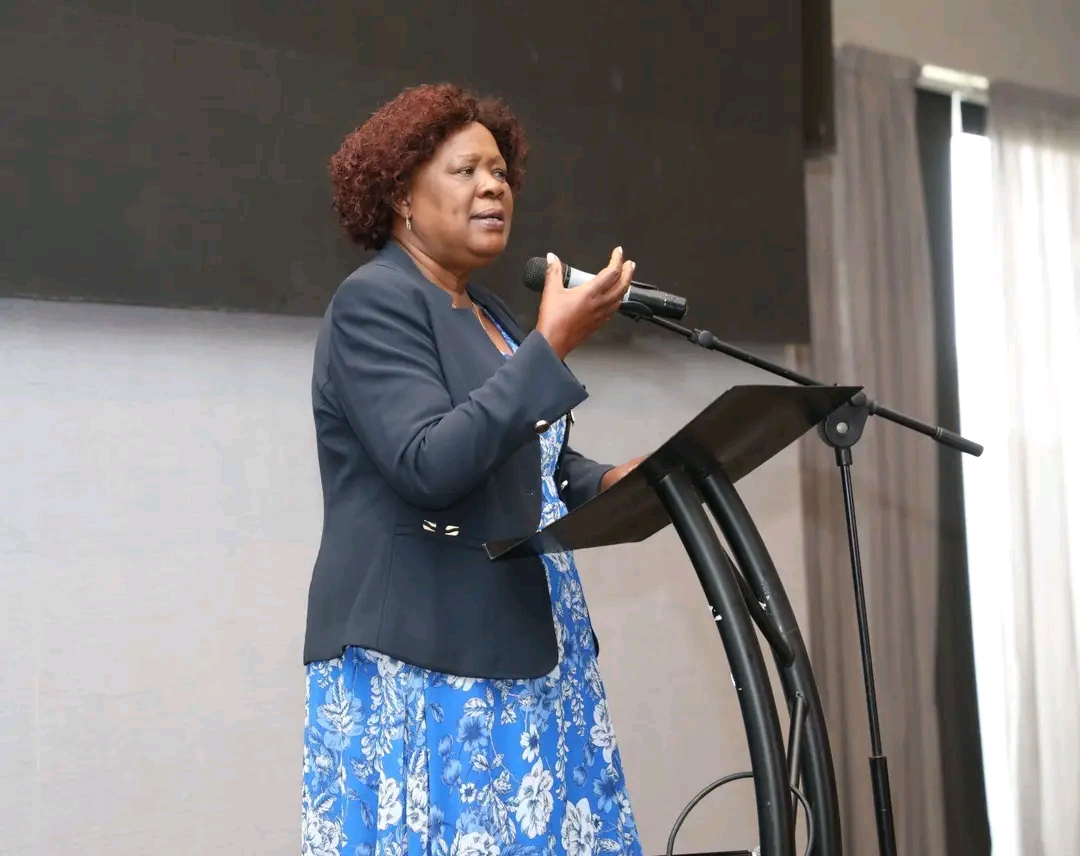
Cabinet Secretary for Lands, Public Works, Housing and Urban Development, Alice Wahome
By Peace Muthoka
NAIROBI, Kenya — September 8, 2026 -For decades, the Nairobi River has been a silent witness to the city’s unchecked expansion—once a lifeline for communities and wildlife alike, it has gradually transformed into an open sewer, choked by plastic waste, poisoned by industrial runoff, and suffocated by makeshift structures that cling to its banks like parasites. Now, after years of broken promises and half-hearted interventions, the Kenyan government is drawing a line in the mud, declaring in a high-stakes appeal to development partners and diplomats on Tuesday that restoring the capital’s rivers is no longer an environmental side project but a matter of national survival.
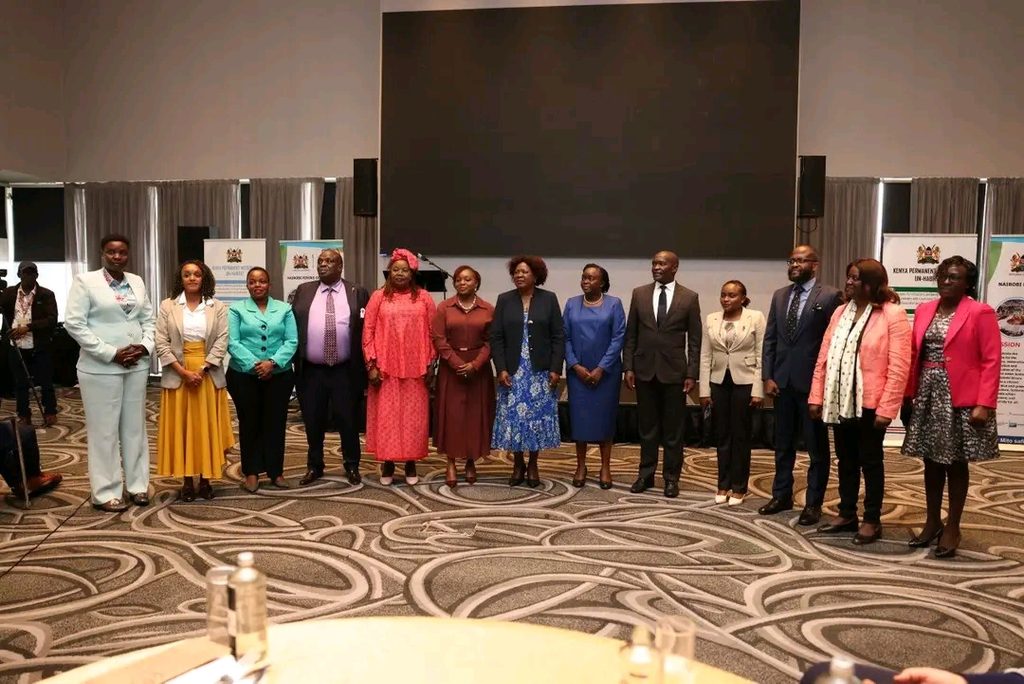
“The rivers have been treated as dumping grounds for too long,” Cabinet Secretary for Lands, Public Works, Housing and Urban Development, Alice Wahome said during a roundtable in Nairobi, his words landing with the weight of lived reality. “Pollution, flooding, encroachment, poor sanitation these are not isolated problems.
They are symptoms of a city that has grown faster than its conscience.” Every year, after all, heavy rains turn the river into a raging torrent that sweeps away homes and livelihoods; every dry season, the water level drops to reveal a toxic sludge that threatens public health; and every day, thousands of Nairobi’s poorest residents drink from these very waters because they have no other choice.
The government’s message was unmistakably clear: river restoration is inextricably tied to almost every major challenge facing the capital, from public health and climate resilience to economic growth and quality of life. “We are not just cleaning a river,” Wahome emphasised. “We are rebuilding a city.” To achieve that, the government has rolled out the Nairobi Rivers Regeneration Programme an ambitious, multi-agency initiative that brings together national and county governments, community groups, academics, and private investors in an integrated approach that envisions long-term transformation rather than quick fixes.
There is, however, some cause for optimism. The first catalytic corridor a 27-kilometre stretch that forms the project’s Phase One is already between 60 and 70 percent complete, with riverbank stabilisation visibly taking shape, sanitation infrastructure being upgraded, flood-risk reduction measures being put in place, and green public spaces beginning to emerge where garbage once piled high. Meanwhile, the Gikomba Market project a key pillar of the broader urban renewal agenda is now 80 percent complete and scheduled for handover next month, a development that cannot come soon enough for thousands of traders who have long operated in hazardous conditions.
Yet, for all the progress, Environment Cabinet Secretary Deborah Barasa struck a note of caution, warning that piecemeal interventions would ultimately fail to save the river system. “We cannot clean the city while the upstream forests are still being destroyed,” she insisted.
“We cannot stop flooding while drainage channels remain blocked. And we cannot build climate resilience while counties work in silos.” Her message was unequivocal: regeneration must cover the entire catchment from the forested highlands where the river is born, through the congested urban heart, all the way to the downstream communities that depend on its flow and this requires robust science, structured policy, and durable institutional alignment.
That is precisely where the Nairobi Rivers Commission comes in, for with a mandate spanning Nairobi, Kiambu, Machakos, Kajiado, and Makueni counties, the commission is expected to serve as the glue holding the regeneration together; without its coordinating role, experts fear the effort could fragment into a patchwork of unconnected projects, each well-intentioned but collectively ineffective.
Barasa also confirmed that her ministry, through agencies like the National Environment Management Authority and the Kenya Forest Service, would continue enforcing environmental standards, managing solid waste, and protecting fragile riparian areas, though she acknowledged that enforcement alone is not enough. “The rivers will only survive if communities see value in protecting them,” she said. “That means creating jobs, building enterprises, and giving young people a stake in the restoration.”
With the programme’s next phase looming, the government is now knocking on doors seeking grants, concessional loans, climate finance, blended finance, impact investment, and technical expertise but more than money, officials say, they need partners who will stay for the long haul. “We have moved from dialogue to partnerships,” the Lands CS declared. “Now we must move from partnerships to investment, and from investment to implementation.”
The timing is strategic, for with Kenya preparing to host COP31, Barasa sees an opportunity to position Nairobi’s river revival as a model for other African cities grappling with similar challenges. “If we get this right,” she said, “we are not just saving one river system. We are proving that urban renewal and environmental restoration can go hand in hand. We are showing that African cities can solve African problems.”
For the millions of Nairobians who live along the river’s edge, however, the government’s words are familiar they have heard promises before from politicians seeking votes, from officials seeking budgets, from donors seeking photo opportunities but what they have not seen, until now, is a coordinated, multi-year effort with measurable milestones and accountable leadership. The Catalytic Corridor is a start, and Gikomba Market is a start, but the river runs for far more than 27 kilometres, and the challenges extend far beyond one market.
As the meeting wrapped up, the Lands CS left the room with a final appeal that captured both the scale of the challenge and the promise of collective action: “We cannot afford to fail. Not for the environment. Not for public health. And certainly not for the millions of Kenyans who have no other river to call their own.” Outside, the Nairobi River kept flowing still brown, still bloated, still burdened but for the first time in years, there was a sense that someone, somewhere, was finally listening, and whether that listening translates into action is the question that only time, and partnership, will ultimately answer.