
Kabete Member of Parliament James Wanjohi Brings Community Together Through Super Darts Tournament
By Peace Muthoka
Kabete Constituency burst into life this week as darts players from across the area gathered for the Hon. James Wanjohi Super Darts Tournament, an event that turned a quiet local pastime into a powerful moment of unity, hope and shared purpose.
From early morning, excitement rippled through the venue. Teams arrived in small groups, some laughing loudly, others silent and focused. Darts boards were mounted carefully, uniforms adjusted, and players took a few final practice throws. For many, this was not just another game. It was a moment they had waited for years to see.
For decades, darts has existed quietly in Kabete. It lived in social halls, kiosks and back rooms, often played with worn-out equipment and little recognition. However, this tournament changed that narrative. It placed darts at the centre of the community and gave players something they had rarely experienced: structure, dignity and visibility.
The competition brought together 22 teams drawn from different parts of the constituency. Teenagers stood shoulder to shoulder with players in their sixties and seventies. Despite the age gaps, the atmosphere remained warm and respectful. As the games progressed, generations blended naturally. Skill mattered more than age. Focus mattered more than background.
Many players said it was the most organised darts tournament they had ever witnessed in Kabete. Fixtures were clear. Rules were respected. Officials ensured fairness. As a result, players competed with confidence and pride. For the first time, darts felt like a serious sport rather than a casual distraction.
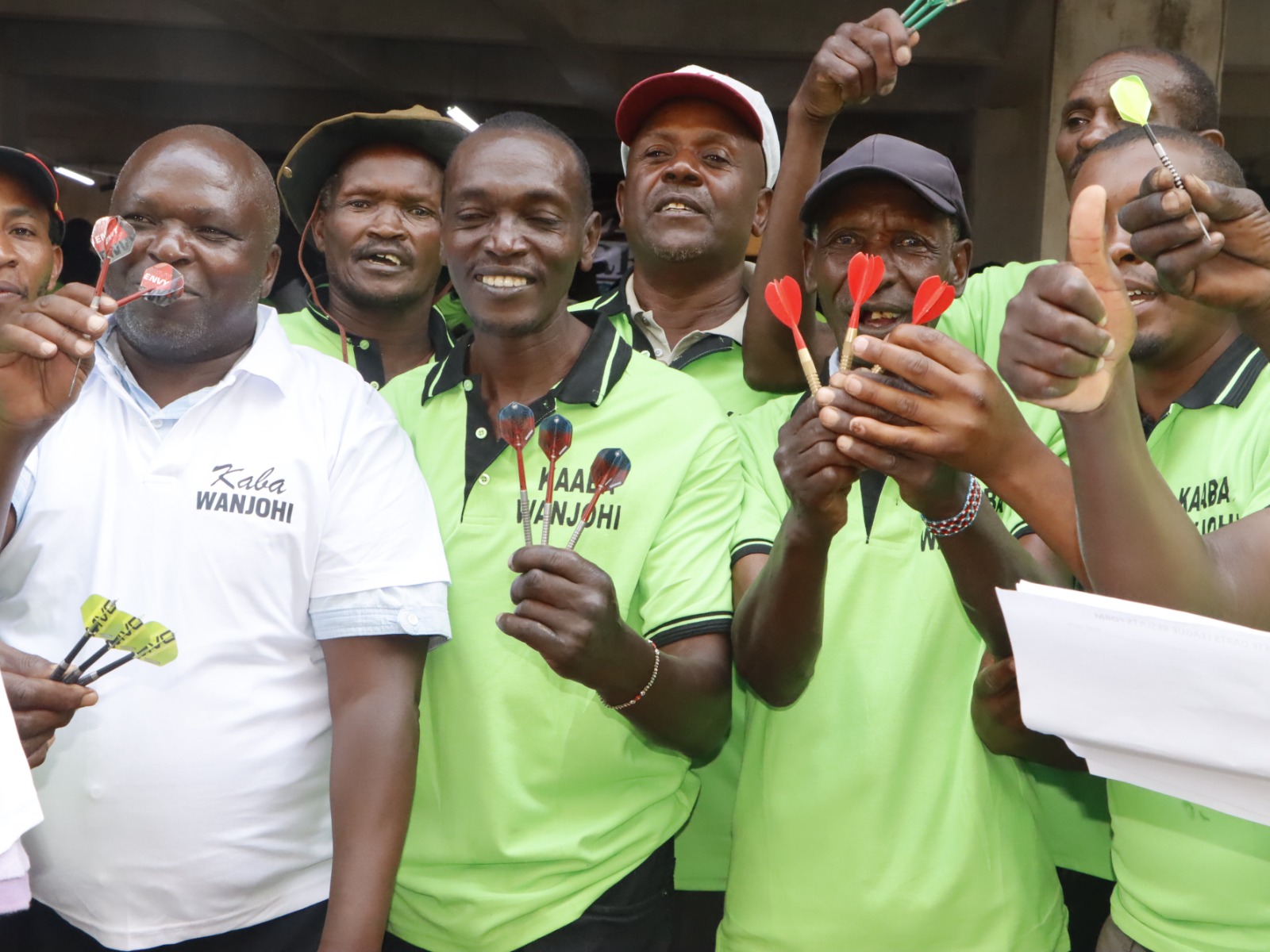
Although Kabete Member of Parliament James Wanjohi was not physically present, his presence was felt in every corner of the tournament. Players, coaches and team leaders repeatedly praised him for supporting a sport often ignored by leaders. Through his sponsorship, 27 dart sets were distributed to 23 youth teams. Proper uniforms were also provided, giving teams a professional identity.
For many participants, the support was deeply emotional. Some recalled years of sharing a single dart set among several teams. Others spoke of improvised boards and broken equipment. With new dart sets in hand, players said they finally felt seen. Young participants, in particular, said the gesture boosted their confidence and motivation.
Veteran players shared stories of how darts once thrived informally but slowly faded due to neglect. According to them, the tournament restored pride in the game. It transformed darts from a casual pastime into a respected competitive sport. Since the announcement of the tournament, more young people have shown interest, with new teams forming at village level.
As the matches unfolded, conversations extended beyond the game itself. Coaches and community members spoke openly about the social power of sports. They noted that darts offers young people a safe and positive alternative to idleness, drug abuse and destructive behaviour. The game demands patience, discipline and mental sharpness, values many youths struggle to develop.
Unlike physically demanding sports, darts welcomes everyone. This inclusivity stood out throughout the event. Older players offered guidance and calm advice. Younger players brought energy and ambition. Together, they built bridges across generations and strengthened community bonds.
Teams from different neighbourhoods, including Kiahuria, showcased impressive skill and sportsmanship. Supporters applauded good throws from both sides. Rivalries remained friendly. The mood stayed competitive yet respectful, reflecting the unity the tournament aimed to promote.
Parents and guardians watched proudly from the sidelines. Many said the event changed how they viewed darts. They saw their children focused, disciplined and learning from older mentors. For them, the tournament offered reassurance and hope that sports can shape better futures.
As the tournament drew to a close, calls grew louder for greater recognition of darts in Kabete. Players urged the Kenya Darts Association and other sports bodies to support the rising talent. They believe regular tournaments and structured leagues could turn Kabete into a darts powerhouse.
Community leaders echoed the call. They argued that meaningful change does not always require massive budgets. Sometimes, small, well-targeted investments can create lasting impact. The Super Darts Tournament, they said, proved that grassroots sports can build confidence, unity and purpose.
When the final darts were thrown, smiles replaced tension. New friendships formed. Plans for future tournaments quickly followed. More importantly, Kabete was reminded that development begins by listening to the community.
Through darts, Kabete found connection and renewed energy. For many players, this tournament was not the end of a game. It was the beginning of a dream.