
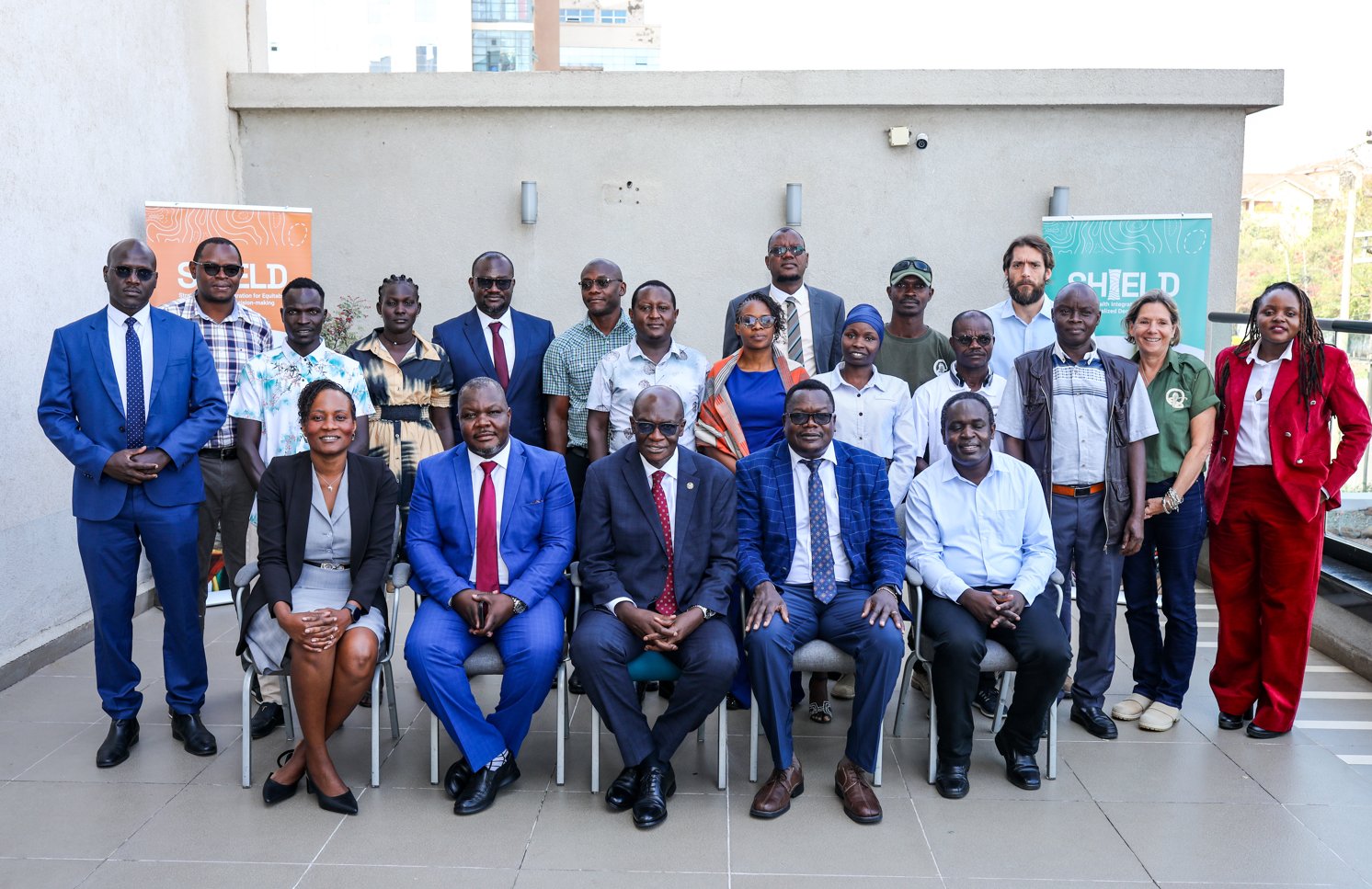
Different stakeholders pose for a group photo during the launch of the SHIELD project, which seeks to strengthen early warning systems and improve health responses to climate-related disease risks in vulnerable communities.
By Peace Muthoka
November 26, 2026 – The Kenya Medical Research Institute (KEMRI) and its international partners have secured Sh424.7 million from the Wellcome Trust to develop early warning systems and health interventions that will help protect Kenyans from the growing health risks of climate change. The three-year initiative, known as SHIELD, will initially focus on refugees and host communities in Kakuma and Kalobeyei, Turkana County, before expanding its findings to inform health interventions across Kenya.
The project brings together KEMRI, Charité Berlin, the University of Geneva, Defrontera and Buni Banda under the Wellcome Trust’s Climate Impacts Awards. Researchers will investigate how extreme heat, changing rainfall patterns and other climate-related pressures affect human health, with particular attention to malaria, snakebites, heat-related illnesses and psychological distress. The findings will help the government develop policies and interventions that address these emerging threats.
Speaking during the launch on Wednesday, November 26, 2026, Director-General of Health Dr Patrick Amoth said climate change was already affecting the health and livelihoods of Kenyans, particularly those living in arid and semi-arid areas. He said rising temperatures, frequent droughts and unpredictable rainfall were placing vulnerable populations at greater risk, especially children under five, pregnant women and older people.
“Climate change is no longer a future threat for us. It is already in our facilities, in our homes,” Amoth said. He described Turkana as an important location for the research because the county faces several climate-related health challenges, including increasing malaria cases, food insecurity and heat stress. He said the evidence generated would guide policies and support similar interventions in other arid and semi-arid counties.
Amoth said Kenya’s health information systems often track individual diseases without capturing the combined health challenges that families experience. A household in Kakuma, for instance, may face extreme heat, water shortages, food insecurity, mosquito bites, snakebites and psychological stress at the same time. He said understanding how these risks interact would help health authorities plan interventions and allocate resources more effectively.
“If we cannot be able to see that combined burden, then we cannot be able to plan for it,” he said. Amoth added that reliable data would help the government identify emerging health risks, plan budgets and intervene before communities reach a crisis. Without timely information, he warned, authorities could struggle to respond effectively when climate-related emergencies occur.
One of the project’s key areas will be monitoring malaria transmission as climate change alters the distribution of mosquitoes. Amoth said rising temperatures and changing rainfall patterns could allow malaria-carrying mosquitoes to spread into areas where the disease had previously been uncommon. Through SHIELD, researchers will monitor mosquito populations in and around Kakuma across different seasons to identify emerging risks and help health authorities strengthen malaria prevention strategies.
The project will also examine snakebite cases and the challenges victims face when seeking treatment. Amoth described snakebites as a neglected cause of death and disability, particularly among poor and marginalised communities. He urged researchers to work with the Kenya Institute of Primate Research to explore local antivenom production, noting that some antivenoms sourced from other countries had not been as effective in treating Kenyan patients as desired.
The research will also support the integration of its findings into Kenya’s digital health system, allowing health authorities to access timely information and respond more effectively to emerging threats. Amoth said the government had made significant progress in digitising health facilities, with all Level Two and Level Three facilities fully digitised and approximately 90 per cent of Level Five facilities connected to the system. He said the project would strengthen the country’s ability to monitor health trends and make informed decisions.
Turkana County Chief Officer for Medical Services Dr Gilchrist Lokoel said climate change had contributed to prolonged droughts, reduced rainfall and rising temperatures, with consequences extending beyond food and water security to the health and well-being of residents. He said temperatures in the county fluctuated between 37 and 40 degrees Celsius, while health workers were observing concerns such as premature deliveries, low birth weight and kidney stones. He added that changing environmental conditions had also contributed to emerging health concerns, including snakebites, crocodile attacks and psychological trauma.
Lokoel said the project would help Turkana move from emergency response towards preventive action by generating evidence that communities could use to make informed decisions. He noted that reaching remote and mobile populations remained a challenge, particularly for residents living far from health facilities. The county has established outreach services and an integrated approach known as Kimormor, a Turkana word meaning “coming together”, which brings together human health practitioners, veterinarians, environmental officers, water services personnel and civil registration officials to provide services in one location.
He said Turkana’s climate policy and action plan provided a framework for refugees and host communities to work together in identifying and responding to climate-related challenges. Amoth said the government wanted the lessons from Turkana to benefit other counties facing similar health risks, while ensuring refugees and host communities access healthcare through an inclusive system. He urged researchers to provide regular updates and share emerging findings that could inform policy changes before the three-year study ends, adding that the government looked forward to practical recommendations to strengthen Kenya’s response to climate-related health threats.