Kenyan Leaders Demand Accountability as Nairobi Trust Summit Challenges Institutions to Deliver
By Peace Muthoka
NAIROBI, Kenya, October 21, 2026 — Kenyan leaders, public officials and civil society representatives have called for stronger accountability, meaningful public participation and improved service delivery, saying public trust depends on institutions fulfilling their promises and responding to citizens’ concerns.
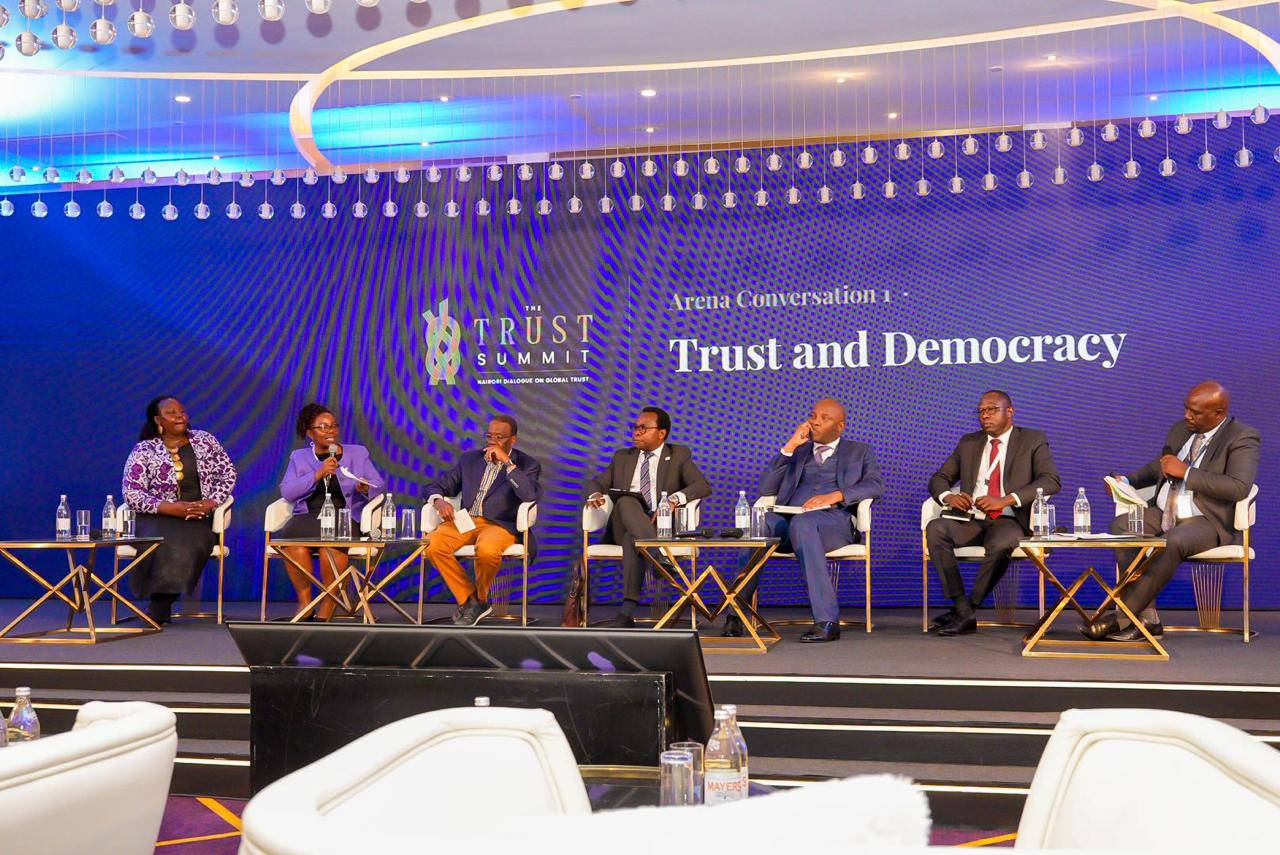
Speaking on the opening day of The Trust Summit: Nairobi Dialogue on Global Trust, held from October 21 to 23, the leaders said public confidence could not be secured through official positions, policies or promises alone, but had to be earned through credible information, effective oversight and tangible results.
The summit, held under the theme “Weaving Trust: Binding Strands for a Stronger Global Order,” has brought together government representatives, multilateral institutions, business leaders, civil society organisations, academics and young people to explore ways of rebuilding confidence in governance, markets and international cooperation.
Dr Abraham Korir Sing’Oei, Kenya’s Principal Secretary for Foreign Affairs, described the gathering as an urgent response to declining confidence in institutions amid inequality and geopolitical tensions.
“This is not a summit of convenience. It’s a summit of necessity,” he said.
Discussions on the opening day centred on how institutions could strengthen their credibility by ensuring that oversight processes, public consultations and official commitments lead to measurable changes.
Auditor-General Nancy Gathungu said trust depended on access to credible and useful information, as well as action throughout the accountability process.
Her remarks highlighted the need for audit findings and oversight reports to result in corrective measures rather than remain administrative exercises.
Dr Priscilla, Director of the Communications Authority of Kenya, said accountability required cooperation among institutions, adding that addressing complaints was essential to restoring public confidence.
“Trust does not stop with complaints. It stops when the complaint has been resolved,” she said.
Similarly, Dorothy Jemator Kimengech, Vice-Chairperson of the Commission on Administrative Justice, said citizens needed to understand the responsibilities, structures and projects of public institutions to develop confidence in their work.
Kenya Bureau of Standards Chief Executive Esther Ngari noted that the quality of institutional performance often became apparent when systems failed.
“When standards work, no one recognizes, but when they fail, that is when questions arise,” she said.
Felix Koskei, Chief of Staff and Head of the Public Service, emphasised that institutions responsible for enforcing regulations must also demonstrate compliance with the standards they expect others to follow.
“A regulator that demands compliance from others must be an example of compliance,” he said.
The discussions also examined public participation, with speakers stressing that democratic engagement should extend beyond elections and attendance at consultation forums to include citizens’ influence over decisions and access to feedback from authorities.
At the Democracy Baraza, Government Spokesperson Charles Owino said democratic power belonged to citizens and should be exercised in the public interest.
“Democracy is always for the public good. Democratic power lies with you, the citizens,” he said.
Independent Policing Oversight Authority Chairperson Duncan Ojwang’ warned against public participation processes dominated by the loudest voices, arguing that engagement should be inclusive.
“Let us not turn public participation to the noisiest, let it be universal,” he said.
Transparency International Kenya Executive Director Sheila Masinde said public participation was a democratic right and should not be treated as an inconvenience by those in authority.
“When I vote for you, I trust that you will deliver in the mandate you are seeking,” she said.
Kenya National Commission on Human Rights Chairperson Clarise Ogangah said citizens retained their power to influence governance after electing their leaders, including through participation in public decision-making.
Mzalendo Trust Executive Director Caroline Gaita cautioned that consultations could become symbolic if institutions failed to respond to the views submitted by the public.
“Participation without a feedback loop is not engagement; it’s attendance,” she said.
The speakers said institutions needed to demonstrate how public contributions informed policies, budgets and services, while explaining the decisions made after consultations.
Uganda’s Vision Group Chief Executive Don Wanyama also highlighted the media’s role in supporting public participation and scrutiny by providing information that enables citizens to engage with governance issues.
Beyond government, the summit explored the importance of trust in business, regulation and investment, with speakers arguing that institutions and companies must provide evidence that their commitments can be fulfilled.
Clare Akamanzi, Chief Executive of NBA Africa, said announcements alone could not establish confidence without proof of delivery.
“Announcements are not enough. Do the public believe you will deliver on the promises made to them,” she said.
Venture capitalist and startup builder Sean Karanja linked trust in business to integrity, saying he wanted to support entrepreneurs whose conduct matched the expectations of investors.
“I want to deploy truthful capital to truthful entrepreneurs,” he said.
The discussions also turned to Africa’s representation in international decision-making, particularly as the continent seeks a stronger voice in matters affecting development financing, debt, climate action and global security.
Africa has 54 countries and more than 1.4 billion people but no permanent seat on the United Nations Security Council. Participants examined how greater representation and regional cooperation could help African countries influence decisions affecting their development.
They also considered the role of the East African Community and the African Continental Free Trade Area in strengthening regional cooperation, expanding economic opportunities and supporting African-led solutions.
A key objective of the summit is to translate the discussions into commitments that can be monitored beyond the Nairobi meeting. The proposed Nairobi Call to Action on Global Trust is intended to promote an evidence-based approach to rebuilding confidence, including reviewing and correcting inaccurate assumptions in data, risk assessments, governance arrangements and public narratives.
The summit is also examining how trust relates to youth participation, gender, disability, displacement, faith, culture and communities that have historically been excluded from decision-making.
Awel Uwihanganye, Chief Executive of The Trust Summit, said rebuilding trust required institutions to recognise Africa’s capabilities and strengthen confidence in its public systems, including courts, universities, regulators and financial institutions.
He also urged young Africans to participate actively in shaping the continent’s future rather than allowing inherited narratives to limit their ambitions.
“Let us trust one another until we are given a reason not to,” he said.
Senate Speaker Amason Jeffah Kingi said trust was closely linked to whether institutions met legitimate expectations within a reasonable period.
“Trust is a belief that my legitimate expectations will be met within a reasonable time,” he said.
As the summit runs through October 23, participants are seeking ways to monitor commitments, report progress and sustain accountability after the meeting.
The outcome will ultimately be measured by whether institutions turn discussions about trust into visible improvements in governance, public services, economic opportunity and international cooperation.