
By ATN Staff
NAIROBI, Kenya — August 20, 2026 — Nairobi’s creative sector does not lack physical space, but new research shows that artists, event organisers and other cultural practitioners are struggling to access commercial properties that are affordable, suitable and flexible enough for their work.
The findings, commissioned by the Trust for Indigenous Culture and Health (TICAH) and conducted by researcher Maurice Otieno, were presented on Thursday during the “A Space for Culture” public forum at Mageuzi Hub, Metropolitan Court, off Argwings Kodhek Road in Nairobi.
The study surveyed 86 cultural practitioners and included focus group discussions and interviews with venue operators, cultural institutions and property-market players.
Its central finding is clear: “Nairobi has the space. The challenge is making it accessible.”
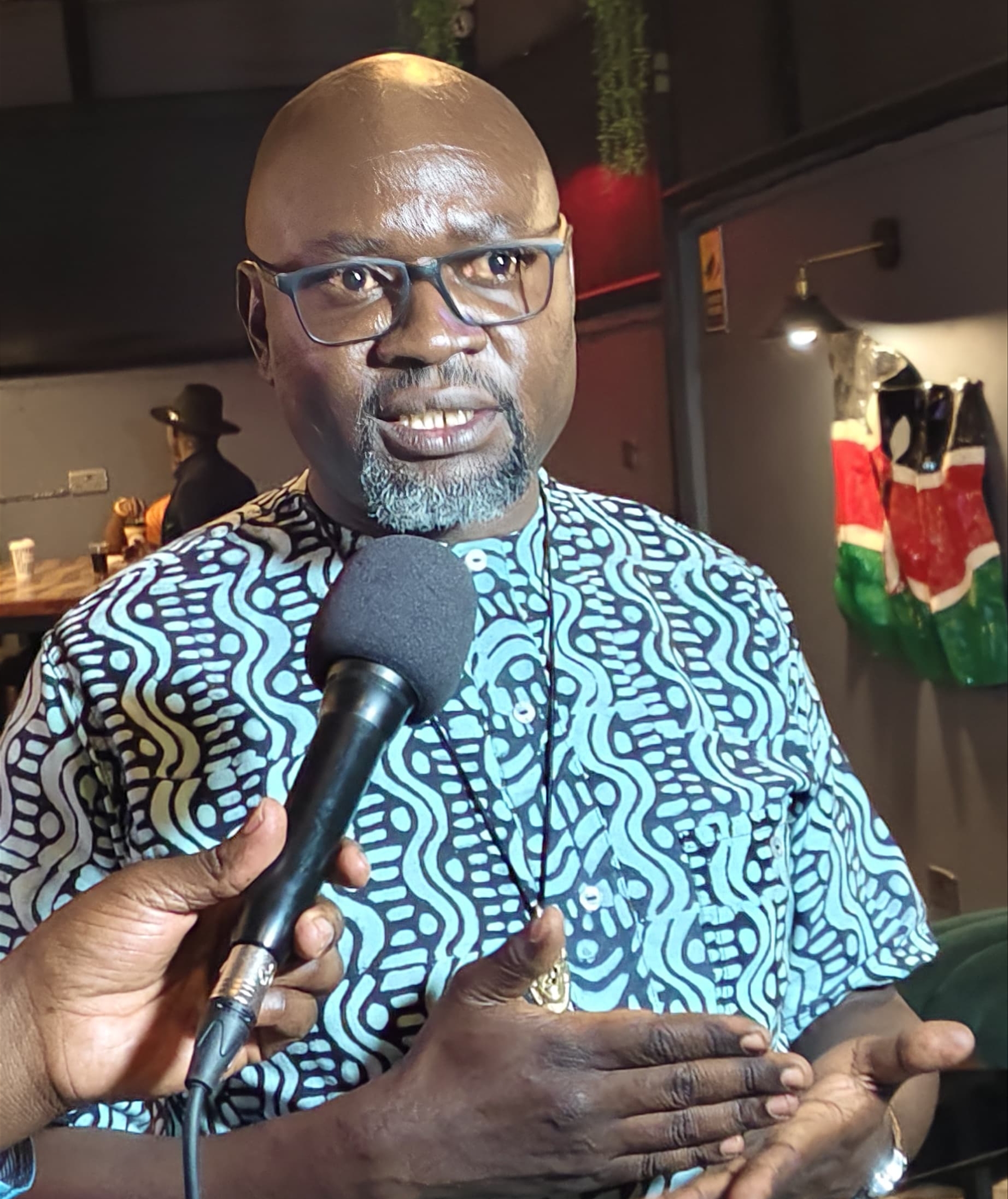
Eric Manya, a TICAH representative, said the findings challenge the common perception that cultural practitioners struggle to find premises because Nairobi does not have enough space.
“There’s a persistent assumption that Nairobi’s cultural practitioners can’t find space because there isn’t enough of it,” Manya said.
“Our research tells a different story. The commercial property sector has significant unused capacity. What’s missing is a working relationship between that capacity and the people who most need it.”
Vacant buildings, but limited access
According to commercial property data from 2024 and 2025 reviewed by the study, Nairobi’s office market had an estimated 5.7 million square feet of oversupply in 2024, which declined to about 3.4 million square feet in 2025.
Some buildings in the Central Business District recorded vacancy rates of up to 70 per cent on upper floors, while peripheral and secondary malls also had significant unused space.
Despite the availability, however, cultural practitioners continue to operate from homes or unsuitable premises.
The study found that 47 per cent of practitioners work primarily from home, while 35 per cent consider their current workspace inadequate.
High rent emerged as another major barrier, with 78 per cent of respondents saying the cost was too high. A further 69 per cent cited rigid lease terms, while 65 per cent said available spaces were not designed for cultural work.
At the same time, 62 per cent said they lacked information about spaces that were available.
The findings therefore point to a mismatch between the commercial property market and the needs of the creative sector, rather than an actual shortage of space.
Creatives pay a hidden cost
For practitioners who manage to secure venues, the financial burden often continues beyond rent.
The study found that artists and event organisers can spend up to 80 per cent of their event budgets modifying spaces to make them suitable for cultural activities.
The costs include flooring, soundproofing, staging, lighting and electricity, particularly when offices, warehouses or retail spaces are converted into temporary cultural venues.
In many cases, the modifications must also be removed after an event, adding to the overall expense.
As a result, practitioners effectively pay twice — first for the space and again to make it usable.
Trust between cultural practitioners and property owners is another major challenge.
Only 11 to 12 per cent of those surveyed said they believed landlords understood their needs or trusted them as tenants.
Landlords, on the other hand, have raised concerns about irregular incomes, possible property damage, noise and complaints from neighbouring tenants.
According to the research, this has created a cycle in which cultural practitioners are viewed as risky tenants, while landlords have few opportunities to establish their reliability.
Five barriers stand out
The research identifies five interconnected barriers to cultural practitioners accessing commercial space.
The first is affordability, as many practitioners have low or irregular incomes that make conventional commercial rents difficult to sustain.
Secondly, rigid lease terms often do not suit project-based cultural activities, which may require space for shorter or flexible periods.
The third challenge is physical suitability. Generic offices, for instance, may not provide the facilities or layout required for dance, music, film, visual arts and other creative activities.
There are also regulatory barriers, with licensing and compliance requirements sometimes making cultural use of commercial premises expensive and unpredictable.
Finally, trust and information gaps continue to keep landlords and cultural practitioners apart, with both sides often uncertain about what the other needs.
Unlocking Nairobi’s unused spaces
Rather than calling for the construction of new cultural facilities, the research proposes making better use of commercial properties that are already standing vacant or underused.
Potential spaces include vacant upper floors of CBD buildings, pension fund-owned properties, peripheral and secondary malls, industrial and former-industrial buildings in areas such as Ngara, Ruaraka and South B, as well as underused private residential compounds.
The study identifies three priority areas for cultural-space development.
Westlands and Upper Hill could support established cultural hubs, while the CBD and Mombasa Road corridor could provide more affordable spaces.
Meanwhile, Ngara, Ruaraka and Eastlands could serve as production, rehearsal and maker spaces.
To bridge the gap, the research recommends moving away from a system where individual artists negotiate with landlords on their own.
Instead, it proposes intermediary-led models in which trusted organisations bring practitioners together, aggregate demand and help manage relationships with property owners.
The recommendations include master leases, structured trust pilots, a cultural-space directory, flexible lease mechanisms, simplified NEMA and county licensing processes, as well as longer-term cultural land trusts.
Such measures, the study argues, could provide a faster and less costly way of expanding cultural infrastructure than constructing new buildings.
“This is not a call to build our way out of the problem. It’s a call to unlock what’s already standing empty, and to build the trust and mechanisms that let cultural practitioners actually use it,” Manya said.
Opportunity for Nairobi’s creative economy
The findings come as Kenya continues to position the creative economy as an important driver of employment, innovation and economic growth.
For Nairobi’s cultural practitioners, the research suggests that unlocking the sector’s potential may not require the city to build more spaces.
Instead, the immediate opportunity lies in making existing vacant and underused properties affordable, accessible and suitable for cultural work.
The study ultimately calls for stronger links between property owners and the creative community, arguing that with the right arrangements, Nairobi’s unused commercial spaces could become an important part of the city’s cultural infrastructure.
