
By Peace Muthoka.
The Kenya Paediatric Research Consortium (Keprecon) today hosted a high-level press briefing in Nairobi to spotlight a groundbreaking partnership that’s giving new momentum to public health in Northern Kenya.
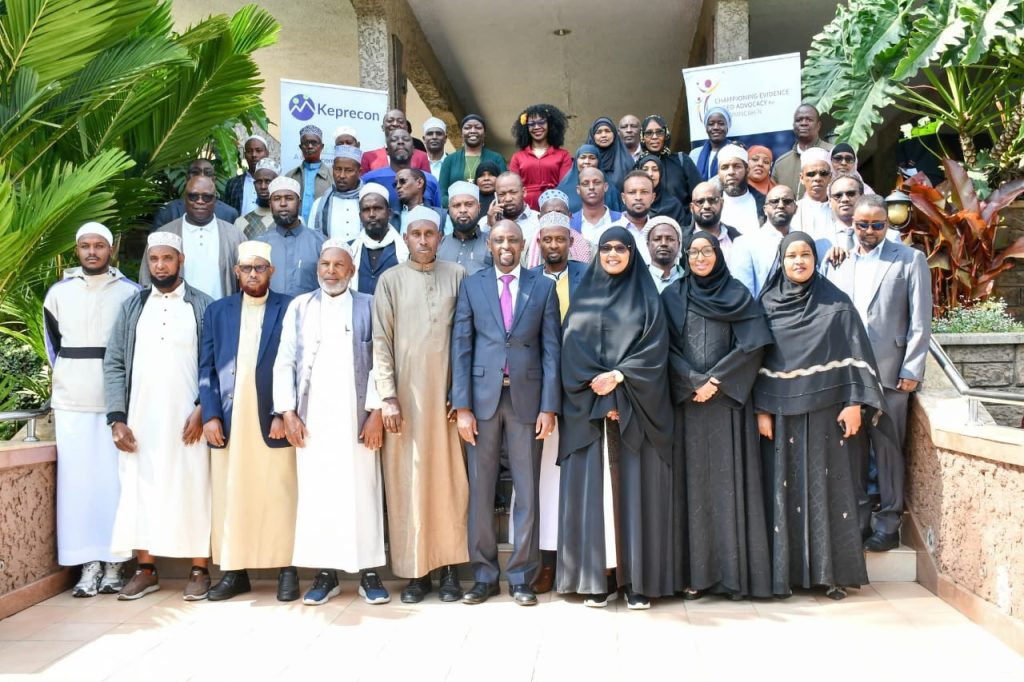
Through its Championing Evidence-Based Advocacy (CEBA) project, Keprecon recently convened a powerful knowledge-sharing forum in Mandera on July 21, 2025. The event brought together over 50 religious leaders from Garissa, Mandera, Wajir, and Isiolo counties alongside county health officials, civil society actors, the Deputy Governor of Mandera, and the First Ladies of Wajir and Isiolo.
Held under the theme “Deepening Local Leadership in Health Advocacy,” the forum sought to equip religious leaders with accurate, science-based information on the Human Papillomavirus (HPV) vaccine and its critical role in preventing cervical cancer. The leaders were also trained on how to combat myths, address cultural concerns, and advocate for greater local investment in reproductive and child health.
“Faith leaders are trusted voices,” said Professor Fredrick Were, CEO of Keprecon. “By equipping them with the right knowledge, we turn them into agents of positive change in the healthcare landscape.”
The urgency is clear. Northern counties continue to report alarmingly low HPV vaccine uptake. In Mandera, it stands at less than one percent a statistic that shocked participants.“Initial rollout efforts failed because we didn’t involve the right peoplevour religious leaders,” said Dr. Abdi Maalim, Director of Medical Services in Mandera County.
“Misinformation has filled that gap. Many people falsely believe the HPV vaccine causes infertility. This vaccine simply protects girls aged 9 to 14 from future cervical cancer. It’s lifesaving.”The forum created space for open, honest dialogue around these misconceptions.
Rukia Mohammed, First Lady of Wajir County, emphasized the need to replace fear with facts: “There is still a deep-rooted belief that the vaccine is a form of birth control. This has created fear among our people. But when religious leaders speak, people listen. That’s why this forum is so important.”
She noted that barriers to uptake also include confusion around the age bracket and limited vaccine supply. But with the backing of faith leaders and grassroots partners like SUPKEM, she believes communities will begin to embrace the vaccine as part of routine immunization.
Hawa Kuti, First Lady of Isiolo County, also lauded the initiative, calling for sustained engagement: “We cannot reach every girl without trusted messengers on the ground. Religious leaders have the moral authority and community reach to drive this message home.”
To amplify awareness, leaders plan to use local radio, community meetings, and mosque platforms to deliver accurate information. The forum also addressed broader reproductive, maternal, neonatal, child, and adolescent health challenges, which remain acute in the region due to limited health infrastructure and nomadic lifestyles.
Keprecon stressed that the success of HPV vaccination and other essential services hinges on inclusive, culturally sensitive advocacy.“We cannot achieve Universal Health Coverage without addressing the real barriers communities face whether cultural, logistical, or informational,” the organization said .