Standard Chartered Nairobi Marathon Attracts 30,700 Runners, Raises KSh76 Million
By Peace Muthoka
NAIROBI, Kenya, October 25, 2026 — The 23rd Standard Chartered Nairobi Marathon attracted 30,700 runners from more than 100 nationalities and raised KSh76 million for community programmes targeting young people, women and persons with disabilities.
The event, held along Nairobi’s Southern Bypass with views of Nairobi National Park, brought together more than 400 elite athletes and recreational runners, backed by a record KSh273 million in sponsorship.
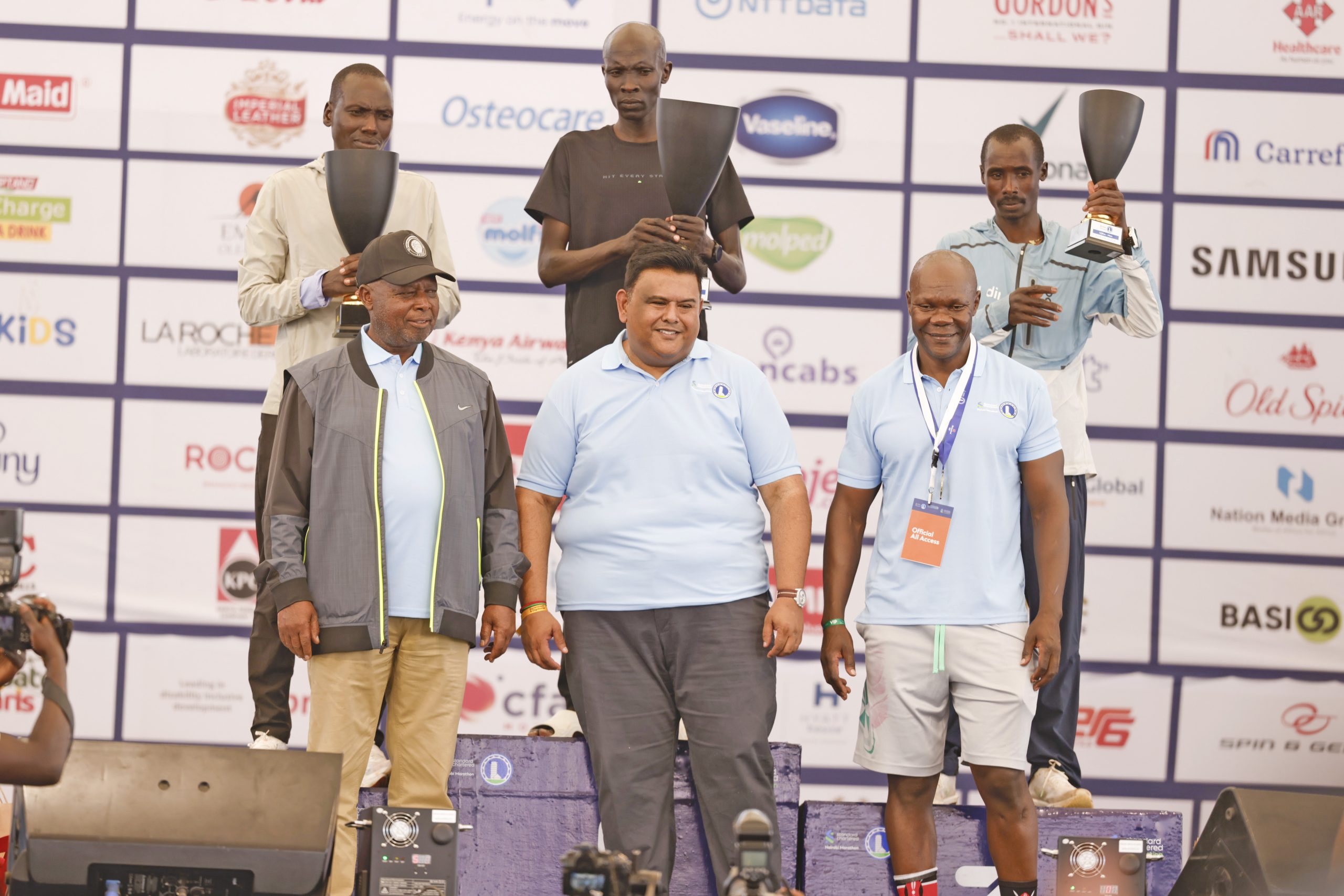
Abraham Kiptum and Mercy Rotich won the men’s and women’s 42-kilometre full marathon titles, respectively. Nahason Kipsang and Orba Chemurgor claimed the men’s and women’s 21-kilometre half-marathon titles, while Alfred Kimani and Joy Cheptoyek emerged victorious in the 10-kilometre race.
In the wheelchair category, Samuel Kuria and Mercyline Ajenjo won the men’s and women’s 21-kilometre races, respectively.
The organisers offered a total prize purse of KSh11.24 million across the race categories. Full marathon winners each received KSh2 million, while champions in the half-marathon and wheelchair races took home KSh300,000 each. The 10-kilometre winners received KSh200,000, while the winning corporate relay and persons with disabilities (PWD) teams each earned KSh100,000.
Beyond the competition, the marathon continued its fundraising mission, with all KSh76 million raised through registration fees set to support community programmes backed by the Standard Chartered Foundation. The latest contribution brings the total raised since the event began to KSh596 million.
The foundation supports initiatives that help young people develop skills, secure employment and grow businesses through education, employability and entrepreneurship programmes. The funding also targets efforts to expand economic opportunities for women and persons with disabilities.
“This marathon brings the world to Nairobi and turns a shared passion for running into opportunities that last beyond race day,” said Standard Chartered Kenya Chief Executive Officer Birju Sanghrajka.
He said the participation of runners from more than 100 nationalities demonstrated the power of sport to connect people, while the funds raised would help young people build skills, find employment and grow businesses.
“That is the legacy our runners, sponsors, partners and volunteers are building together,” Sanghrajka said.
Meanwhile, organisers placed emphasis on runners’ welfare, introducing measures to improve safety, comfort and recovery throughout the event. These included 19 hydration stations, roaming bicycle medics, dedicated muscle-relief stations, improved post-race recovery services and downloadable digital finisher certificates.
Standard Chartered Nairobi Marathon Local Organising Committee Chairman David Mwindi said the success of an international race depended not only on participation numbers but also on the quality of the experience and the integrity of the competition.
“From elite athletes chasing a podium place to recreational runners pursuing a personal goal, every participant deserves dependable support,” Mwindi said, adding that organisers prioritised accurate timing, medical care, hydration and recovery.
The marathon also maintained its focus on fair competition. According to Mwindi, the event’s World Athletics Road Race Label reflected the standards applied to course measurement, timing, medical support and anti-doping procedures.
Working with the Anti-Doping Agency of Kenya, organisers subjected selected top finishers to testing in line with race regulations.
Environmental sustainability formed another part of the event. Each finisher received a tree seedling to plant, contributing to the organisers’ target of planting 40,000 trees in partnership with Nairobi City County. The organisers also introduced waste segregation, recycling and measures to reduce single-use plastics.
Registration figures showed that women accounted for the majority of participants. Of the 30,700 registered runners, 15,796 were women, representing 51.5 per cent, while men accounted for 14,904, or 48.5 per cent.
Millennials formed the largest age group, with 15,544 registrations, representing 50.6 per cent of participants. Generation Z accounted for 10,175 runners, or 33.1 per cent, while Generation X contributed 3,782, or 12.3 per cent. Generation Alpha accounted for 920 registrations, representing three per cent. Overall, 86 per cent of registered participants were aged 45 and below.
The strong turnout also reflected early demand, with registration closing in July after more than 30,700 entries filled the available places.
With its combination of elite competition, mass participation, fundraising and environmental initiatives, the 2026 marathon extended its impact beyond race day, bringing together runners and partners in support of community development and safer, more sustainable futures.