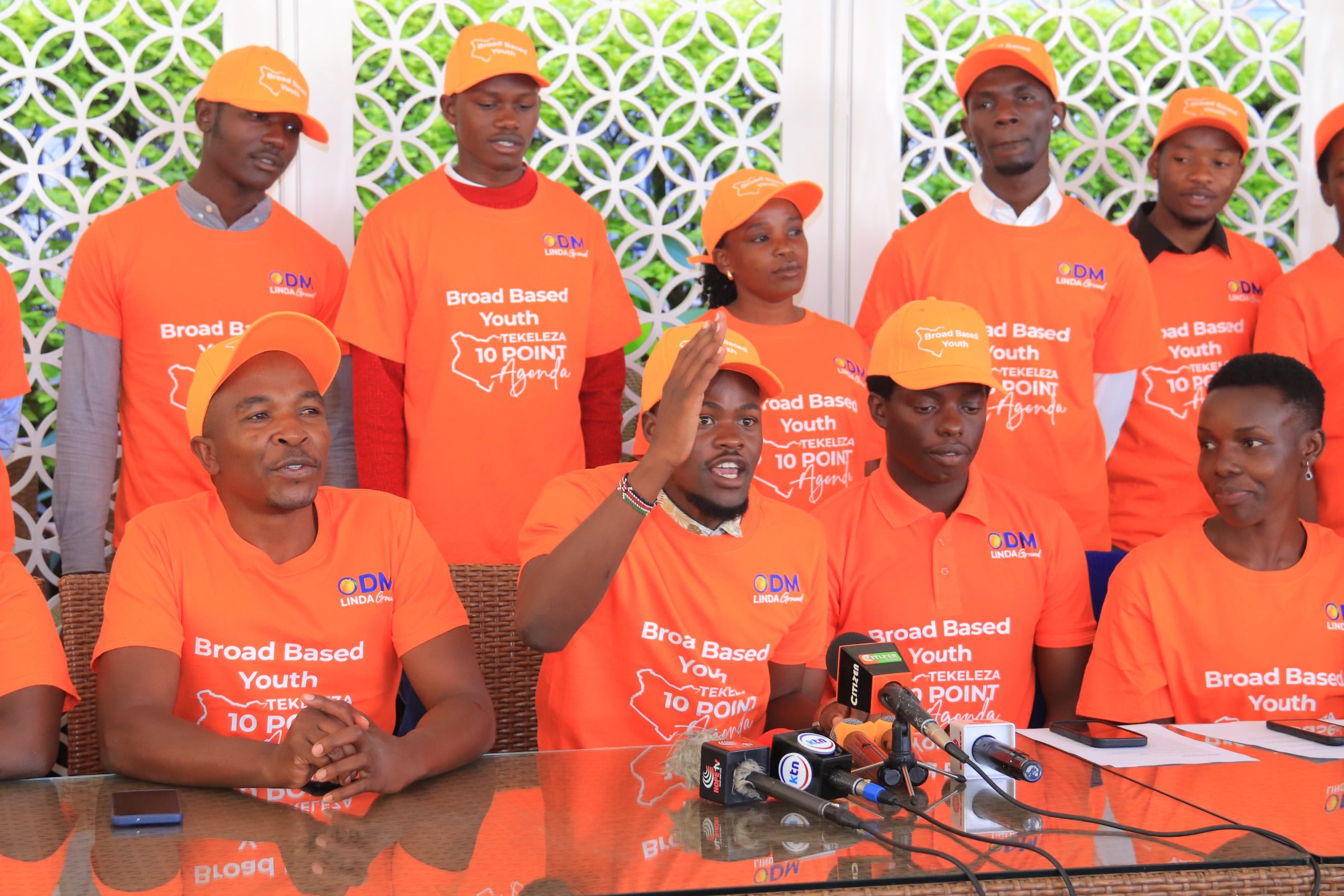
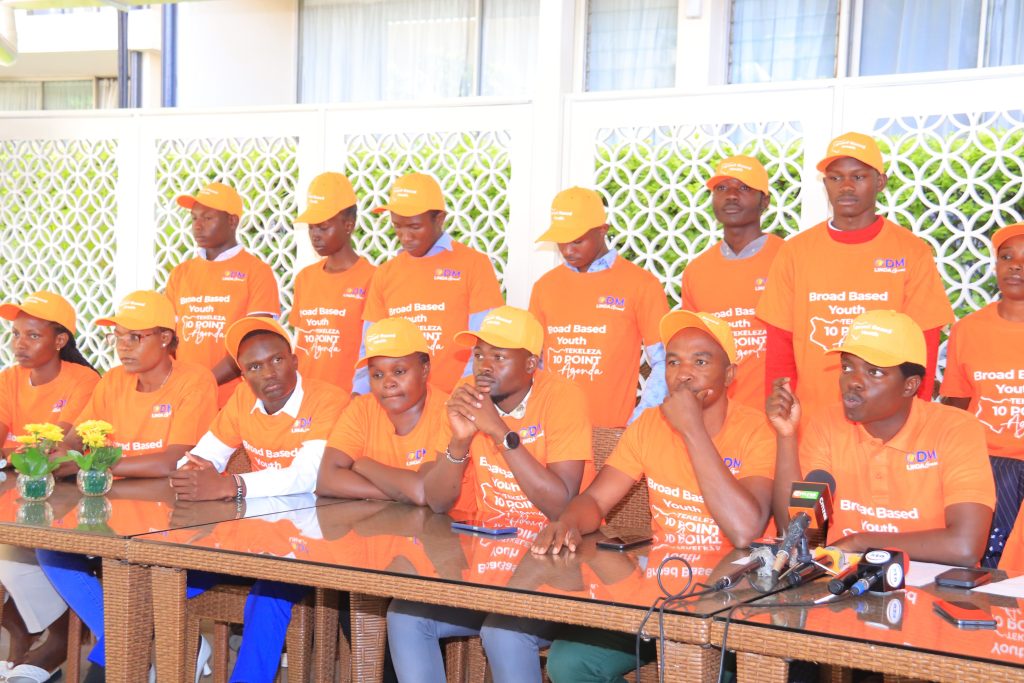
ODM youth delegates address the media while reading a joint statement at the Sarova Panafric Hotel in Nairobi on Wednesday, calling for the full implementation of the 10-point reform agenda and unity within the party.
By Peace Muthoka
Nairobi, Wednesday, January 21 — Young delegates of the Orange Democratic Movement today gathered at the Sarova Panafric Hotel to demand the full implementation of a 10-point reform agenda, saying Kenya has reached a moment where leadership must deliver real change, not speeches.
Drawn from across the country, the delegates read a joint statement that blended calm confidence with firm warning. They said the nation stands at a crossroads shaped by protest, dialogue, and uneasy compromise. Now, they argued, the country must move from promises to results.
At the centre of their message was the 10-point agenda agreed upon by President William Ruto and ODM leader Raila Odinga. To the delegates, this agenda is no longer a political gesture. It is the yardstick by which the Broad-Based Government must be judged.
Their remarks reached back to the youth-led protests against the 2024 Finance Bill. For many young Kenyans, those demonstrations grew from lived pain. Taxes rose. Jobs vanished. Daily life became heavier. Still, the delegates rejected the idea that the protests were reckless or chaotic.
Instead, they described them as deliberate and organised actions meant to force the country to confront hard truths about governance, fairness, and accountability. When tension ran high, they said, restraint saved the nation from deeper crisis. That restraint opened the door to dialogue and, eventually, to the Broad-Based Government.
However, the delegates drew a firm line between protest and leadership. Youth alone, they said, does not equal leadership. True leadership demands discipline, sacrifice, and results. Energy without responsibility only creates noise, and noise cannot fix a struggling economy or restore public trust.
From that position, they defended their support for structured engagement with the government. In their view, stability mattered at a moment when the country risked tearing itself apart.
Throughout the statement, inclusion emerged as a guiding theme. The delegates reminded Kenyans that ODM was born from resistance to exclusion and marginalisation. That history, shaped by Raila Odinga’s long political struggle, still defines the party’s soul.
Inclusion, they said, is not a temporary political tactic. It is a principle. That belief explains their support for any genuine effort to expand representation and restore balance, even when that effort involves working with President Ruto on shared national priorities.
Yet national unity, they stressed, must go hand in hand with internal discipline. ODM, they said, remains their political home. Its authority lies in its structures and delegates, not in loud declarations on social media.
They affirmed Dr Oburu Oginga as the duly mandated party leader, with full authority over coalition engagements. They also adopted resolutions passed by the Central Management Committee in Kilifi and decisions reached at delegates’ conventions in Busia and Kakamega, saying those resolutions bind all members.
At the same time, the delegates warned against public quarrels and media-driven disputes. Reckless statements and personal ambitions, they said, weaken the party and distract from the work Kenyans expect leaders to do.
Anyone nursing leadership ambitions, they added, must wait until after the 2027 General Election. This season, they insisted, calls for unity and focus, not internal warfare.
The strongest message of the day focused on implementation of the 10-point agenda. The delegates said Kenyans now want visible progress on constitutional freedoms, devolution, youth livelihoods, justice, and integrity in public life. Agreements signed at the top, they warned, mean little if life at the grassroots remains unchanged.
Even so, they acknowledged progress in some areas. They pointed to improved respect for the right to assemble, reduced cases of police excesses, and youth-focused programmes such as NYOTA. For young people searching for work or capital, these programmes offer a fragile but important lifeline.
Still, they cautioned that progress remains vulnerable. Without protection and expansion, gains can easily fade.
On national stability, their tone sharpened. They described the Broad-Based Government as a stabilising framework and rejected what they called opportunism and manufactured dissent. Legislators, they said, must return to oversight, lawmaking, and representation instead of fuelling factional politics.
Looking ahead, the delegates pledged continued engagement. Through an initiative dubbed Operation Linda Ground, they plan to mobilise youth across all counties, drive voter registration, and support national ID acquisition. For many young Kenyans, they noted, an ID card remains the first step toward opportunity.
They described the next phase as one of consolidation. The task now, they said, is to protect hard-won gains while pushing forward the broader struggle for social and economic liberation.
The 10-point agenda now stands as both a promise and a deadline. Kenya’s leaders, they said, must prove their worth through action that ordinary citizens can feel in their daily lives.