
Dandora Secondary School Defies the Odds as One A-Minus Ignites Hope and Rewrites a Community’s Story
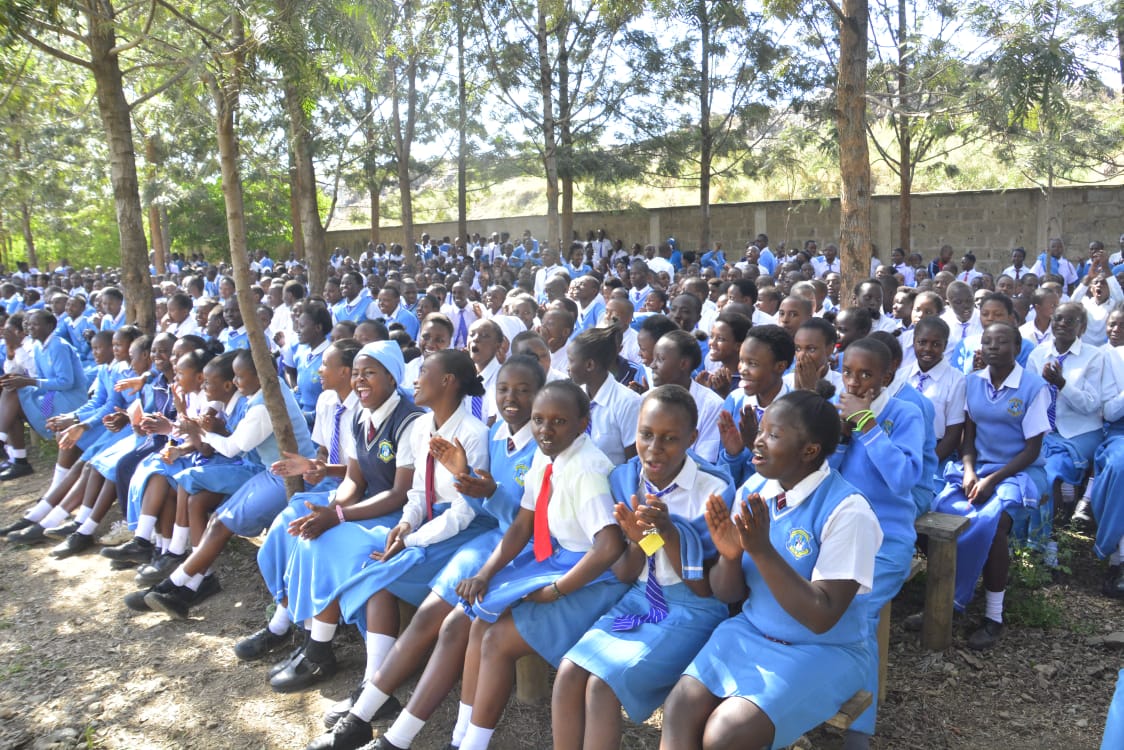
DANDORA, Nairobi, Friday, January 16, 2026 — As the sun hovered above the crowded rooftops of Dandora, a rare stillness settled inside Dandora Secondary School. Students gathered in clusters, teachers stood quietly at the edges of the compound, and parents leaned forward, eager to listen. On this day, the school was not fighting stigma, scarcity, or survival. Instead, it was celebrating possibility.
At the heart of the moment stood Aggrey Munandi, a lean, soft-spoken young man whose KCSE 2025 results had done what years of advocacy often failed to achieve. He scored an A-minus of 80 points, missing a straight A by just one mark. In a day secondary school located in one of Nairobi’s most disadvantaged neighbourhoods, that single result carried the weight of a revolution.
For many in attendance, the applause that rang out was not just for Aggrey. It was for Dandora itself.
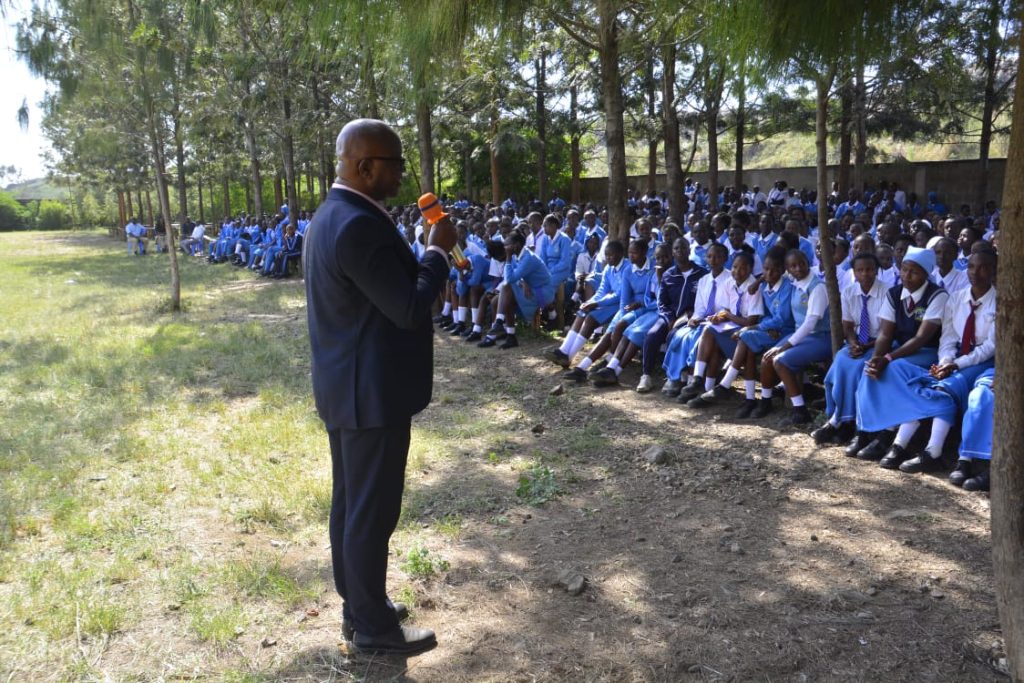
Eustus Thiong’o, the Principal of Dandora Secondary School
“I am a very proud principal today,” said Eutychus Maina Thiong’o Thiong’o, the Principal of Dandora Secondary School, as he addressed the gathering. His voice carried pride, relief, and a deep sense of validation. “Aggrey Munandi has put the name of this school on the academic map of our Republic.”
As he spoke, Thiong’o looked less like an administrator delivering remarks and more like a guardian watching a long, difficult journey reach a defining milestone. For years, he has led a school of 1,628 students with only 48 teachers and 23 non-teaching staff. Every day, overcrowded classrooms and limited resources test both patience and resolve. Still, he insists, belief has kept the school moving forward.
“When Aggrey came here, I immediately saw potential,” Thiong’o recalled. “The grades he was posting told me this boy could go far.”
Yet talent alone does not thrive on hope. Aggrey’s reality outside the school gates threatened to cut short that promise. His mother struggled to raise school fees, and basic requirements like books, trips, and exam registration remained constant hurdles. At that point, Thiong’o made a personal decision that went far beyond his official role.
“I decided to pay all his fees and all the levies,” he said. “Whenever there was a trip, books, literature, or any requirement, I paid. I did it because I believed in him.”
That belief became a lifeline. Aggrey stayed focused, disciplined, and committed. While many of his peers battled distractions and hardship, he pushed forward. He competed with students from some of the country’s best-resourced schools and refused to shrink.
“He did not disappoint me,” Thiong’o said. “Despite all the challenges, he did us proud.”
For Aggrey, the achievement did not come with comfort. As a day scholar, his evenings meant more than revision. They meant responsibility. They meant navigating a neighbourhood grappling with drugs, crime, and economic strain. Still, he found time to study. He found reasons to believe.
His success, therefore, became more than a personal victory. It became proof.
“People think Dandora only produces crime and despair,” the principal said. “But Aggrey has shown that we can change the narrative.”
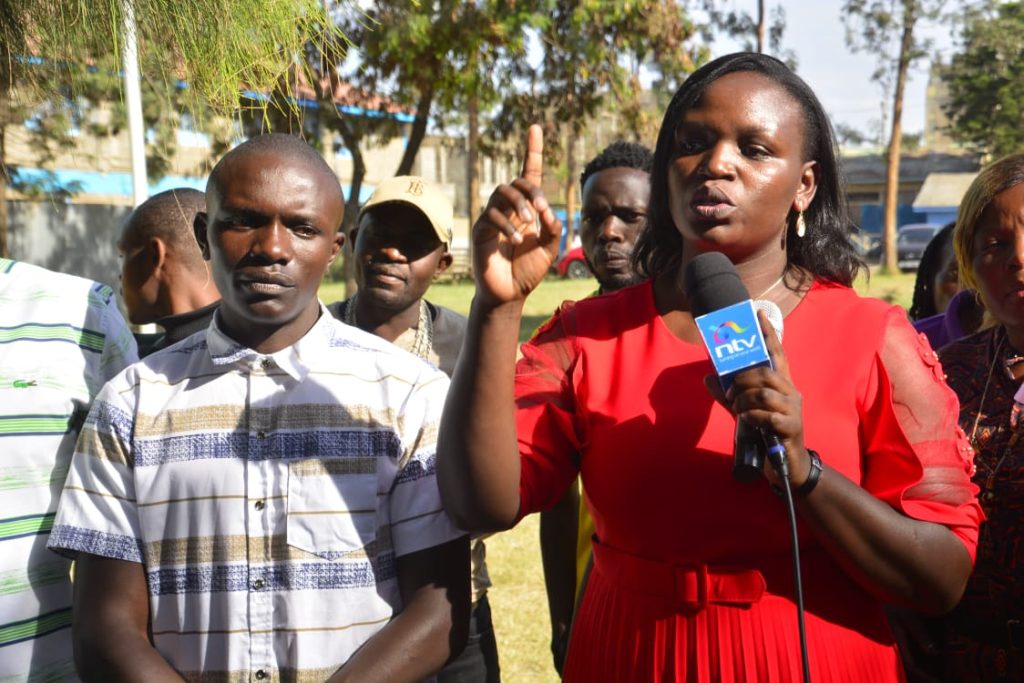
(L-R) Aggrey Munandi and Dorcas Mwigereri, an alumnus of Dandora Secondary School
That same message echoed through the voice of Dorcas Mwigereri, an alumnus of Dandora Secondary School. She returned to the school not as a guest seeking applause, but as a community member reclaiming dignity.
“For a very long time, all we hear about Dandora is bad news,” Dorcas said. “I take it upon myself to come out and say this is not what my community is all about.”
She spoke with conviction shaped by lived experience. Growing up in Dandora, she witnessed hardship, but she also saw resilience, intelligence, and ambition waiting for opportunity.
“In this community, if given the right support, young people can do amazing things,” she said.
Dorcas described Aggrey’s A-minus as a rare and powerful statement.
“Getting an A-minus in a day school is not easy,” she explained. “After classes, you go home, you fend for yourself. You don’t have enough time to revise. It takes sacrifice.”
As she spoke, students listened closely. Some stood in faded uniforms. Others clutched exercise books. For them, Aggrey’s story felt personal.
“That is why appreciation matters,” Dorcas added. “As water is to a flower, so is appreciation to a human.”
She stressed that the event was not just about celebrating one student. It was about motivating many others to believe that background does not define destiny.
“You don’t have to depend on what people say about where you come from,” she told them. “A child in Dandora is no different from a child in Karen or Lavington. The difference is resources.”
However, inspiration alone cannot solve systemic challenges. Dorcas used the platform to confront one of Dandora’s most urgent crises: drug and substance abuse.
“We have children as young as nine being pulled into drugs and crime,” she said. “If we don’t act, we will lose a generation.”
That concern led her to issue a direct plea to the government, especially on education transition.
“This is not advice. It is a plea,” she said. “Mr. President, if these kids do not go to school, the fight against drugs and crime will be futile.”
She called for a 100 percent transition to Grade 10, warning that economic hardship has pushed many learners out of school.
“Parents don’t have money,” she said plainly. “Every day, people ask for help with fees, and we cannot help everyone.”
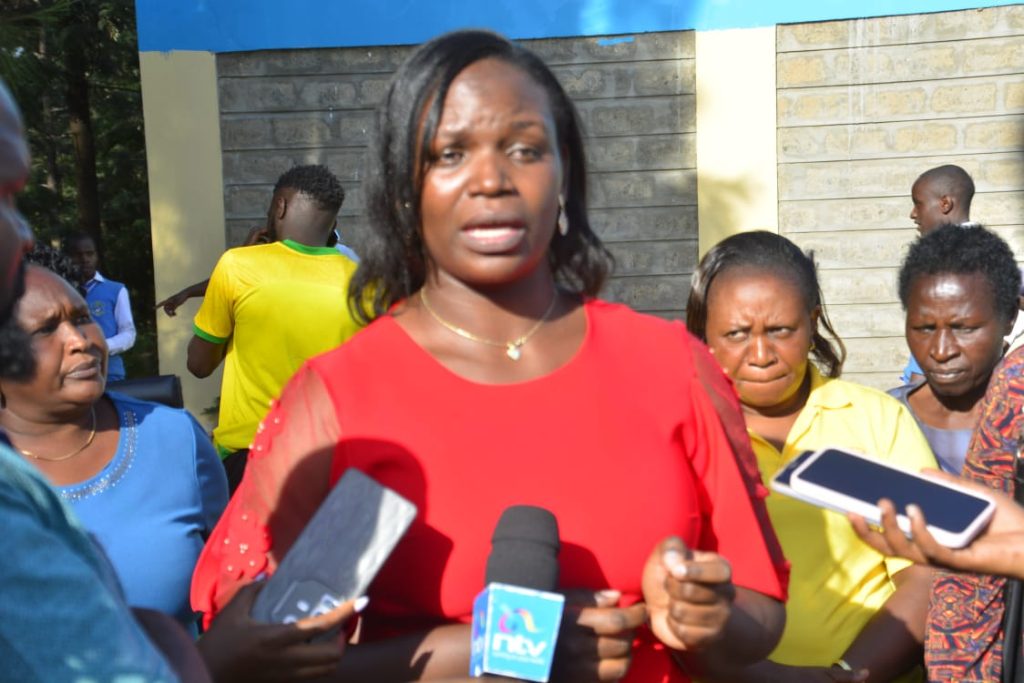
Dorcas Mwigereri, speaking to the press at Dandora Secondary School on January16, 2025.
Her message was simple and urgent. “Mr. President, tafadhali,” she said. “If all children are in school, we stand a chance.”
Back on the podium, Principal Thiong’o did not shy away from describing the harsh realities his school faces daily. He spoke of parents who struggle to raise lunch levies and students exposed to crime networks that thrive on fear.
“Some students witness theft and destruction, but they cannot report because they fear being beaten outside,” he said. “That fear affects discipline and safety.”
He also addressed the long-standing stigma attached to the area.
“People still believe Dandora is not a good place,” he said. “Even when the Teachers Service Commission posts teachers here, many request transfers.”
Yet he insisted that reality has changed.
“Dandora is not the old Dandora,” Thiong’o said. “We are a community committed to morals, growth, and change.”
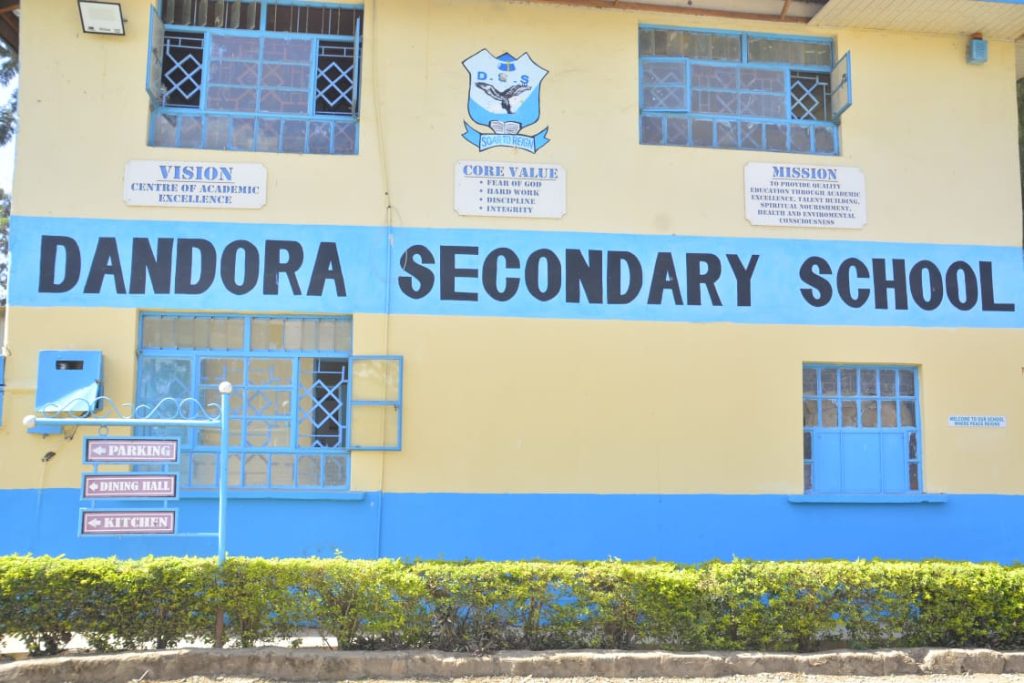
The numbers, however, reveal the pressure. With an average of 70 students per class, teachers struggle to offer individual attention. Infrastructure remains stretched, even as the school absorbs learners affected by curriculum transitions and missed admissions.
“We do not discriminate,” the principal said. “These are Kenyan children. If we get more teachers and resources, we can produce many Aggreys.”
As the ceremony drew to a close, one truth remained clear. Aggrey Munandi’s journey is far from finished. Despite his remarkable result, he currently works at a local construction site as he waits for support to continue his education.
“So far, no one has come forward to assist him,” Thiong’o said. “We are appealing to anyone of goodwill to help him access the best possible institution.”
Aggrey stood quietly among his teachers and peers, carrying both pride and uncertainty. His A-minus had lifted a school, challenged national perceptions, and reignited conversations about equity in education.
On this Friday at Dandora Secondary School, excellence did more than shine. It spoke. It confronted. And it reminded the country that even in the most unlikely places, greatness grows when belief meets opportunity.