EMKF Leads Counties in Drive to Strengthen Emergency Healthcare Services
By Peace Muthoka
Nairobi, March 12, 2026 – County governments are intensifying efforts to improve emergency medical services as health leaders gather to share solutions on faster ambulance response and better pre-hospital care across Kenya.
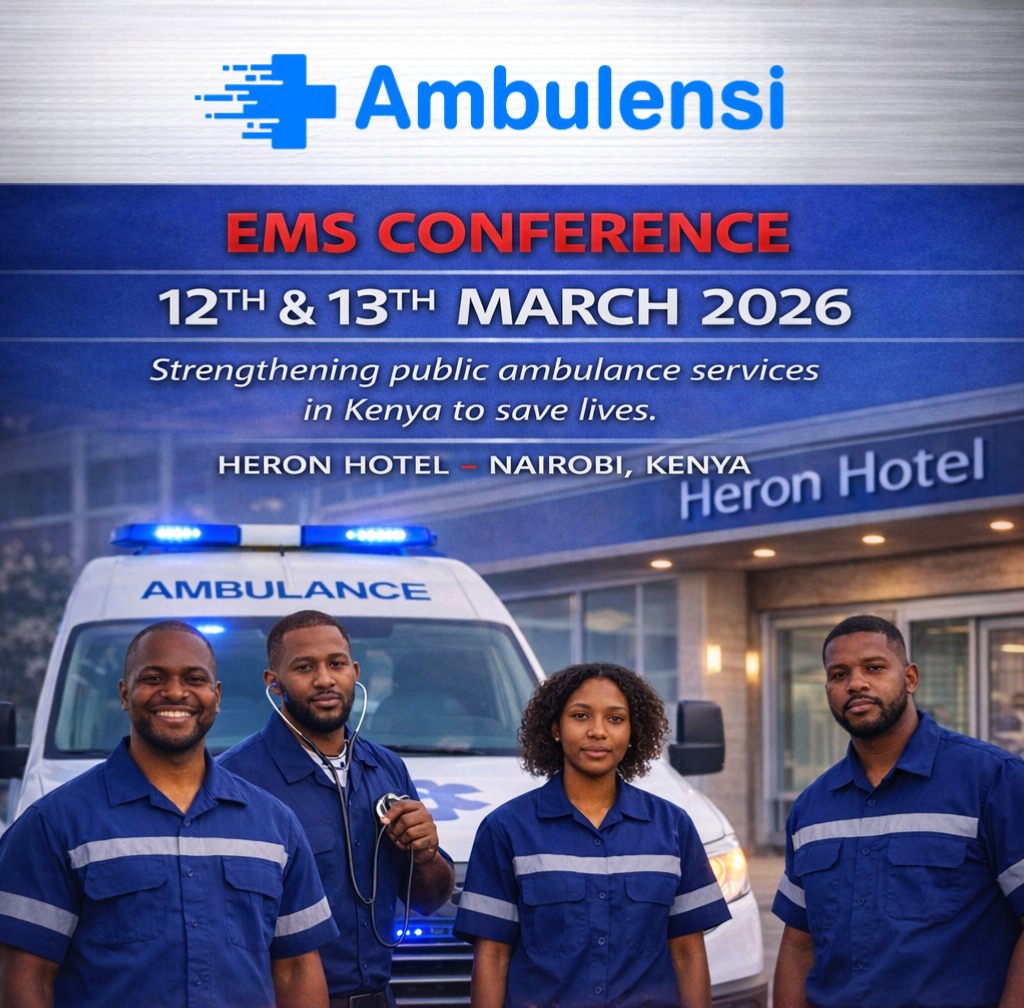
The discussions took place during a conference organised by the Emergency Medicine Kenya Foundation (EMKF), bringing together county health officials, emergency care experts and development partners. The meeting focused on how counties can strengthen ambulance services, improve coordination and ensure patients receive life-saving care quickly.
Health officials said emergency medical systems remain a critical pillar of healthcare, especially when accidents, medical crises and disasters occur.
Kisumu County Executive Committee Member for Medical Services, Public Health and Sanitation, Dr Gregory Ganda, said the county has made steady progress in building an organised emergency response system.
He explained that Kisumu took advantage of the Covid-19 period to establish a coordinated command system that manages emergency services across the county.
“We set up what we call an Emergency Operations Centre, which also hosts our ambulance dispatch centre. This acts as a command centre where all emergency services are coordinated,” said Dr Ganda.
From the centre, an incident manager receives emergency calls and dispatches ambulances to the nearest location. The system also tracks response teams and ensures patients are quickly transported to hospitals.
Dr Ganda said the model has helped Kisumu streamline ambulance management and improve coordination during emergencies.
“We wanted a properly managed system that ensures our ambulance services are organised and able to respond effectively when residents need urgent medical attention,” he said.
The county currently operates a fleet of 16 ambulances, with 14 actively serving residents. The county has also budgeted for three additional fully equipped ambulances in the current financial year to strengthen its response capacity.
Despite the progress, Dr Ganda acknowledged that challenges still exist, particularly in reaching residents who live far from health facilities.
“For people in remote areas, the entire response process from the time a call is made to the time a patient reaches the hospital can take up to 90 minutes,” he said.
To address the challenge, Kisumu County is strategically placing ambulances across different regions and using specialised vehicles to reach difficult terrain.
Some areas are served by four-wheel-drive ambulances such as Land Cruisers, which can navigate rough roads and remote communities. Other areas along major highways are covered by standard ambulance vehicles.
Dr Ganda said the county is also exploring public-private partnerships to expand coverage.
Private ambulance providers could join the county emergency system once national reimbursement mechanisms are fully operational.
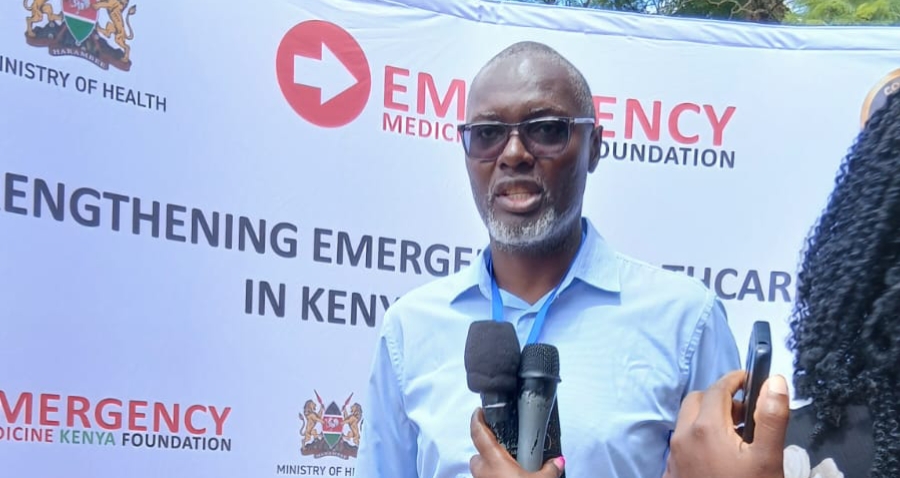
Kisumu County Executive Committee Member for Medical Services, Public Health and Sanitation, Dr Gregory Ganda
He added that technology is also becoming a key tool in strengthening emergency response.
Dr Ganda welcomed a new digital platform introduced by EMKF that allows counties to monitor ambulance movement and patient information in real time.
“The platform helps us track ambulances, monitor patient information and coordinate responses much more efficiently,” he said.
“We are here to learn, share experiences with other counties and discuss how we can adopt such systems to strengthen emergency care.”
Kericho County Executive Committee Member for Health Services, David Ekuwan, said the conference offers counties a valuable opportunity to learn from each other and improve their emergency response systems.
“This forum brings together partners in the emergency care space so that we can share knowledge and experiences on how best to save lives through prompt medical services,” he said.
Ekuwan said Kericho County has also taken steps to improve emergency healthcare through partnerships and capacity building.
The county currently has eight public health facilities and one private facility capable of offering emergency medical services.
Residents can request ambulance services through a dedicated county emergency line, allowing health teams to respond quickly and transport patients to the nearest hospital.
“We normally ensure that an ambulance reaches a patient within about an hour, even for those living in remote areas,” he said.
He added that the county is also investing in training healthcare workers and procuring emergency medical equipment to improve service delivery.
Kericho has also developed a county emergency care plan with support from EMKF, which is now guiding efforts to strengthen emergency services.
Meanwhile, Emily Nyagaki of the Emergency Medicine Kenya Foundation said the conference is part of a broader effort to help counties strengthen pre-hospital emergency care systems.
She said counties are sharing best practices and identifying practical ways to improve ambulance coordination, emergency infrastructure and human resource capacity.
“Today’s discussion focuses on how counties can improve their pre-hospital services by strengthening policies, infrastructure and resources,” Nyagaki said.
She explained that infrastructure includes ambulances and emergency care centres, while resources also cover financial investments and trained personnel.
Nyagaki said the progress made so far is encouraging.
“Currently, 12 counties have established dispatch centres that coordinate pre-hospital emergency services,” she said.
More than 20 counties have also developed policies to guide emergency care, while 32 counties have started allocating funds for emergency healthcare services in their budgets.
She noted that peer learning among counties is one of the most important aspects of the conference.
“The best thing about this meeting is that counties are learning from each other, discussing challenges and identifying the best way forward,” she said.
Nyagaki expressed optimism that the ongoing collaboration between counties, health partners and organisations like EMKF will help strengthen emergency medical services nationwide.
She said the goal is simple but critical to ensure every Kenyan, regardless of where they live, can access timely emergency care when it matters most.
“As counties continue building their systems and sharing experiences, we are moving closer to a future where emergency healthcare services are faster, more coordinated and able to save more lives across the country,” she said.