Nairobi HR Leaders Urged to Turn Inclusion Talk into Action
By Peace Muthoka
Nairobi, March 24, 2026 – HR leaders in Nairobi have been challenged to move beyond conversations and take deliberate steps toward building inclusive workplaces for persons with disabilities.
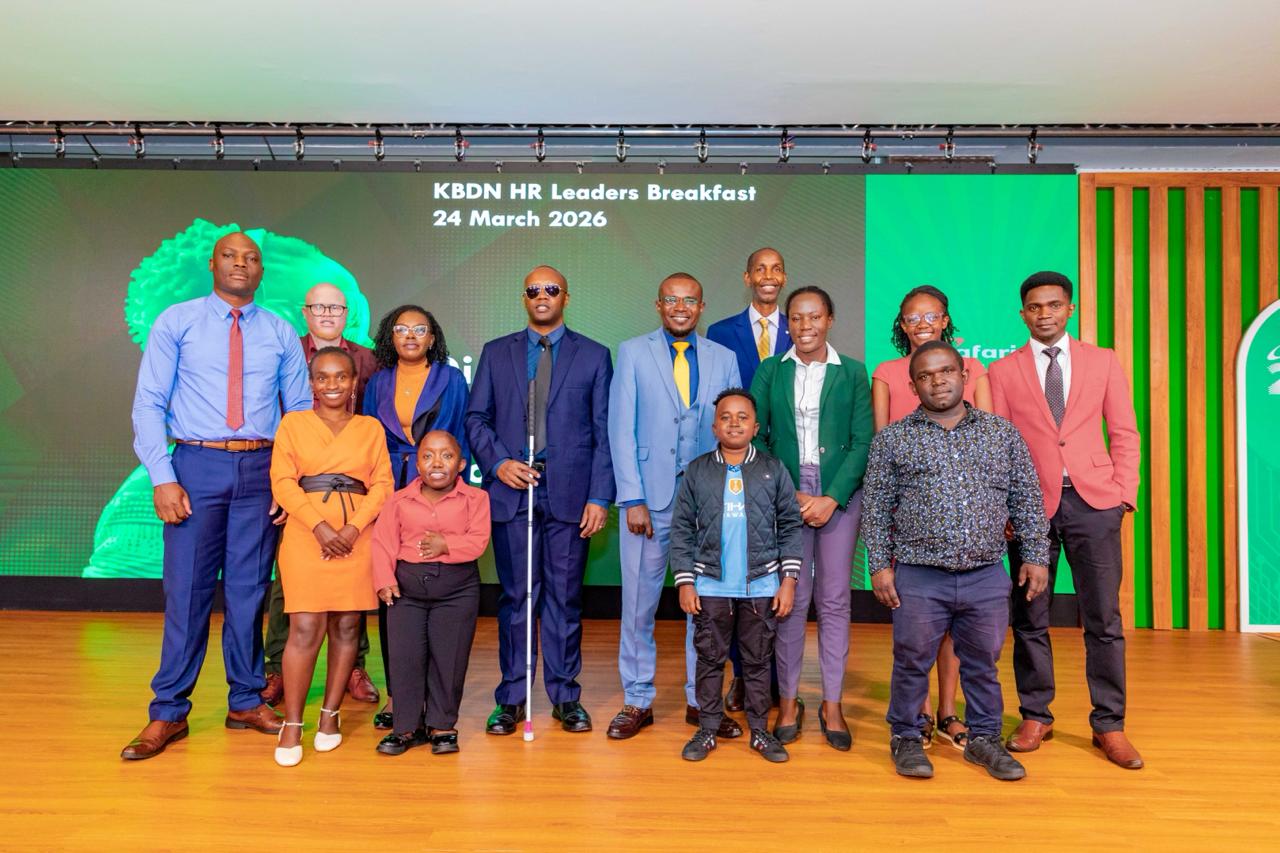
The call emerged during the Kenya Business and Disability Network (KBDN) HR Leaders Breakfast held at the Michael Joseph Centre at Safaricom headquarters on March 24, 2026. The forum brought together industry players and inclusion advocates to explore practical ways of advancing workplace diversity.
Speaking at the event, United Disabled Persons of Kenya Vice chairman Eric Ngondi emphasized that inclusion is a continuous journey that requires intentional action. He noted that while many organizations remain uncertain about where to begin, progress starts with a single step.
“Start where you are,” he urged, adding that even small actions can trigger meaningful and lasting change. At the same time, Ngondi highlighted the stark reality that although persons with disabilities make up about 16 percent of the population, nearly 80 percent are still excluded from full economic participation.
Consequently, he challenged HR leaders to use their influence to create opportunities, stressing that they remain key decision-makers who can either open or shut doors for persons with disabilities.
Meanwhile, the forum spotlighted Safaricom’s journey in promoting inclusion. The company began its efforts in 2001 by hiring its first employee with a disability and has since increased representation to 4 percent, edging closer to the 5 percent legal requirement.
This target is anchored in the Persons with Disabilities Act, 2025, which requires both public and private institutions to allocate at least five percent of jobs to persons with disabilities. Additionally, the law offers tax incentives to organizations that invest in accessible infrastructure and tools, reinforcing a broader rights-based approach.
On her part, Safaricom’s Chief Human Resources Officer Florence Nyokabi said the company’s progress has been driven by deliberate strategies, including the establishment of a diversity and inclusion function in 2016.
She noted that inclusion is not only a social obligation but also a business advantage. Furthermore, she explained that inclusive workplaces enable organizations to tap into a wider talent pool while improving overall performance.
In addition, Nyokabi underscored the importance of partnerships, encouraging organizations to join networks such as KBDN to access resources, share experiences, and accelerate their inclusion journey. She added that when institutions collectively move from intention to action, they create sustainable impact.
Throughout the discussions, participants explored practical areas such as accessibility, disability etiquette, and reasonable accommodation. They were also encouraged to embrace collaboration and continuous learning as key drivers of progress.
Ultimately, the Nairobi forum delivered a clear message while inclusion may be a journey, it must begin with decisive action, shared commitment, and the willingness to move forward together.