
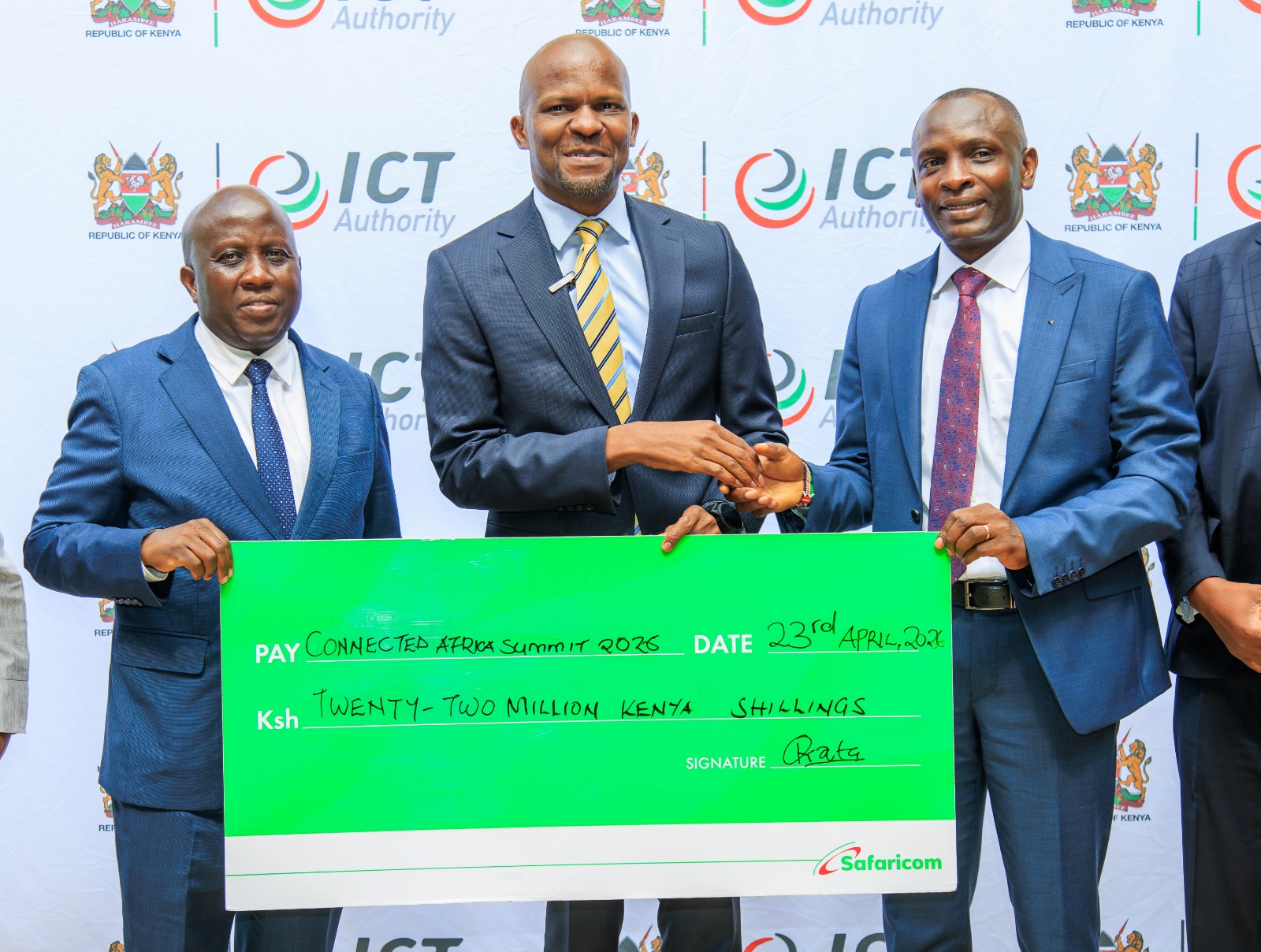
PS John Kipchumba Tanui and ICT Authority receive a cheque from Safaricom for the Connected Africa Summit 2026.
By Editorial Team
Nairobi, April 2026 — Africa’s push to take control of its digital future has gained fresh momentum as leaders, innovators, and global technology players prepare to gather in Nairobi for the Connected Africa Summit 2026, with a strong message emerging ahead of the meeting the time for talk is over, and delivery must now take centre stage.
The four-day summit, set for April 27 to April 30 at the The Edge Convention Centre, will bring together high-level delegations from across the continent and beyond. Organised by the ICT Authority, the summit is being billed as Africa’s most senior gathering on the digital economy this year.
Held under the theme “Uniting Africa’s Innovation for an Inclusive Digital Market,” the event is expected to move beyond past conversations and deliver concrete outcomes that shape Africa’s digital trajectory.
At a press briefing in Nairobi, William Gitau set the tone by emphasising the need for measurable progress. He said the summit builds on previous editions but introduces a sharper focus on execution. He noted that while the 2024 summit unlocked conversations beyond connectivity and the 2025 edition moved ideas from vision to reality, the 2026 gathering must ensure that “delivery becomes measurable.”
Gitau also underscored the scale and influence of the summit, describing it as the most senior digital economy platform on the continent. He pointed to the 2025 edition, which attracted more than 1,500 delegates from over 30 countries, and said this year’s event will expand that footprint and deepen its impact.
From the government side, the Ministry of Information, Communications and the Digital Economy framed the summit as a defining moment for Africa’s digital sovereignty. In a detailed statement, the Office of the Cabinet Secretary highlighted two urgent priorities connecting Africa’s innovators to each other and building a digital market that works for everyone, from small traders in border towns to large-scale tech entrepreneurs.
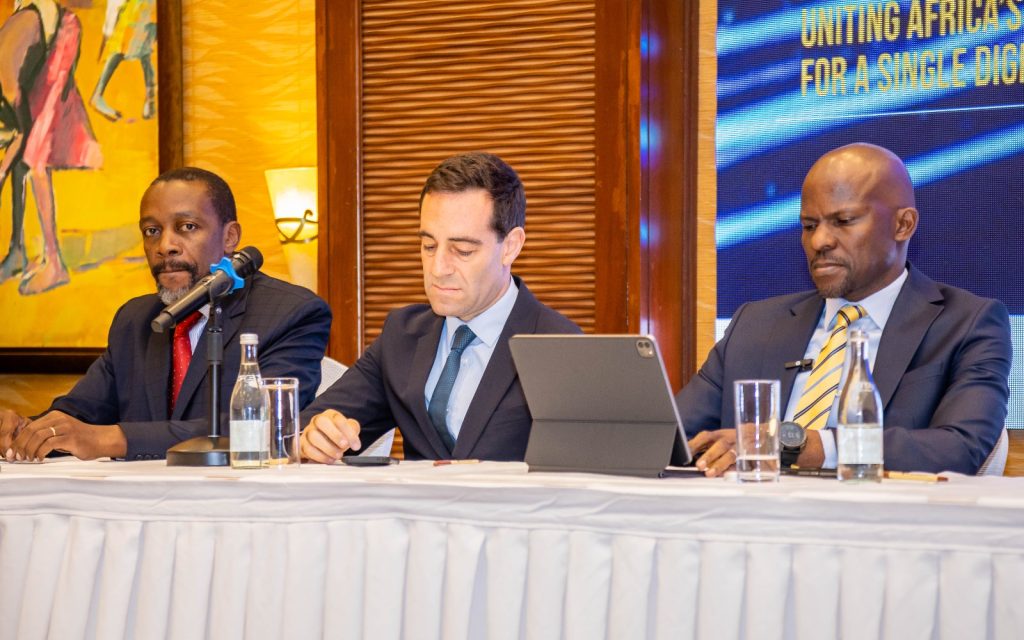
L-R George Odula , Country Manager, Kenya at Hewlett Packard Enterprise, Adam Lane ,Policy and Partnerships lead at Huawei , Kenya and Frankline Okata , Senior Executive at safaricom
The Ministry stressed that Africa’s innovators are often better known internationally than within the continent itself, and the summit aims to bridge that gap by creating direct connections between builders, investors, and policymakers.
At the same time, the government warned of a more pressing challenge that the rules shaping Africa’s digital economy are currently being written elsewhere. It insisted that Africa must take charge of defining frameworks around artificial intelligence, cross-border data, and digital trade.
Officials said the summit will serve as a platform for that shift, bringing ministers and stakeholders together for focused, high-level engagements designed to produce actionable results rather than broad declarations.
They outlined a structured format for the four days, combining plenary sessions, closed ministerial meetings, private sector engagements, and innovation showcases. According to the Ministry, this design is intentional and aimed at ensuring that discussions translate into implementation.
At the heart of the summit will be African innovators themselves. The Ministry noted that some of the continent’s most promising tech builders will present their solutions directly to decision-makers, putting innovation at the centre of policy and investment discussions.
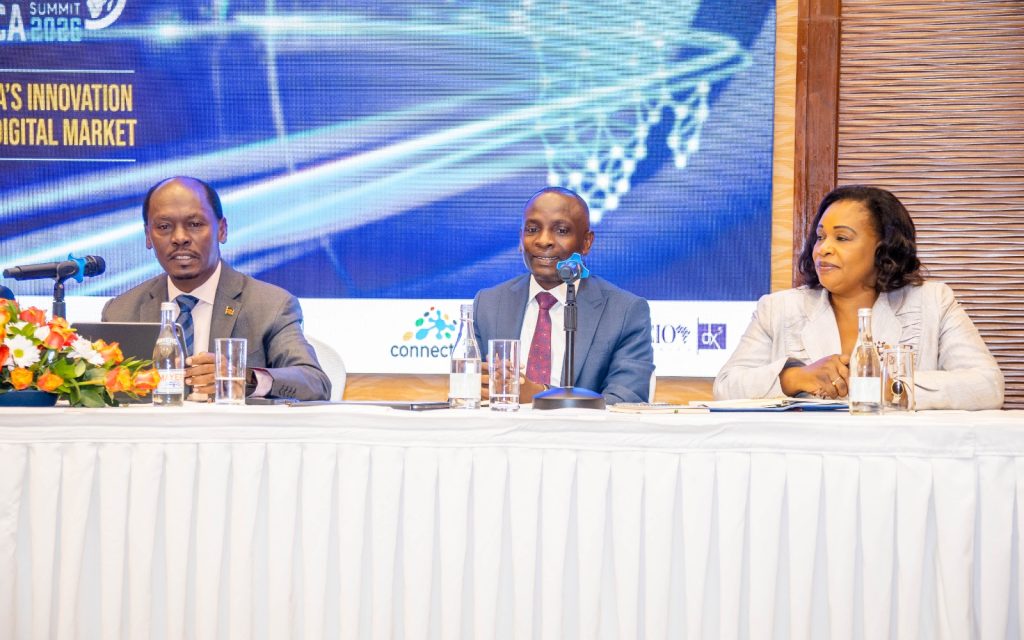
L-R William Kabogo , the Cabinet Secretary for Information,Communications and the Digital Economy, Jessy Maruti, the CEO for ICT Authority and Mary Kerema, the secretary for ICT and E-Government
Government officials also confirmed strong continental representation, with ministers from Ethiopia, Malawi, Uganda, Gabon, Guinea, Chad, and Zimbabwe expected to attend, alongside institutions such as the African Union, the African Continental Free Trade Area Secretariat, and Smart Africa.
In addition, the summit will host Deemah AlYahya, Secretary-General of the Digital Cooperation Organization, further underlining its global significance.
A major highlight of the summit will be the expected rollout of three key outcomes, which government officials say are designed to drive real change across the continent.
First, leaders aim to introduce a Digital Trade Implementation Sprint List under the AfCFTA framework. Officials explained that this will consist of practical measures to remove barriers that continue to slow cross-border digital trade, making it easier for businesses to operate across African markets.
Second, the summit will produce an African Data Space Action Note. According to the Ministry, this will act as a working framework to guide how data is shared and governed across borders, ensuring Africa develops its own data systems aligned with continental policies.
Third, a pipeline of bankable digital projects will be unveiled, covering areas such as connectivity, digital public infrastructure, cloud computing, cybersecurity, and digital skills. Each project will have a clear lead sponsor and delivery timeline, marking a shift from discussion to deal-making.
The Ministry emphasised that these outcomes are guided by a simple principle — Africa should negotiate as one digital market rather than as fragmented national economies.
Officials also pointed to ongoing infrastructure initiatives, such as regional transport and connectivity corridors, as key building blocks for a unified digital economy. They stressed that connectivity is not just about access, but about creating a seamless system that allows value to flow across borders.
Despite the opportunities, the government acknowledged significant challenges. It noted that only about a third of Africa’s population currently uses the internet, with rural areas still largely underserved. High broadband costs, limited access to capital for innovators, and reliance on foreign legal systems were also highlighted as barriers.
In addition, officials raised concerns that global rules on emerging technologies like artificial intelligence are often developed without Africa’s input, reinforcing the need for a coordinated continental response.
Meanwhile, the private sector is stepping in to support the summit’s ambitions, with Safaricom announced as the title sponsor after committing KES 22 million.
Safaricom Senior Executive, Peter Ndegwa reinforced the summit’s central message, saying Africa’s digital journey must now focus on scaling solutions that work in everyday life. He noted that while progress has been made in digitisation, the priority now is building systems that are practical, secure, and integrated.
Ndegwa said governments need reliable partners who can deliver solutions that improve how citizens interact with services daily. He added that digital systems must be designed around real user needs, ensuring they are accessible and effective.
Reflecting on Safaricom’s long-standing involvement, he said the company has supported the summit since its inception in 2009 and has witnessed how collaboration between governments, industry, and partners has shaped the region’s digital agenda.
He pointed to achievements such as infrastructure expansion and the growth of the digital superhighway, noting that these milestones go beyond policy wins and form the foundation of a functioning digital economy.
As the summit approaches, expectations are high that it will mark a turning point in Africa’s digital transformation journey.
With governments accelerating efforts to digitise public services and expand access, and with innovators continuing to push boundaries, the Connected Africa Summit 2026 is shaping up as more than just a conference.
It is emerging as a platform where Africa seeks to define its digital future on its own terms with clear plans, committed partners, and a strong focus on turning ambition into action.