
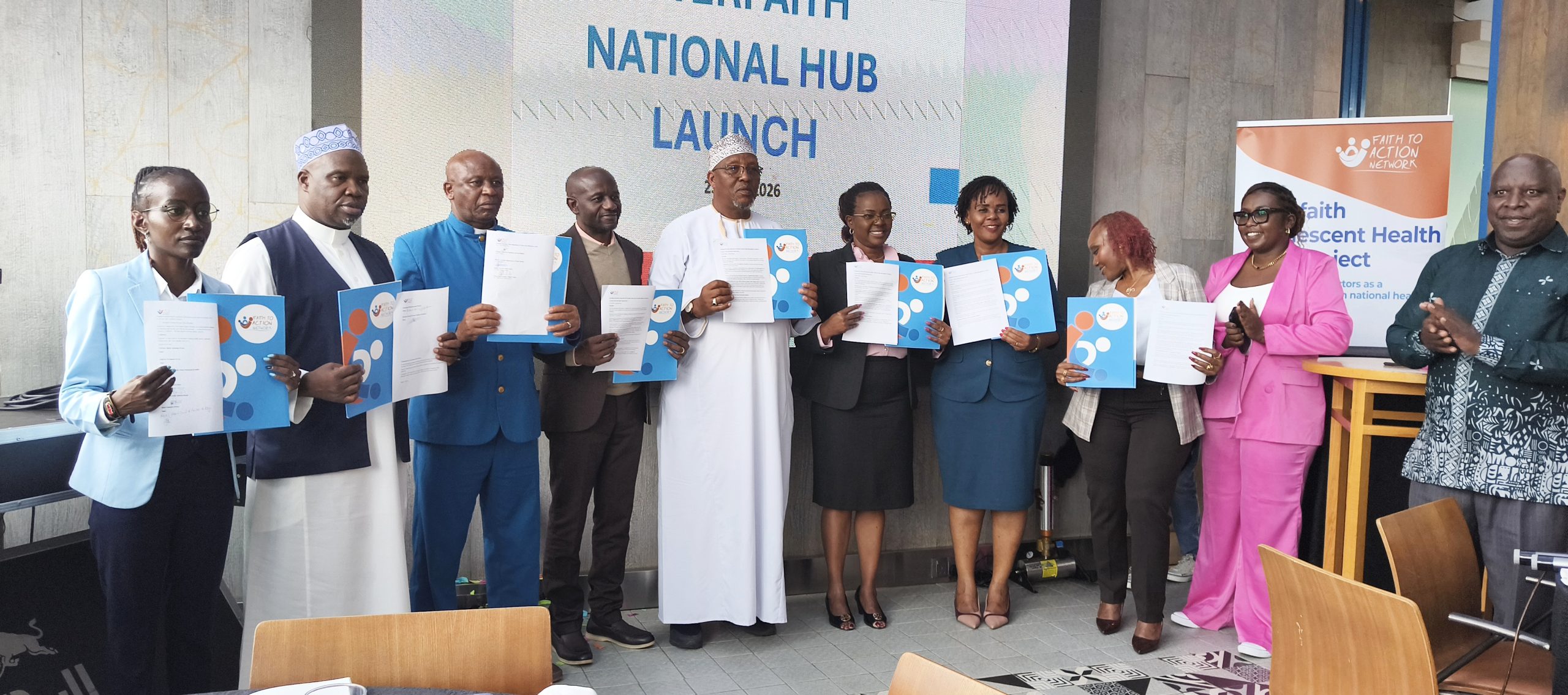
Faith to Action Network drives new interfaith push to curb teenage pregnancy
By Peace Muthoka
Nairobi, April 2026 — The Faith to Action Network is leading a renewed national effort to tackle teenage pregnancy after launching the Interfaith National Hub on Family Health and Wellbeing, a platform designed to strengthen coordination between faith actors, government, and communities.
The initiative, rolled out in partnership with the Inter-Religious Council of Kenya, Supreme Council of Kenya Muslims, Kenya Conference of Catholic Bishops and National Council of Churches of Kenya, seeks to place communities at the centre of efforts to address adolescent pregnancy, maternal and child mortality by leveraging the influence of faith leaders as trusted voices.
Speaking during the launch, Dr. Jackline Kisia from the Ministry of Health said the new hub will bridge the gap between public health systems and community structures where most decisions on care and prevention are made.
“By placing faith leaders at the centre of community health efforts, we acknowledge that key decisions about care and prevention often happen beyond clinical settings,” she said, noting that stronger partnerships will improve access to information and services at the grassroots.
The launch is backed by fresh findings from a baseline assessment in Kilifi County and Migori County, which reveal that adolescent sexual and reproductive health outcomes are deeply shaped by entrenched social and gender norms influenced by religion and culture. The data shows that while 91.4 per cent of parents in Kilifi approve of SRH discussions, only 28.5 per cent believe such conversations are common, exposing a major perception gap.
At the same time, knowledge levels remain critically low, with just 4.5 per cent of boys and 2.6 per cent of girls meeting the required SRH knowledge threshold, highlighting a dangerous mix of high motivation and limited information.
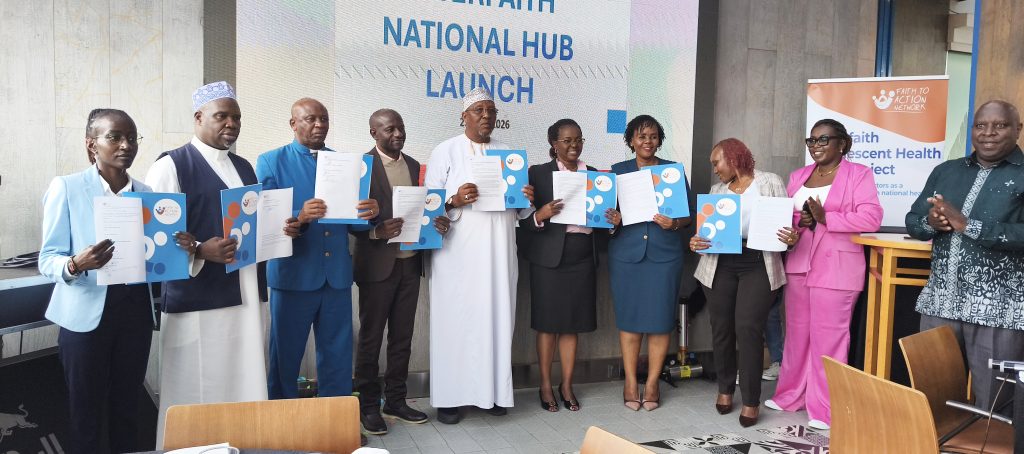
Faith to Action Network CEO Peter Munene said the hub was informed by the urgent need to address persistent cases of teenage pregnancy and early marriage in the two counties. “This particular day is very important for us because one of the burdens we have carried is seeing girls in counties of Migori and Kilifi carrying pregnancies and even being married by their parents,” he said, adding that the crisis cannot be handled by a single institution.
“This is not a problem that can be solved by one organization. We wanted to link the county government, the national government, religious leaders and cultural leaders, and that is why we established this national interfaith hub,” he said, describing it as a platform where stakeholders will exchange strategies, build consensus and coordinate action across all levels.
Program Manager Sheenan Mbau said the findings reveal a society ready for change but held back by silence, stigma and misinformation. “What we are seeing is a society that agrees. There is a high willingness to have more open conversations, but no one is willing to take the first step,” she said.
She pointed out that in Kilifi, a social norm of shame and silence continues to block open engagement, even as parents, faith leaders and young people recognise the need for accurate information.
“There is a vacuum of fear, shame and stigma, and the silence is costing us as a people,” she said, warning that many adolescents rely on social media and peers for information, often leading to misinformation and unintended pregnancies.
Mbau said the solution lies in empowering faith leaders to take a more active role beyond moral guidance. “We want faith leaders to stand in that gap and tell communities that it is okay to have open conversations. Your faith supports you and your culture supports you,” she said, while also calling for more structured engagement with faith networks to ensure consistent messaging nationwide. “What we need is structured engagement so that when we pass a message through faith networks, it reaches the whole country,” she added.
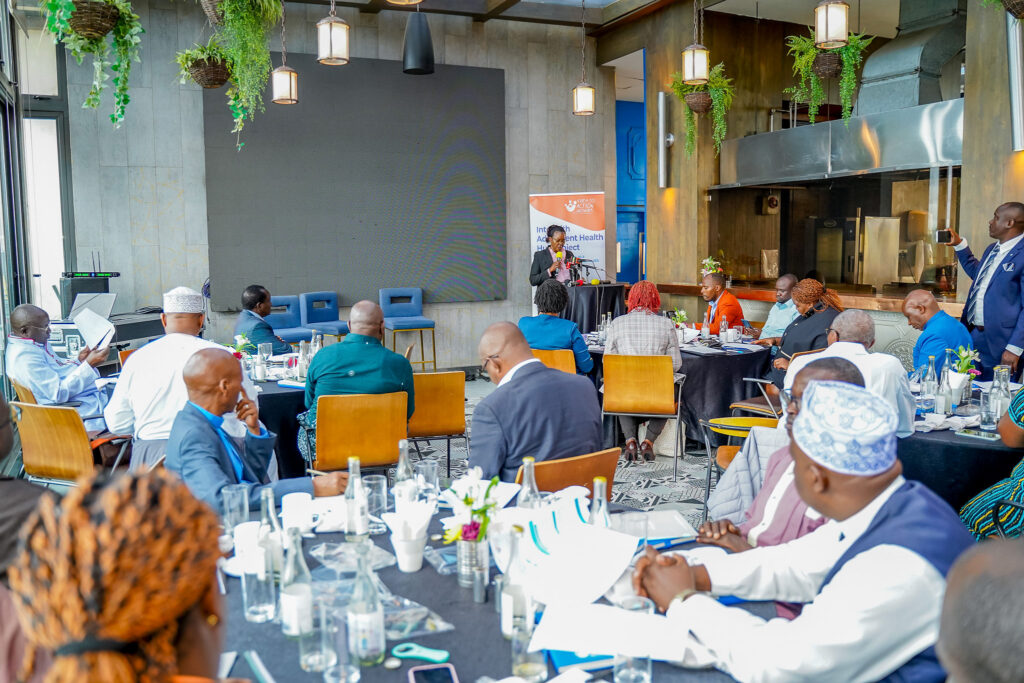
The Interfaith National Hub is expected to serve as a safe and collaborative platform for knowledge sharing, capacity strengthening and coordination of faith-led interventions, with plans to replicate the model across all 47 counties once it proves effective. Stakeholders say the initiative will also address gender gaps in communication, as current data shows more parents are willing to discuss prevention with daughters than sons, leaving boys less engaged in the conversation.
With stakeholders now pushing for practical solutions such as scaling up parenting programmes, strengthening partnerships with faith actors and improving access to accurate, age-appropriate information, there is growing optimism that the new approach could shift social norms. As faith leaders step forward to break the silence, experts say the country may be on the brink of a turning point in tackling teenage pregnancy and improving family health outcomes.