
Tea Board Moves to Ease Concerns Over New 0.8 Percent Tea Export Levy
By Peace Muthoka
Nairobi, May 14, 2026 – The Tea Board of Kenya has moved to calm concerns surrounding the newly introduced Tea Levy Regulations 2026, insisting that the 0.8 percent export levy is meant to strengthen the tea sector and improve services in tea-growing regions, not punish exporters or consumers.
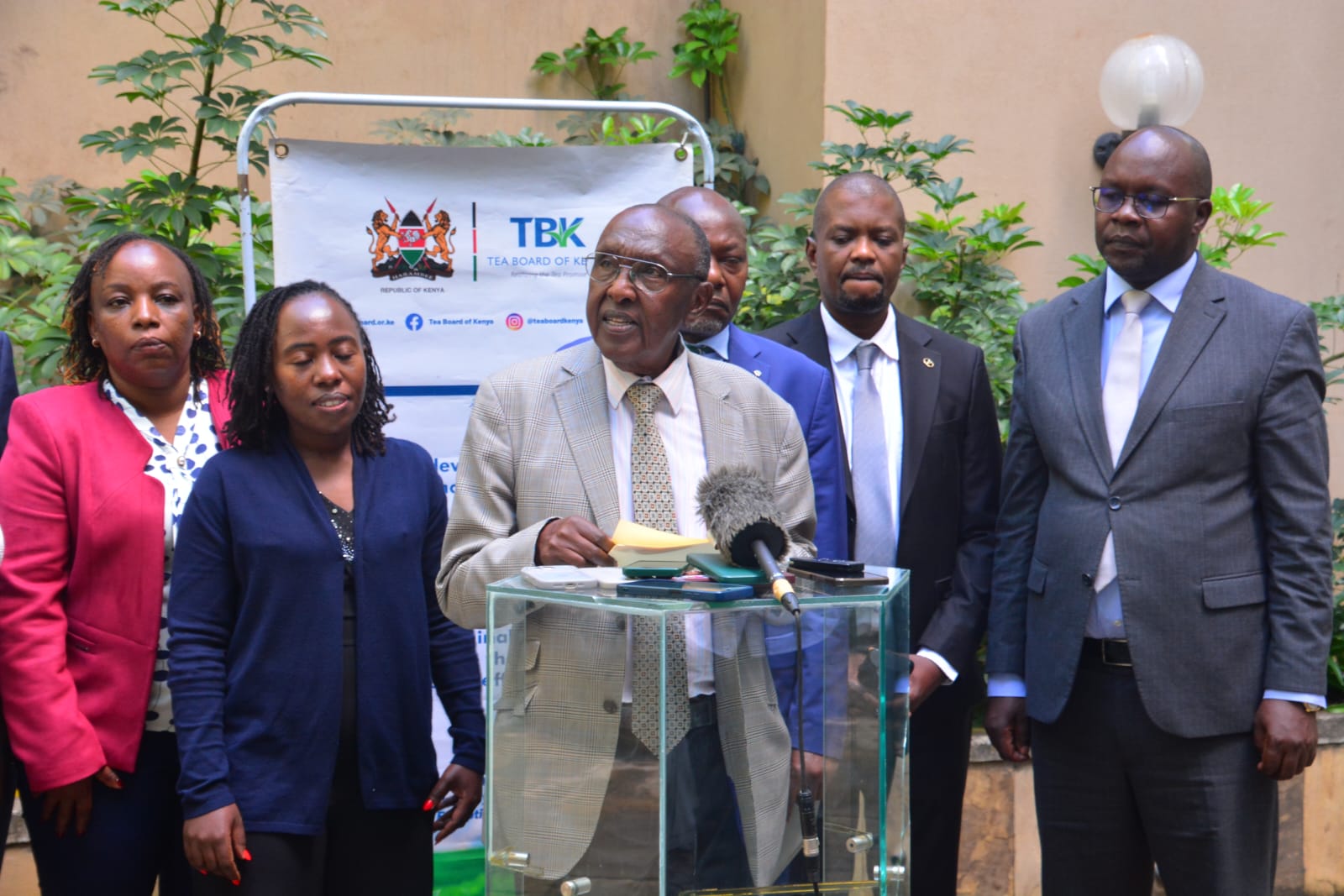
Speaking during a media briefing at Tea House in Nairobi, Tea Board Chairman Ndung’u Gathinji dismissed reports suggesting the government had introduced an 8 percent levy on tea exports, terming the claims misleading and inaccurate.
Gathinji clarified that exporters will only pay a 0.8 percent levy based on auction value or customs value for direct sales.
“The levy is 0.8 percent and not 8 percent as alleged in some quarters. The misinformation has created unnecessary concern among stakeholders and international buyers,” he said.
The regulations came into effect on May 1, 2026, after being published under Legal Notice No. 56 in the Kenya Gazette Supplement on April 1, 2026.
According to the board, the levy was introduced under Section 53 of the Tea Act and is expected to provide sustainable financing for the growth and competitiveness of Kenya’s tea industry.
Gathinji said the tea sector remains one of Kenya’s most important economic pillars, supporting millions of livelihoods while earning the country valuable foreign exchange.
He explained that money collected through the levy will finance key programmes within the tea value chain, including infrastructure development, market expansion, quality assurance, research, sustainability initiatives, branding, and farmer support programmes.
Part of the funds will also be channelled directly to tea-growing county governments as conditional grants to support infrastructure projects in farming areas.
The counties, working together with tea stakeholders, will identify priority projects such as feeder roads, tea buying centres, and other facilities that improve operations within tea-growing communities.

At the same time, the Tea Board announced exemptions for selected products in a move aimed at encouraging local value addition and export diversification.
Products exempted from the levy include value-added teas packed in containers weighing less than 10 kilograms, tea extracts, tea aroma, and teas processed within Export Processing Zones and Special Economic Zones for local consumption.
Gathinji said the exemptions are designed to promote local manufacturing, branding, and value addition in line with the government’s Bottom-Up Economic Transformation Agenda.
He maintained that the levy should be viewed as a long-term investment in the future of the tea industry rather than an additional tax burden.
“This is not meant to punish the market. It is a strategic investment towards safeguarding the sustainability and competitiveness of Kenya tea globally,” he said.
The board further defended the process used to develop the regulations, saying consultations and public participation forums were carried out between 2021 and 2025 and involved farmers, factory owners, exporters, brokers, warehouse operators, county governments, tea associations, and other industry players.
Despite concerns raised by some stakeholders and international buyers, the Tea Board said it will continue engaging the sector through sensitization forums, consultations, and technical support to ensure smooth implementation of the levy framework.
Kenya tea continues to maintain a strong reputation in the global market due to its quality, with the Mombasa Tea Auction remaining the world’s largest tea auction and a major trading hub for teas from the region.
The Tea Board now says it remains focused on strengthening Kenya’s position in the global tea market through better regulation, sustainability compliance, market development, and increased value addition.