
By Peace Muthoka
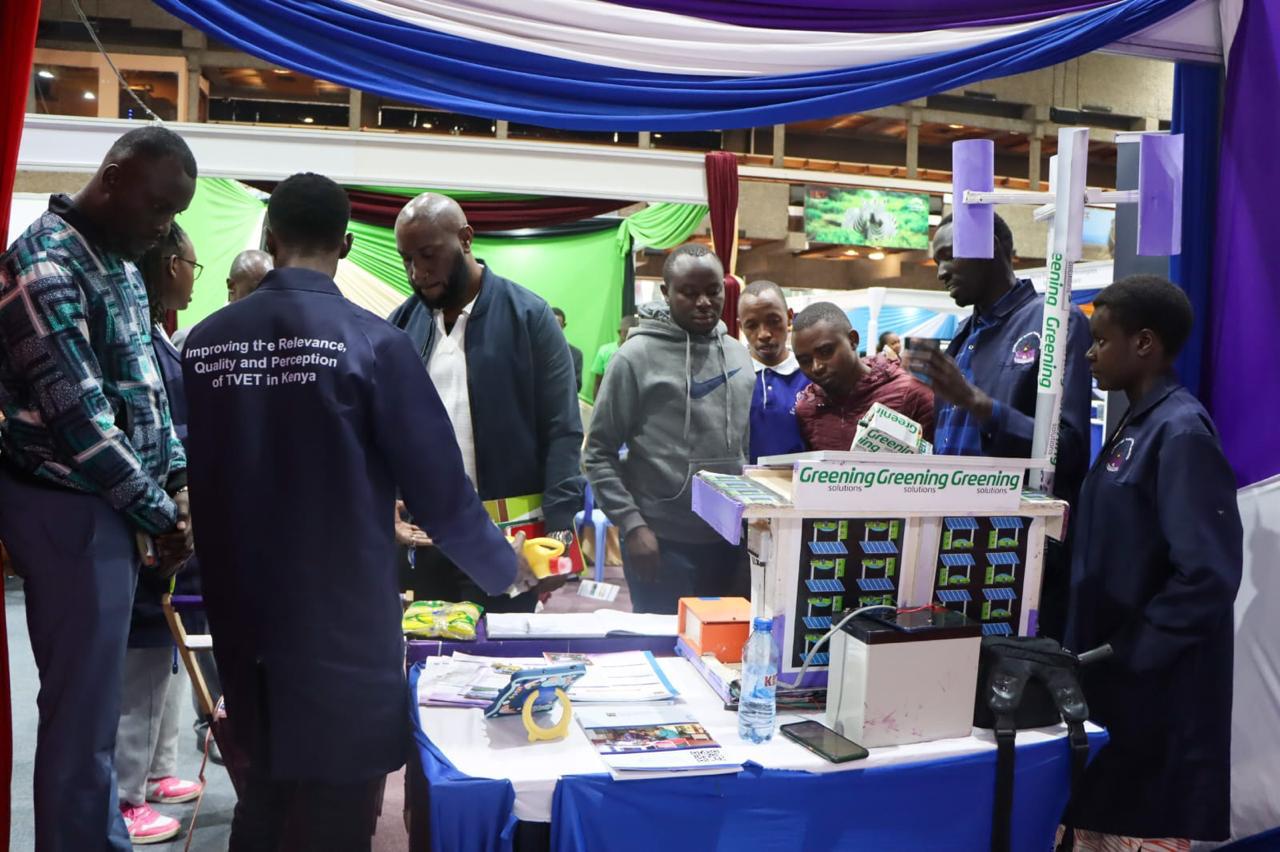
NAIROBI, June 22, 2026 — Homegrown innovations developed by Technical and Vocational Education and Training (TVET) institutions under the Ministry of Education took centre stage at this year’s Africa Public Service Day celebrations, offering practical solutions to water scarcity, sanitation challenges, clean energy adoption and environmental sustainability.
The innovations were showcased at the Kenyatta International Convention Centre (KICC) as Kenya joined the rest of the continent in marking Africa Public Service Day under the theme, “Enhancing Public Sector Institutions and Empowering Stakeholder Partnerships to Achieve Universal Water Availability and Safe Sanitation by 2063.”
The exhibition demonstrated how TVET institutions are translating classroom knowledge into real-world solutions that directly contribute to Africa’s development goals and the continent’s vision for sustainable water access.
Speaking during the opening ceremony, Public Service Cabinet Secretary Geoffrey Ruku emphasized the importance of innovation, partnerships and strong institutions in ensuring universal access to clean water and safe sanitation across Africa.
Among the standout exhibitors was Khwisero Technical and Vocational College, whose innovations reflected a commitment to sustainable resource management and green energy.
Research Coordinator Javan Ineke said the institution has fully transitioned to solar energy, making it one of the few TVET institutions operating entirely on renewable power. The solar system not only powers the college but also pumps water for use within the institution and supplies free water to surrounding communities.
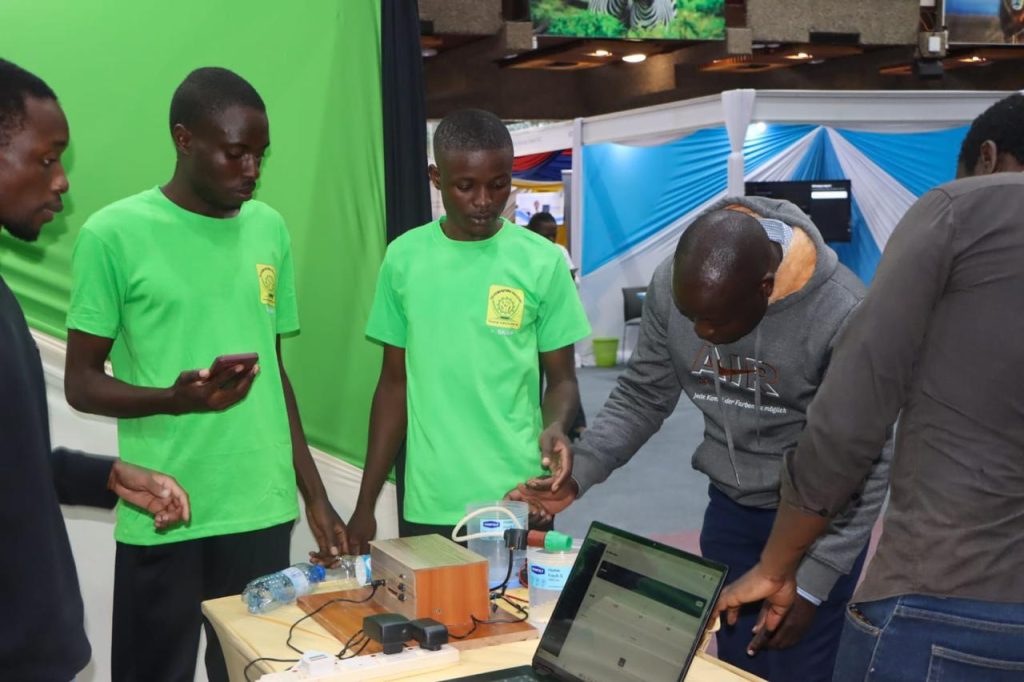
The college has also invested in biodigester technology that treats and recycles wastewater for agricultural use, ensuring that water resources are reused efficiently.
“We are proving that going green is possible. Everything we use within the institution can be recycled and reused, making sustainability a reality rather than a concept,” said Ineke.
Beyond water conservation, trainees at the institution have developed several innovations under the Competency-Based Education and Training (CBET) curriculum, including a low-energy solar-powered welding machine, organic manure produced from recycled waste and a skin-friendly beauty wax made from food-based materials.
The innovations, he noted, are helping students acquire practical skills while providing solutions to environmental and community challenges.
At the same exhibition, Kisiwa Technical Training Institute unveiled a smart water management system designed to improve water distribution, billing and fault detection.
Research and Innovation Coordinator Anthony Mabele said the system combines pressure sensors, water-flow monitoring technology and GSM communication to enable remote management of water services, even in areas without internet connectivity.

The innovation allows service providers to monitor water usage, detect leaks and manage distribution through a single digital dashboard.
“Our goal is to make water services more accessible, efficient and sustainable. By integrating billing, fault detection and distribution into one system, we can help address some of the biggest challenges facing water service providers,” said Mabele.
He expressed optimism that the technology could be adopted beyond Kenya and help improve water access across the African continent.
Meanwhile, PC Kinyanjui Technical Training Institute showcased a hybrid wireless electric vehicle charging station powered by solar and wind energy, highlighting the role of clean energy technologies in supporting sustainable development.
Innovator Robinson Ochieng explained that the charging station uses wireless energy transfer technology to charge electric vehicles without physical cable connections. The system harnesses solar and wind power, providing a reliable alternative to conventional electricity sources that are often affected by outages and rationing.
According to Ochieng, the innovation is designed to support the growing adoption of electric mobility while reducing dependence on fossil fuels and lowering carbon emissions.
The exhibition underscored the growing role of TVET institutions as centres of innovation and problem-solving. It also highlighted the Ministry of Education’s efforts to equip young people with practical skills that address pressing societal challenges while supporting national and continental development priorities.
As Africa Public Service Day celebrations continue, the innovations on display serve as a powerful reminder that the future of sustainable water management, clean energy and environmental conservation may well be shaped by the ingenuity of young innovators emerging from Kenya’s TVET institutions.