
East African Universities Forge Stronger Partnerships to Build a Borderless Higher Education System
By Peace Muthoka
NAIROBI, Kenya, July 29, 2026 — East African leaders have renewed their commitment to creating a borderless higher education system, with a strong call for universities, governments, industry and development partners to deepen collaboration in order to produce graduates equipped to drive the region’s economic transformation.
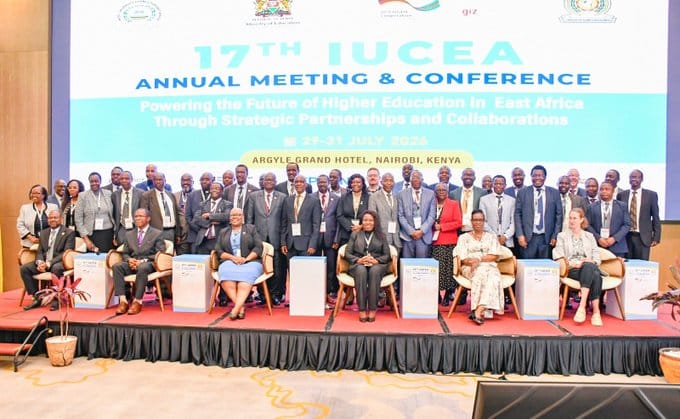
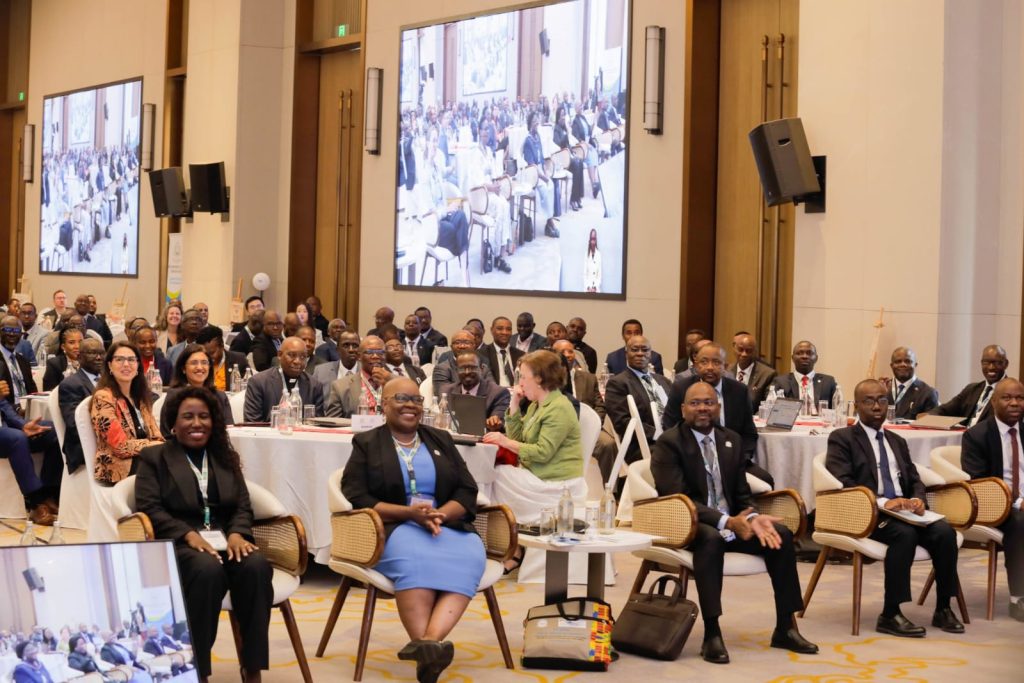
The call dominated the opening of the 17th Inter-University Council for East Africa (IUCEA) Annual Meeting and Conference in Nairobi, which brought together more than 400 participants, including policymakers, university leaders, higher education regulators, researchers, students, industry representatives and development partners from East Africa and beyond.
Convened by IUCEA in partnership with Kenya’s Ministry of Education, the three-day conference is being held under the theme, “Powering the Future of Higher Education in East Africa through Strategic Partnerships and Collaborations.” Discussions are focusing on strengthening regional integration, expanding academic mobility, fostering innovation and preparing universities to respond to emerging technological and labour market demands.
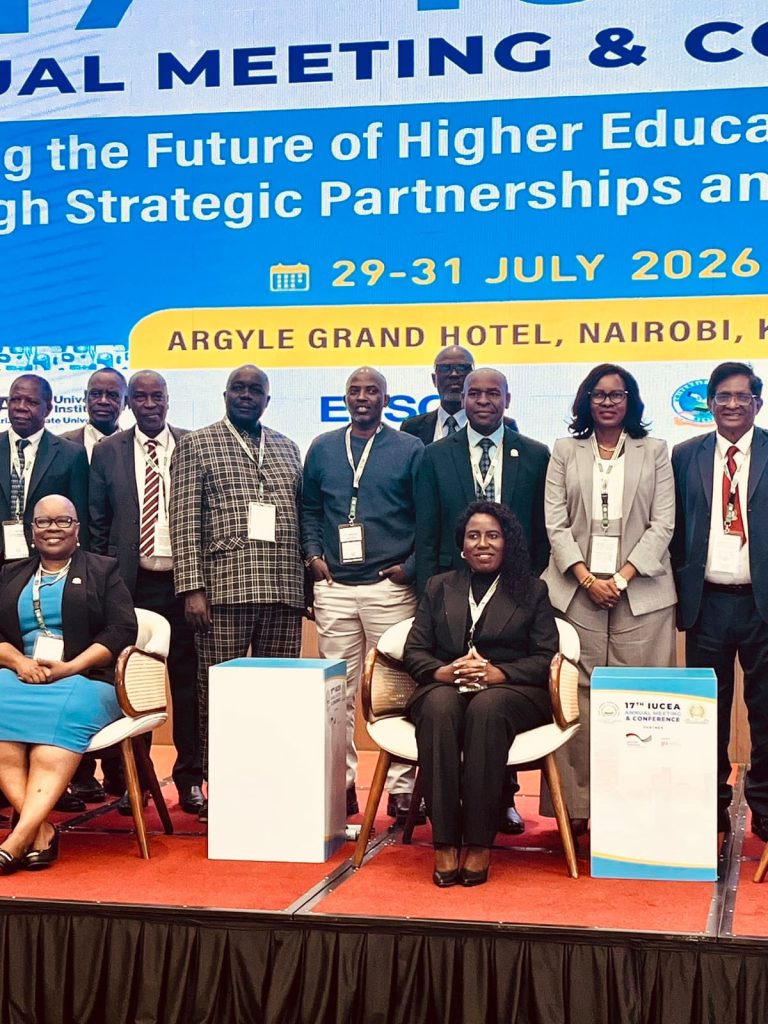
Representing the Cabinet Secretary for Education as the Chief Guest, Dr. Beatrice Muganda Inyangala, Principal Secretary for Higher Education and Research, challenged universities to forge stronger links with industry and position themselves as engines of innovation and economic growth.
“Our universities should become living laboratories where students work alongside industry to solve real problems. We must build stronger bridges between knowledge and enterprise, discovery and deployment, and research and revenue,” she said.
Dr. Inyangala also reaffirmed the region’s commitment to establishing a Common East African Higher Education Area, where students can pursue studies across partner states and later access employment opportunities without facing barriers to the recognition of their academic qualifications.
She noted that education remains one of the strongest pillars of East African integration because it creates opportunities for young people while supporting the region’s long-term social and economic development.
Turning to Kenya’s university funding reforms, Dr. Inyangala assured students that government financial support would continue even as Parliament considers proposed changes to the higher education funding model.
She explained that while the current model emphasizes equity by directing more support to students from disadvantaged backgrounds, the proposed reforms seek to ensure that every learner receives the financial assistance they need.
“We are now emphasizing equality so that everybody gets the support they require,” she said.
Meanwhile, Professor Rose Clarke Nanyonga, Acting Chairperson of the IUCEA Executive Committee and Vice-Chancellor of Clarke International University in Uganda, urged delegates to use the conference to build lasting partnerships capable of transforming higher education across the region.
She challenged participants to leave Nairobi with a shared commitment to implement practical reforms that will make East African universities more competitive, inclusive and responsive to the needs of society.
Professor Nanyonga also renewed calls for universities to eliminate disparities in tuition fees charged to students from neighbouring East African Community (EAC) partner states, saying regional integration should guarantee equal opportunities for all East African learners.
Echoing her remarks, Professor Idris A. Rai, Acting Executive Secretary of the Inter-University Council for East Africa (IUCEA), said the future of higher education depends on institutions working together rather than in isolation.
“The question before us is no longer whether higher education should transform. The question is how we transform it together. The universities that will shape tomorrow’s East Africa are not those that work in isolation, but those that collaborate across disciplines, sectors and national borders,” he said.
Professor Rai said IUCEA continues to harmonize higher education systems across the eight EAC partner states by developing regional quality assurance frameworks, curriculum benchmarks and qualifications frameworks that allow academic credentials to gain recognition across borders.
He added that the council is also promoting collaborative research, academic mobility, innovation, university leadership development and responsible use of artificial intelligence in teaching and learning.
One of the conference’s major milestones was the launch of the IUCEA Strategic Plan 2026–2031, a roadmap developed through extensive consultations with partner states, universities, regulators, students, industry and development partners.
Speaking during the launch, Annette Semuwemba, Deputy Secretary General of the East African Community (EAC), said the strategy must translate into tangible improvements for citizens across the region.
“The strategic plan must deliver tangible benefits to the people of East Africa. It should not remain a document that we merely discuss. It must become a practical blueprint demonstrating how IUCEA contributes to the wellbeing and prosperity of the region’s citizens,” she said.
In another significant development, delegates launched the Regional AI Network of Universities, an initiative designed to connect institutions engaged in artificial intelligence education, research and innovation. The network will enable universities to share expertise, strengthen research capacity, pool infrastructure and promote the responsible use of AI across East Africa.
The conference also highlighted the importance of international cooperation in strengthening higher education systems.
Friederike Hemker, Deputy Head of Development Cooperation at the Embassy of Germany in Kenya, said regional collaboration would enable East African universities to build world-class expertise more efficiently.
“No Partner State can build world-class capacity in every field alone. A Common East African Higher Education Area allows universities to specialise, students to move where expertise exists, and qualifications to be trusted across borders,” she said.
Beyond the conference sessions, IUCEA is expected to formalise new partnerships with the Information Centre on Academic Mobility and Equivalence (CIMEA) of Italy, the High Council for the Evaluation of Research and Higher Education (HCERES) of France and the Christian Television System (CTS) of the Republic of Korea.
Delegates are also touring a partnership and innovation exhibition showcasing university research, innovation hubs, TVET innovations and enterprises led by young innovators, reflecting the growing role of higher education institutions in driving research, entrepreneurship and sustainable development across East Africa.
The conference concludes with the IUCEA Annual General Meeting, where member institutions will review progress, strengthen regional cooperation and chart the next phase of efforts to build an integrated, innovative and globally competitive higher education system for East Africa.