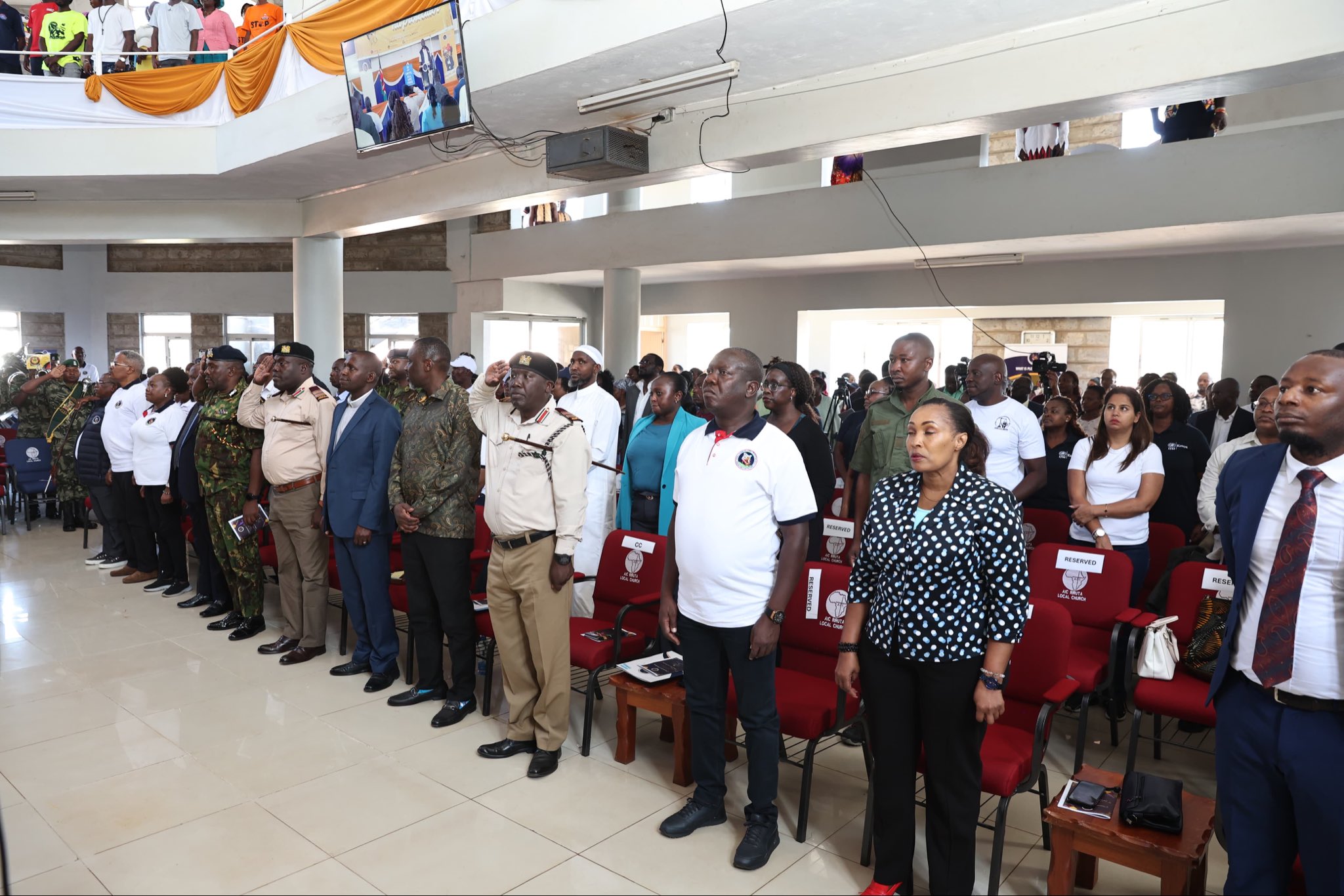
Officials from the ODPP, NCIC and IPOA engage members of the public during a community dialogue at the African Inland Church in Riruta, Nairobi, on October 23, 2026, to discuss access to justice, public trust, accountability and peaceful coexistence ahead of the 2027 General Election.
By Peace Muthoka
NAIROBI, Kenya, October 23, 2026 — Justice-sector institutions have called for stronger public engagement, accountability and civic education to improve access to justice, address public concerns and strengthen peaceful coexistence ahead of Kenya’s 2027 General Election.
The call came during a community dialogue at the African Inland Church in Riruta, Nairobi, on Friday, where the Office of the Director of Public Prosecutions (ODPP), the National Cohesion and Integration Commission (NCIC) and the Independent Policing Oversight Authority (IPOA) engaged residents on the administration of justice and the roles of different institutions.
The forum provided an opportunity for residents to raise concerns about the criminal justice system, while officials explained how their agencies handle complaints, investigate cases, make prosecution decisions and address police misconduct.
Director of Public Prosecutions Renson Ingonga said justice institutions needed to engage communities beyond courtrooms and offices to understand their concerns and correct misconceptions about how criminal cases are handled.
“Today, we come to listen, to learn, and to strengthen the relationship between the prosecutors and the communities we serve,” Ingonga said.
He noted that some members of the public did not understand why certain cases proceeded to court while others did not. In addition, victims sometimes lacked information about their rights, witnesses feared coming forward, and families faced long waits for criminal proceedings to conclude.
Ingonga said sustained dialogue could help bridge the gap between justice institutions and the public, while improving citizens’ understanding of prosecution procedures.
He also explained the ODPP’s constitutional mandate, including its responsibility to decide whether to institute or discontinue criminal proceedings in accordance with the law. He stressed that prosecutors must consider the available evidence, constitutional rights and the public interest.
“A prosecutor is a minister of justice,” Ingonga said, adding that prosecution should not focus solely on securing punishment but must also ensure that victims receive a hearing and accused persons enjoy their legal rights.
The DPP further warned that criminal networks were adapting to new technologies and methods, including digital fraud, money laundering and the use of virtual assets to conceal proceeds of crime.
He cautioned young people against allowing others to use their bank accounts, mobile money accounts or digital wallets to receive money from unknown sources, saying such arrangements could expose them to financial crime.
Ingonga said effective action against financial offences required reliable intelligence, thorough investigations, credible evidence and cooperation among institutions responsible for enforcement and asset recovery.
NCIC urges youth to reject political violence
NCIC Commissioner Jerusah Mwaathime described the ODPP as an indispensable partner in the criminal justice system because it links investigative agencies with the courts through its constitutional role in making prosecution decisions.
She explained that the NCIC receives complaints, investigates them and prepares case files before forwarding them to the ODPP, which determines whether the evidence meets the threshold for criminal prosecution.
Mwaathime said the dialogue also enabled the commission to explain its mandate and discuss its roadmap towards peaceful 2027 General Election.
She identified declining public trust, youth vulnerability and political intolerance as challenges that required attention. To address them, she said, the NCIC was prioritising trust-building initiatives, youth engagement and civic education before, during and after the elections.
Mwaathime urged young people to reject recruitment into political violence and instead become peace ambassadors in their communities.
“We have asked them not to be used by politicians or any person to advance violence,” she said, noting that young people could play a significant role in promoting peaceful political participation.
She also called on residents of Dagoretti and the wider Dagoretti South area to maintain good relations despite differences in political opinion or party allegiance.
“Politics come and go, but neighbours remain, friends remain, relationships remain,” Mwaathime said.
She urged Kenyans to exercise their constitutional rights responsibly, including the right to assemble and protest, while respecting the rights of others. She also encouraged residents to report wrongdoing to the appropriate institutions rather than take the law into their own hands.
“If it is a matter that can go to the police, please go to the police. If it is a matter of the ODPP, go to the ODPP. If it is a matter of NCIC, go to NCIC,” she said.
IPOA says accountability is key to public confidence
IPOA Chairperson Duncan Ojwang said public trust was essential to effective policing and the wider administration of justice.
He said citizens needed to see truthfulness, empathy, professionalism and competence in public institutions before they could confidently rely on them.
Ojwang described community dialogue as an opportunity for residents to explain their concerns, while giving officials a chance to clarify their mandates and identify practical ways to improve service delivery.
He acknowledged that one meeting could not resolve longstanding mistrust. However, he said regular engagement, clear action plans and follow-up could help institutions address grievances and build confidence ahead of the 2027 elections.
“We know one meeting cannot build trust, but at least we can do something with more meetings,” Ojwang said, emphasising that dialogue must lead to action rather than remain “a talking shop”.
He added that residents needed to know where to report police excesses and hate speech, as well as understand how different institutions work together to uphold the law.
According to Ojwang, many Kenyans encounter government services first through the police, making police professionalism and accountability important to public perceptions of other state institutions.
He also noted that investigators needed time and adequate evidence to build cases that could withstand legal scrutiny. Investigations involve gathering evidence, interviewing witnesses and following due process before prosecutors can make informed decisions.
The dialogue highlighted the importance of cooperation between justice institutions and the communities they serve. Officials urged residents to seek help through the appropriate channels, report wrongdoing and participate in efforts to maintain peace.
As the country prepares for the 2027 General Election, the institutions said sustained public engagement, accountability and civic education would remain important in addressing grievances, discouraging violence and strengthening confidence in the administration of justice.