
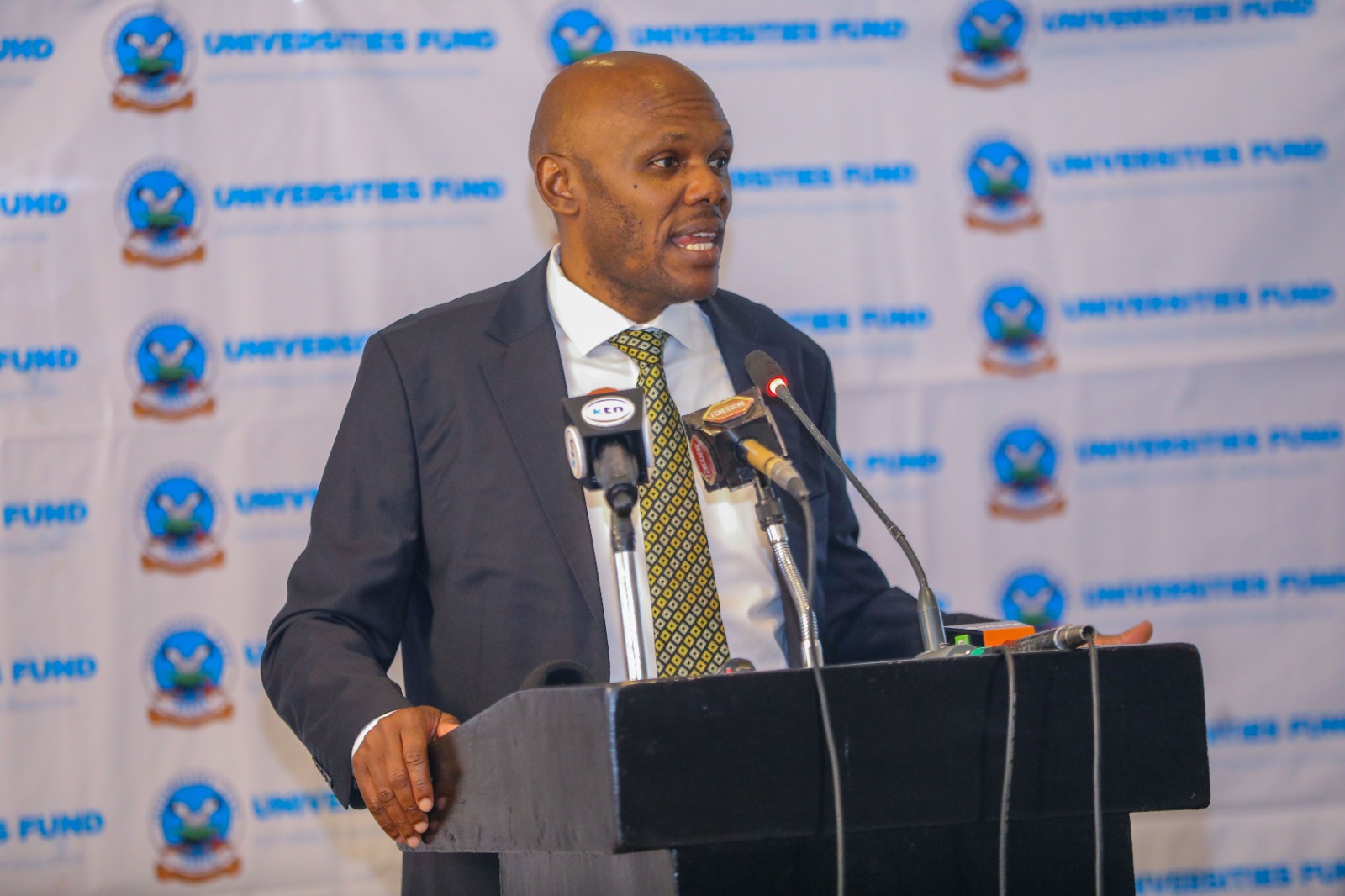
Universities Fund Chief Executive Officer Dr Edwin Wanyonyi
By Peace Muthoka
NAIROBI, Kenya — The Universities Fund has called on government agencies, county governments and private scholarship providers to coordinate student funding and share data to ensure that financial support reaches the learners who need it most.
Universities Fund Chief Executive Officer Edwin Wanyonyi said fragmented scholarship programmes had resulted in some students receiving substantial support while others remained underfunded or received no assistance.
Speaking during a meeting with scholarship providers and other education stakeholders, Wanyonyi said the priority should be to maximise the impact of available resources through better coordination, information sharing and collaboration.
“When we give out a scholarship, it represents hope, opportunity, dignity and the possibility of a better future for students and families in our nation,” he said.
Wanyonyi said the Fund was supporting 537,000 students and had KSh13.1 billion to disburse in the current financial year. By the time of his remarks, it had disbursed KSh10 billion to universities to support students through scholarships.
Despite the funding, he said the demand for student support remained high, with the Fund estimating that it required KSh47 billion to meet its needs for the financial year.
Wanyonyi noted that between 20 and 30 per cent of the students supported by the Fund were among the most financially disadvantaged and required substantial tuition assistance.
He said closer collaboration among scholarship providers would help identify students receiving support from multiple sources and enable institutions to direct resources to learners who remained underfunded.
“How do we work together better? How do we get to share data better?” he asked, urging partners to improve information sharing to establish students’ needs and distribute available resources more effectively.
The CEO said the Fund had already held discussions with individual county governments and development partners to explore ways of strengthening partnerships and mobilising additional resources for students.
He urged stakeholders to move away from isolated interventions and adopt a more organised approach that would expand access to higher education and ensure fairer distribution of scholarship support.
Kanyinga calls for accountability in scholarship programmes
Universities Fund Board of Trustees Chairperson Professor Karuti Kanyinga called on scholarship providers to learn from one another, assess the impact of their programmes and work towards shared education goals.
Kanyinga said scholarships should serve a broader purpose beyond financing education, including helping disadvantaged families overcome poverty and enabling students to access opportunities that would improve their lives.
“Everyone is giving a scholarship as a means to an end,” he said, challenging providers to examine whether their programmes were reaching the intended beneficiaries and delivering meaningful results.
He called for greater collaboration among public institutions, private organisations and individual scholarship providers, noting that county governments, Members of County Assemblies, Members of Parliament and other stakeholders were already financing students through different programmes.
However, he warned that fragmented funding could leave gaps in support and make it difficult to establish whether resources were reaching the most deserving learners.
Kanyinga said scholarship providers should also strengthen links with industry to ensure that the courses they finance prepare students for employment and meet the country’s future skills needs.
He urged institutions to engage employers when identifying areas of study to support, helping students pursue courses that align with workforce demands and national development priorities.
The board chairperson also called for a broader national conversation on education financing and the quality of human capital being developed at all levels of the education system.
He challenged stakeholders to assess whether the courses funded through scholarships were relevant to Kenya’s changing needs and whether the education system was adequately preparing learners for the future.
Stakeholders urged to sustain collaboration
Both leaders said no single institution could address the country’s student funding challenges alone, making sustained cooperation among public and private scholarship providers essential.
Wanyonyi said the meeting was intended to provide a platform for stakeholders to share information, identify gaps in existing programmes and develop more effective ways of supporting students.
Kanyinga called for regular engagements to help scholarship providers exchange experiences, learn from one another and identify opportunities to improve education financing.
They said a coordinated approach would help reduce duplication, strengthen the impact of available resources and expand opportunities for students from financially disadvantaged backgrounds.
The discussions highlighted the need for scholarship providers to look beyond the amount of money disbursed and assess whether their interventions were improving access to education, reducing poverty and preparing students for future opportunities.