
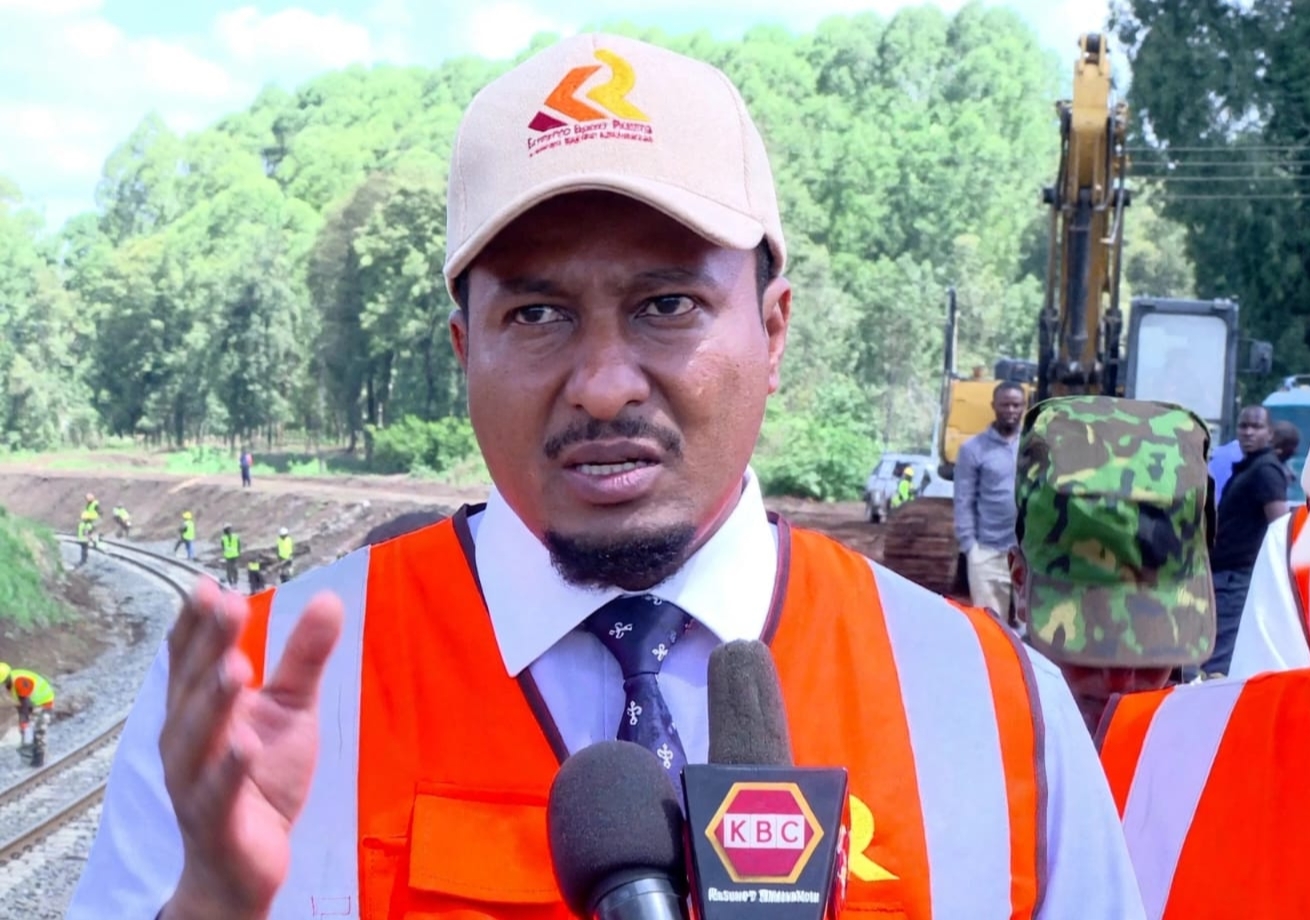
Principal Secretary for Transport Mohamed Daghar speaks to the media during a tour of the Nairobi-Kibera-Talanta Metre Gauge Railway Line to assess the progress of the rehabilitation works.
By Peace Muthoka
NAIROBI, Kenya, November 10, 2026 — The government is targeting December 15 to complete the rehabilitation of the Nairobi Central Station–Talanta Stadium commuter railway line, in preparation for the stadium’s first major football match scheduled for January 5, 2027.
The 13.3-kilometre upgrade includes a new 1.8-kilometre spur linking Kibera Station to the proposed Talanta Stadium railway station. Once operational, the connection is expected to ease traffic congestion and give football fans a faster and more affordable way to reach the facility. It will also improve transport for residents who rely on commuter trains to travel between Nairobi’s Central Business District and neighbourhoods along the railway corridor.
The upgraded line is expected to reduce the journey from Nairobi Central Station to Talanta Stadium to about 15 minutes, with trains travelling at speeds of up to 60 kilometres per hour.
Principal Secretary for Transport Mohamed Daghar said the project would serve both stadium spectators and daily commuters as the government works to improve Nairobi’s wider commuter rail network.
Daghar spoke on Tuesday during an inspection of the ongoing works alongside Kenya Railways Corporation Managing Director and Chief Executive Officer Philip Mainga and the contractor, China Road and Bridge Corporation (CRBC).
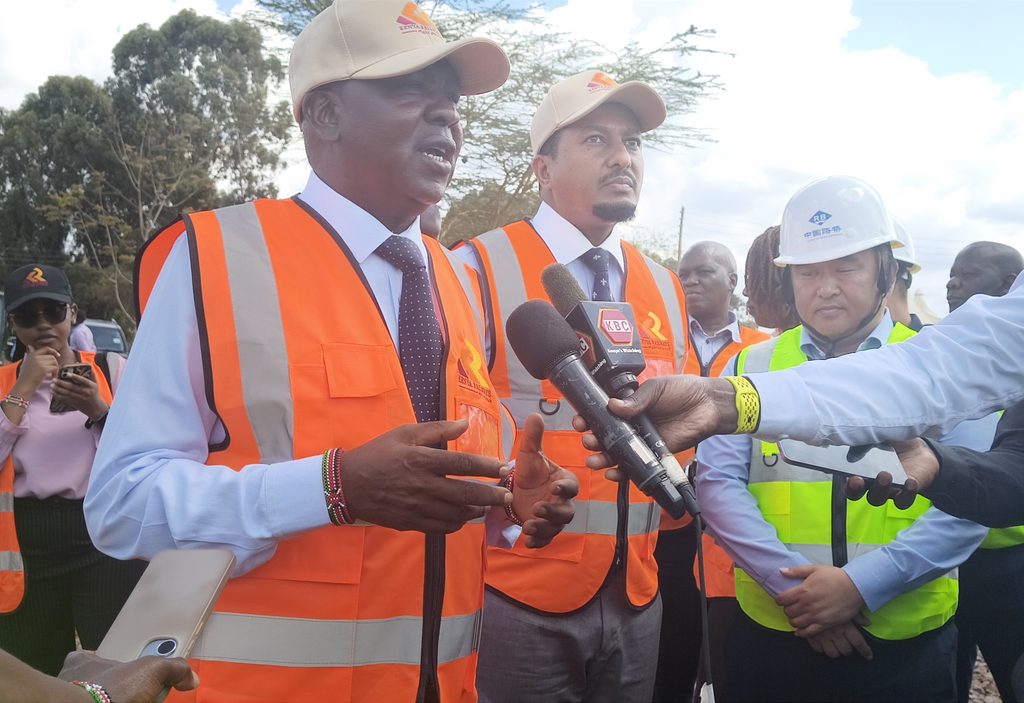
(L-R) Kenya Railways Corporation Managing Director and Chief Executive Officer Philip Mainga, Principal Secretary for Transport Mohamed Daghar and CRBC General Manager in Kenya Yu Xiaodong speaking during a tour of the Nairobi-Kibera-Talanta Metre Gauge Railway Line to assess the progress of the rehabilitation works
He said the rehabilitation covers the existing Nairobi Central Station–Limuru railway line, which serves commuters travelling through areas including Kibera, Satellite and Kikuyu.
“This is the first commuter rail line, which runs from Nairobi Central Station all the way to Limuru,” Daghar said, noting that the new station would extend the railway connection to Talanta Stadium.
The rehabilitation involves strengthening sections of the railway foundation and replacing old steel sleepers with 21,600 concrete sleepers to improve track stability and safety. The contractor is also replacing the existing ballast and rails, improving drainage, constructing three footbridges and building a masonry wall along sections of the railway corridor.
Work on the new Talanta Stadium station is progressing, with the substructure complete and construction of the superstructure underway. The government is targeting December 15 for completion to allow time for preparations before the January 5 match.
To manage the expected movement of spectators, Kenya Railways is developing an operational plan that will include additional train services. Daghar said the proposed arrangement would see trains carry approximately 1,500 passengers every 10 minutes in each direction.
The service is expected to use eight-coach diesel multiple units, with Kenya Railways assessing whether it can reduce train intervals to seven or even five minutes to accommodate more passengers.
Daghar said the corporation has about 15 diesel multiple units, 11 of which are operational, while the remaining trains are undergoing refurbishment.
He acknowledged that construction had disrupted normal commuter services, particularly along the Kibera section, where train frequency had reduced. He appealed to residents who depend on the railway for daily transport to remain patient as the contractor works to meet the December deadline.
Mainga said the investment would deliver lasting benefits beyond the stadium’s opening and major sporting events. While the new spur will provide a direct connection to Talanta Stadium, he said rehabilitation of the main line would improve services for residents travelling through Laini Saba, Satellite, Kikuyu, South B and Upper Hill.
He added that replacing the old steel sleepers with concrete ones would strengthen the railway infrastructure and make it harder for vandals and scrap metal dealers to interfere with the tracks.
The Talanta Stadium upgrade is also part of a wider programme to modernise Nairobi’s commuter railway network. Mainga said Kenya Railways was pursuing plans to upgrade and electrify the Nairobi–Thika line, with the procurement process expected to be nearing completion by December 2026 and implementation planned for 2027.
The proposed electrification is expected to introduce electric multiple units into the commuter rail network, improving operational efficiency, passenger comfort and environmental performance.
Mainga also called for closer integration between commuter trains, Bus Rapid Transit (BRT) services and other road transport systems to make travel across the metropolitan area more convenient.
Daghar said the Ministry of Roads and Transport was reviewing the 2019 Nairobi Metropolitan Transport Master Plan and feasibility study to improve coordination between commuter rail services, the five existing BRT lines, road transport networks and last-mile connections.
The review is also considering proposals for additional commuter rail routes, including a possible connection between Nairobi Central Station and Jomo Kenyatta International Airport, alongside other routes serving the wider metropolitan region.
On environmental sustainability, Daghar said the government was assessing different locomotive technologies as part of efforts to reduce emissions and promote cleaner transport across the road, railway and maritime sectors.
CRBC General Manager in Kenya Yu Xiaodong said construction began about three months ago, leaving the contractor with a demanding schedule ahead of the December completion target.
He said the company had undertaken extensive replacement of the old railway infrastructure, including ballast, sleepers and rails, while maintaining its focus on safety and quality.
Describing the work as a major rehabilitation of a railway line that is more than 100 years old, Xiaodong said the improvements would provide passengers with smoother and more reliable journeys.
“We promise Kenyans and the Kenyan Government that we are going to deliver a quality project on time and put this line into operation as soon as possible,” he said.
He added that CRBC, which has operated in Kenya for more than 40 years, remained committed to supporting the country’s infrastructure development.
Mainga assured commuters that the railway would remain an affordable transport option, with fares expected to range between KSh50 and KSh100.
Once complete, the Talanta Stadium rail link is expected to ease pressure on Nairobi’s roads during major sporting events while improving everyday commuter services. The project will connect the stadium to the city’s public transport network and provide a more convenient travel option for communities along the railway corridor.