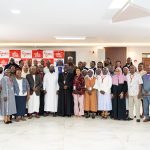
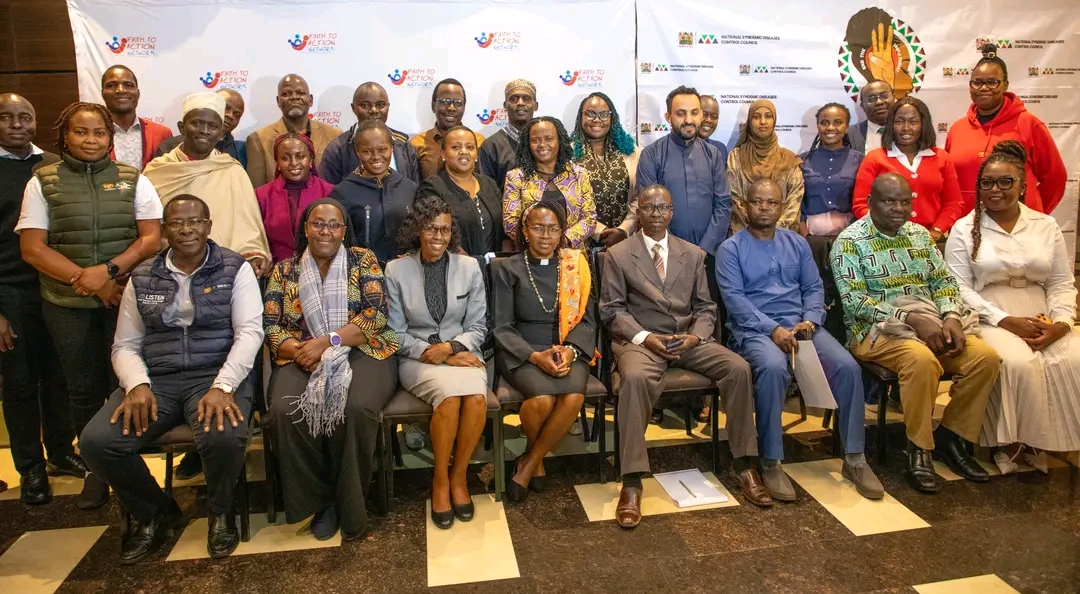
Representatives of faith-based organisations, government agencies and development partners pose for a group photo during a joint breakfast meeting convened by the National Interfaith Hub to discuss the Faith Sector Action Plan and Roadmap on Family Health and Wellbeing at the DoubleTree by Hilton in Nairobi on Friday, November 6, 2026. PHOTO/COURTESY
By Peace Muthoka
NAIROBI, Kenya, November 6, 2026 — Faith-based organisations and government agencies are developing a joint action plan to address teenage pregnancies, new HIV infections and gender-based violence, in an effort to strengthen family health and wellbeing across Kenya.
The proposed Faith Sector Action Plan and Roadmap seeks to bring religious institutions, government ministries and development partners under a common framework to coordinate prevention programmes, improve access to services and strengthen support for families, adolescents and young people.
The initiative was discussed during a National Interfaith Hub breakfast meeting held on Friday at the DoubleTree by Hilton in Nairobi. The meeting brought together the Faith to Action Network (F2AN), the National Council for Population and Development (NCPD), the National Syndemic Diseases Control Council , government ministries and representatives of faith-based organisations.
Faith to Action Network Chief Executive Officer Jane Nga’ng’a said the partnership would help the faith sector move beyond separate initiatives towards coordinated action with clear priorities, shared responsibilities and measurable outcomes.
She noted that family health challenges are interconnected and require the combined efforts of government, health professionals and communities.
“When we talk about family health and well-being, there are many issues there. We need the politicians, we need the health system, we need those of us who are working as a community. We need all of us so that we can be able to work together,” she said.
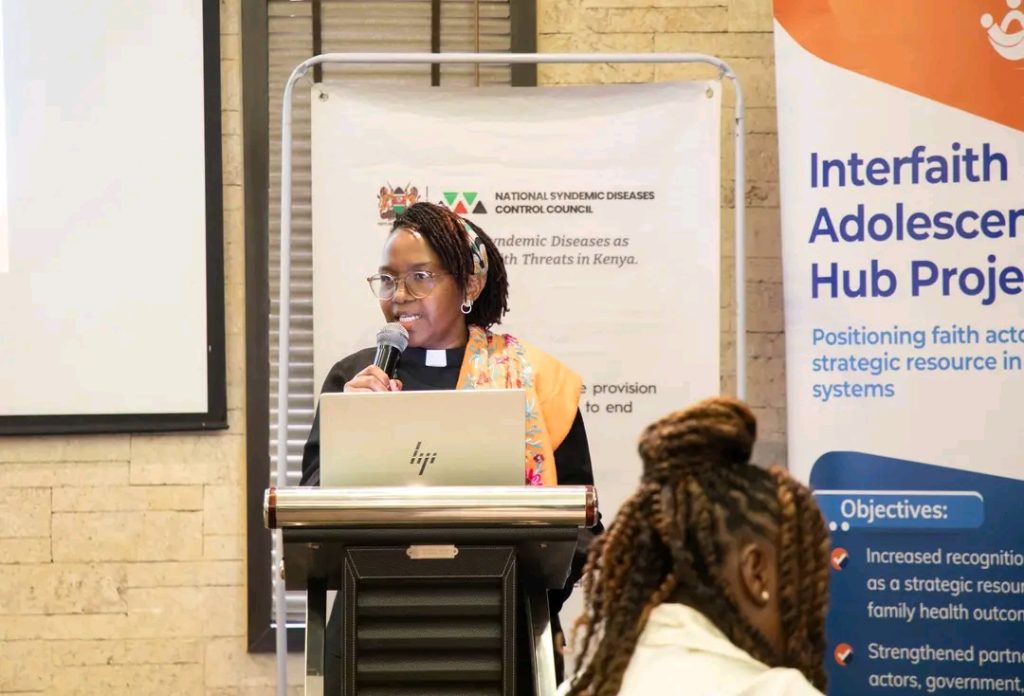
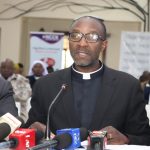
Faith to Action Network Chief Executive Officer Jane Nga’ng’a speaking during a joint breakfast meeting convened by the National Interfaith Hub
Nga’ng’a observed that faith institutions have extensive grassroots networks that can help government programmes reach communities through places of worship, social support systems, family guidance and community mobilisation.
However, she said their contribution needed to be better organised and aligned with national and county development priorities to avoid duplication and ensure resources are used effectively.
“We need to move from goodwill to coordinated action,” she said, adding that shrinking resources and growing health and social challenges made structured partnerships increasingly important.
She explained that while previous faith-sector initiatives had largely focused on HIV, the proposed framework would take a broader approach to family wellbeing. Its priorities will include reproductive health, adolescent health, gender equality, prevention of gender-based violence and family strengthening.
The National Interfaith Hub is expected to provide a platform for dialogue, information sharing and coordination among faith institutions, government agencies and development partners. In addition, the proposed action plan will outline practical interventions, define stakeholder responsibilities and establish mechanisms for tracking progress.
Representing NCPD Acting Director General Lucy Kimondo, the council’s Director of Policy, Programmes and Partnerships, Dr Isabella Kiplagat, said family wellbeing was central to national development and required a coordinated response across different sectors.
In a speech delivered on behalf of the Acting Director General, she described families as the foundation through which individuals grow, receive care and develop their aspirations. She added that investing in family health and wellbeing was not merely a health intervention, but also an investment in human capital, social stability and economic productivity.
She further recognised the contribution of faith institutions through their community networks, leadership structures, health and education facilities, and ability to build trust at the grassroots level.
To guide the proposed action plan, she outlined five areas for consideration: policy dialogue and coordination; community mobilisation and prevention; service linkages and referrals; capacity strengthening, evidence and accountability; and joint action and resource mobilisation.
She said the framework should align faith-sector activities with national and county priorities while respecting institutional mandates and constitutional rights, including dignity, confidentiality and non-discrimination.
She also called for clear responsibilities, sustainable implementation and continued consultations with faith networks and government institutions before the action plan is validated.
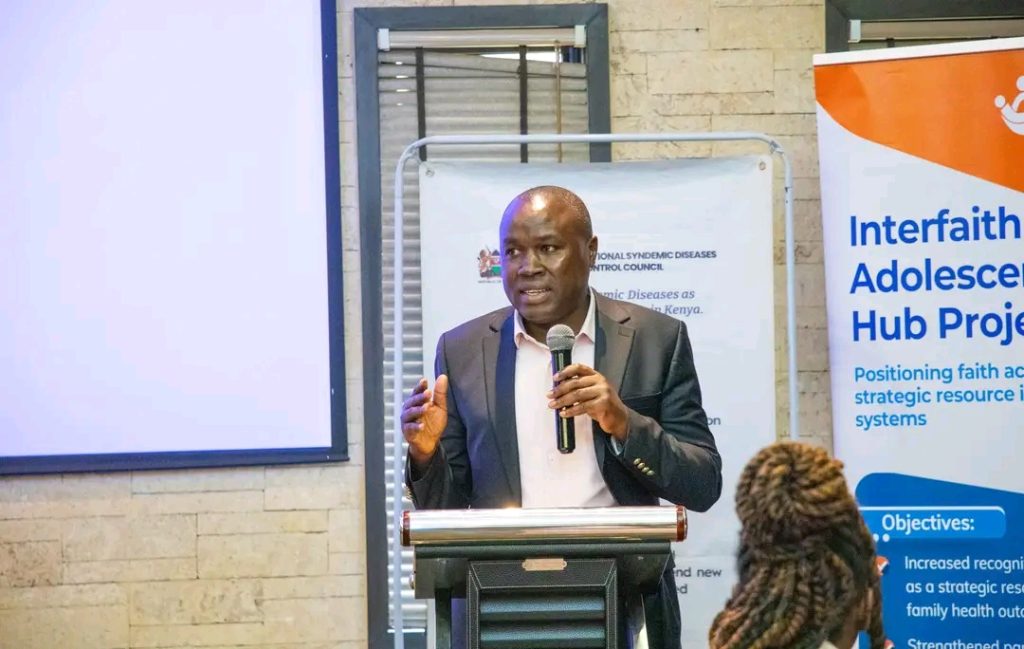
National Syndemic Diseases Control Chief Executive Officer, Douglas Bosire, speaking during a joint breakfast meeting convened by the National Interfaith Hub.
Meanwhile, the National Syndemic Diseases Control Council emphasised the need for stronger collaboration with faith institutions in addressing health challenges affecting young people.
The council’s Chief Executive Officer, Douglas Bosire, said the faith sector was a critical partner because of its extensive reach and influence within communities.
He noted that religious institutions could help strengthen public awareness, encourage prevention and link people to appropriate health services.
The discussions also highlighted the interconnected nature of teenage pregnancies, sexual and gender-based violence and new HIV infections, which require coordinated interventions rather than isolated responses.
On teenage pregnancy, the NCPD representative said the recently launched Kenya Mini Demographic and Health Survey indicated a decline nationally. However, she cautioned that disparities remained, with some counties continuing to record high levels, requiring targeted interventions.
Nga’ng’a said the faith sector would continue using its national and grassroots structures to ensure that community experiences inform policy discussions. She added that faith institutions could also help translate government policies into practical interventions and provide feedback on their implementation.
She urged government agencies to recognise faith institutions as strategic partners in policy processes, community programmes and service delivery linkages.
The meeting is expected to be followed by further consultations to identify shared priorities, consolidate proposed interventions and prepare a draft action plan for stakeholder review and validation before implementation.
The partners intend to build on lessons from previous collaboration in HIV programmes, particularly in coordination, institutional ownership, capacity strengthening and alignment with national priorities.
Through the proposed framework, faith institutions and government agencies hope to strengthen their collective response to health and social challenges affecting families and ensure that interventions reach communities and deliver measurable results.