
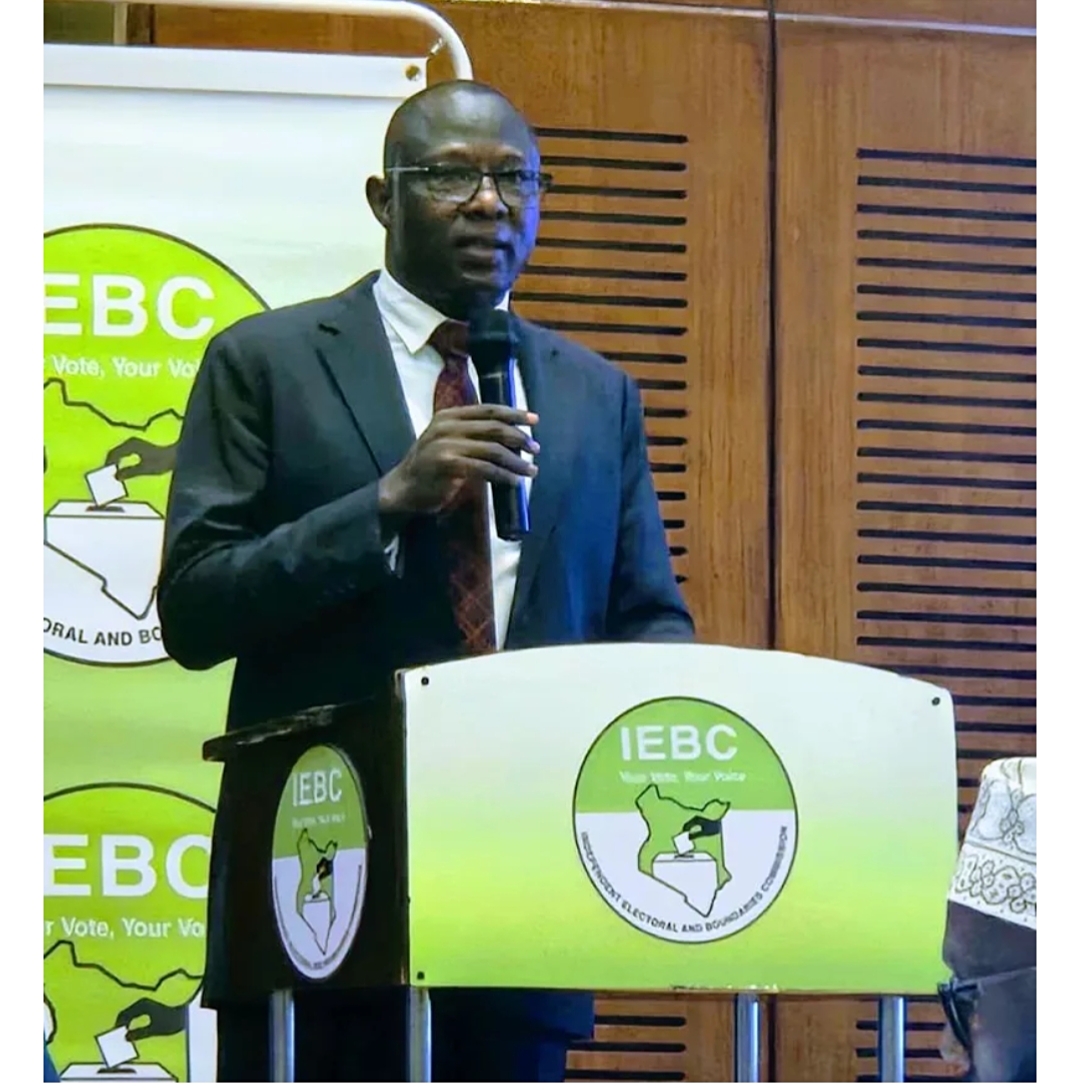
IEBC Chairperson Erastus Ethekon speaking to journalists ahead of the August 2027 General Election .
By Peace Muthoka.
Nairobi, November 24, 2026 – The Independent Electoral and Boundaries Commission (IEBC) has reaffirmed its commitment to transparent elections ahead of the August 2027 General Election, even as it weighs the financial and logistical implications of live-streaming activities at all 50,000 polling stations.
IEBC Chairperson Erastus Ethekon said the commission was committed to ensuring that election results were accessible and that the electoral process remained credible, but cautioned that installing cameras in every polling station would place a significant financial and operational burden on the commission.
Speaking during a meeting with journalists in Nairobi on Tuesday, November 24, 2026, Ethekon said the proposal would require the procurement of about 50,000 cameras, recruitment and training of operators, as well as the installation of monitoring equipment.
He questioned whether such an extensive arrangement would be practical within the time remaining before the elections, particularly when the cost of conducting elections remains a concern among Kenyans.
“If we say IEBC should livestream, to them we need to have little cameras in every polling station recording everything that is happening. From a practical perspective, how tenable is that?” he posed.
Ethekon explained that beyond purchasing the cameras, the commission would need additional personnel and infrastructure to monitor the footage, making the exercise more demanding than simply installing recording equipment.
“Imagine another 50,000 of you employed. Imagine us procuring these cameras in 50,000 polling stations. It is like CCTV. You need the screens. Who will have the time to have the cameras to observe? Some things are impossible,” he said.
The IEBC chairperson, however, maintained that the commission had nothing to hide regarding the management of the presidential vote, stressing that its responsibility was to tally votes and declare the candidate who meets the constitutional requirements.
Meanwhile, IEBC Commissioner Ann Nderitu clarified that live-streaming, from the commission’s perspective, should not be interpreted as installing cameras in every polling station to broadcast all activities taking place during voting.
She explained that the arrangement could instead facilitate media coverage of results from polling stations, giving journalists an opportunity to access information and keep the public informed about the electoral process.
“Live-streaming from IEBC’s perspective is allowing the media to cover results from any polling station. This matter of live-streaming was marked for deletion by the Court. Live-streaming according to Section 39(1G) is there,” Nderitu said.
Her clarification offered a different perspective on the debate, pointing to the need to distinguish between broadcasting activities inside every polling station and making election results accessible to the media.
As preparations for the 2027 General Election gather pace, the commission faces the task of balancing the cost of election management with growing public expectations for openness, accountability and timely access to results.