
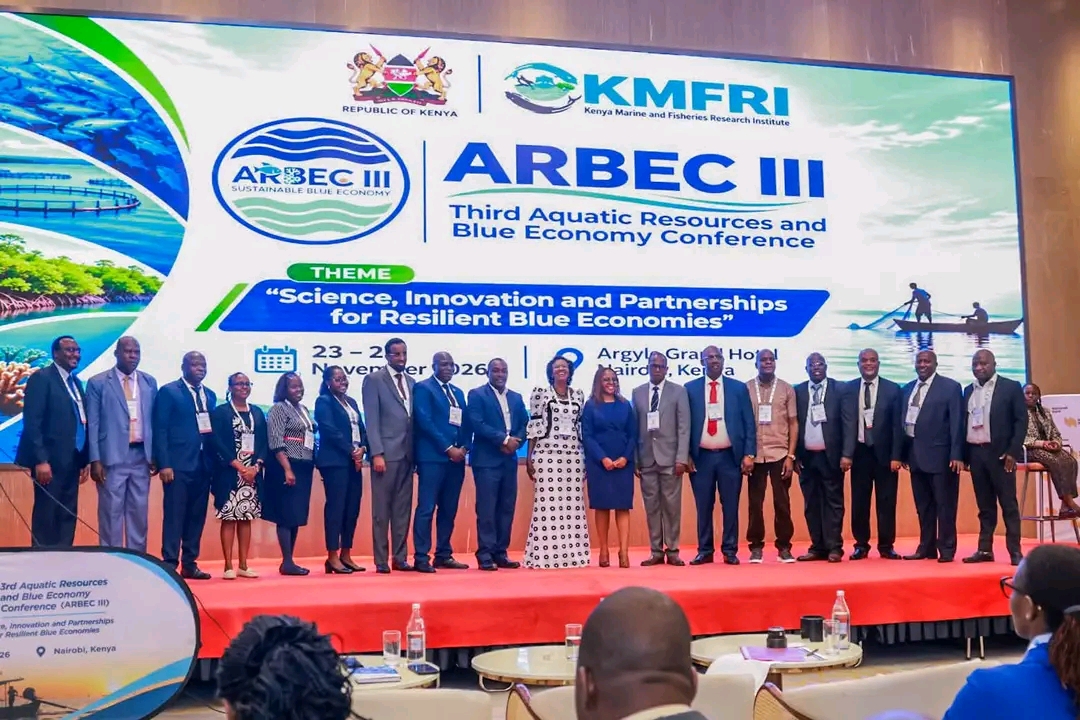
Leaders and officials drawn from various institutions pose for a group photo during the official opening of the Third Aquatic Resources and Blue Economy Conference (ARBEC III) in Nairobi on November 23, 2026.
By Peace Muthoka
Kenya is looking to turn its vast aquatic resources into jobs, investment and better livelihoods, with the government calling for stronger partnerships to address challenges facing the fisheries and wider Blue Economy sector.
Principal Secretary for the State Department for the Blue Economy and Fisheries Betsy Muthoni Njagi made the call on Monday, November 23, when she officially opened the Third Aquatic Resources and Blue Economy Conference (ARBEC III) in Nairobi.
The five-day conference, running until November 27, has brought together researchers, policymakers, industry players, development partners and fishing communities to discuss how science, innovation and investment can support the sustainable use of aquatic resources.
Njagi said Kenya had made progress in developing its Blue Economy but noted that more needed to be done to ensure investments and government policies translate into meaningful benefits for communities.
She pointed to ongoing investments in fisheries infrastructure, aquaculture, research and innovation as part of efforts to strengthen the sector and create more economic opportunities.
One of the initiatives highlighted was the planned transformation of 455 Beach Management Units (BMUs) into cooperatives. The move is expected to strengthen the organisations, improve their economic position and give fishing communities greater opportunities to benefit from the sector.

For many communities that depend on fishing, the challenge goes beyond accessing aquatic resources. Improving fish handling, processing and access to markets is equally important in ensuring that the industry supports stable livelihoods.
The PS also raised concerns over declining fish stocks, climate change, pollution, post-harvest losses and the destruction of aquatic ecosystems, saying these challenges require closer cooperation between government, researchers and other players in the industry.
To guide the sector’s development, she reaffirmed the Government’s commitment to the Blue Economy Strategy 2025–2030 and the development of the Kenya Blue Economy Master Plan 2026–2036.
Njagi challenged researchers to produce findings that respond to the realities facing fishing communities rather than allowing scientific work to remain within academic circles.
She also called for women and young people to have a greater voice in research and decisions affecting the sector, while urging investors to explore opportunities in aquaculture, mariculture, seaweed farming, fish processing and maritime services.
Meanwhile, Kenya Marine and Fisheries Research Institute (KMFRI) Director General Dr Paul S. Orina urged participants to ensure the conference produces recommendations that can be implemented beyond the meeting rooms.

Orina said the real value of ARBEC III would be seen in what stakeholders do with the knowledge and ideas shared during the five-day gathering.
The conference has been organised around seven thematic areas, including fisheries and climate-smart aquaculture, blue tourism, governance and finance, digital innovation, ecosystem health and community development.
With participants drawn from different countries and professional backgrounds, Orina challenged delegates to share experiences and learn from people working in areas outside their own specialisations.
“Let scientists listen to financiers in the room, engineers engage with field practitioners and community researchers, tour operators interact with oceanographers, and colleagues from different countries learn from one another,” he said.
He urged session chairs to identify clear recommendations from the discussions, saying the resolutions should provide direction for research, policy and investment over the next two years.
The conference is expected to adopt its resolutions on Thursday, November 26, before they are submitted to the Ministry and shared with regional and international partners.
The recommendations will also be supported by policy briefs from each of the seven thematic areas and a digital book of abstracts documenting research presented at the conference.
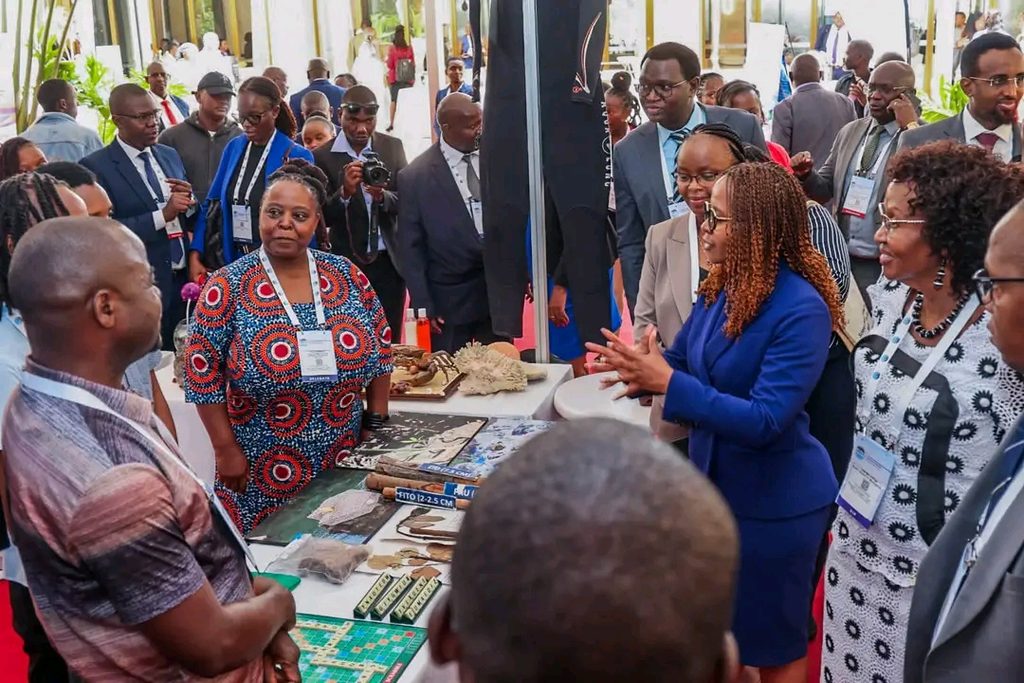
Away from the conference sessions, delegates have also been encouraged to visit the exhibition area, where institutions and businesses are showcasing technologies, innovations and services linked to the Blue Economy.
Orina said the exhibition offered an opportunity for universities, financial institutions, technology companies, insurance firms and community enterprises to explore partnerships that could turn ideas into investments and employment opportunities.
As the conference continues, the focus will be on finding practical ways to protect aquatic resources while ensuring that the communities and businesses depending on them benefit from their economic potential.