
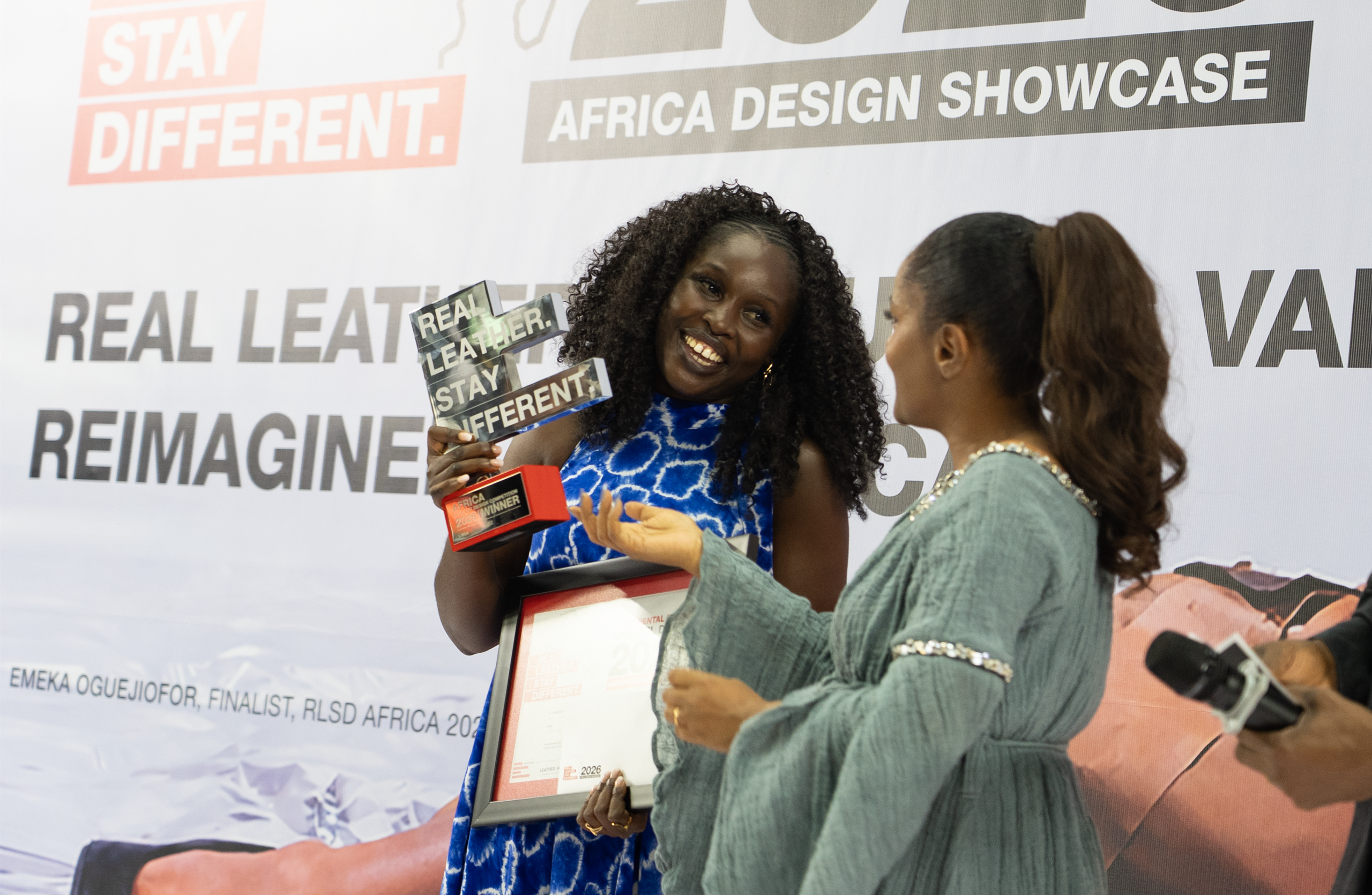
African Designers Win Top Leather Fashion Awards as Nigeria, Rwanda and Zimbabwe Lead
By Staff Reporter
ADDIS ABABA, ETHIOPIA | 16 NOVEMBER 2026 – Designers from Nigeria, Rwanda and Zimbabwe have won top honours at the 2026 Real Leather. Stay Different. (RLSD) Africa Talent Leather Design Showcase, as the competition puts the spotlight on Africa’s growing talent in leather fashion and product design.
The winners were announced during an awards ceremony and fashion runway held in Addis Ababa, Ethiopia, on Saturday, November 14, where 15 finalists from across the continent presented their work in apparel, accessories and footwear.
Nigeria’s Omosalewa Ogunjimi, the designer behind EXUVIA, emerged as the overall winner after taking the Apparel Category Award. Her latest achievement adds to her success at the international RLSD finals in Bangkok, Thailand, where she represented Africa and received the Most Commendable Designer distinction.
Rwanda’s Umuhuza Hirwa Jeanluc was another standout, winning both the Accessories Category Award and the People’s Choice Award with his design, INGABO. Zimbabwe’s Nompumelelo Marilyn Samambgwa claimed the Footwear Category Award with her creation, Tethered Earth.
The other finalists were also recognised for their work, with all 15 receiving certificates of recognition for their creativity, craftsmanship and contribution to Africa’s leather design industry.
Held alongside Africa Sourcing and Fashion Week (ASFW), the showcase was organised under the theme, Real Leather. Enduring Value. Reimagined by Africa. It brought together designers and industry players to celebrate African creativity while drawing attention to the opportunities available in the continent’s leather sector.
Speaking at the event, United States Embassy Agricultural Counselor in Addis Ababa Sarah K. Gilleski congratulated the finalists and called for stronger partnerships to link African designers and manufacturers with international suppliers and markets.
“Africa’s greatest resource is not its livestock or its hides. It’s the creativity and industrious people in this room,” she said.
Representing the US Embassy and the US Department of Agriculture, Gilleski noted that American suppliers could provide quality materials, traceability and technical expertise, while African designers and manufacturers had the creativity and production potential to turn these resources into competitive products.
She cited nearly US$700 million in US hides and skins exports globally last year, saying there was room to expand commercial partnerships between the United States and Africa.
However, industry leaders said recognising designers was only the first step. They challenged stakeholders to build stronger links between creativity, manufacturing and the market so that promising designs could become viable businesses.
Nicholus Mudungwe, Executive Director of the Africa Leather and Leather Products Institute (ALLPI), urged the industry to focus on turning designs into products that could reach consumers.
“We have seen the designers. We have seen their designs. We need to commercialise the design,” he said.
Mudungwe called for closer cooperation among designers, manufacturers, distributors, retailers and governments. He also urged the industry to make better use of hides and skins generated through livestock production by processing them into durable leather goods, rather than allowing valuable raw materials to go to waste.
The 2026 showcase marked the fourth African edition of the competition, which attracted hundreds of registrations from more than 12 countries. Fifteen finalists made it to the continental stage after developing their ideas into finished products.
Their designs were assessed against five criteria: individuality, conceptualisation, relevance, sustainability and commerciality. The criteria were intended to recognise originality while considering how well the products addressed market needs and the potential to succeed commercially.
The initiative is powered by the Leather and Hide Council of America (LHCA), in partnership with ALLPI, and coordinated in Africa by the Center for Business Innovation and Training (CBiT).
It promotes leather as a durable material and encourages responsible production through the principles of slow fashion. The campaign also seeks to offer an alternative to fast fashion by supporting products designed to last longer and encouraging more responsible choices in the use of materials.
According to the organisers, the wider RLSD campaign reached approximately 750 million people globally in 2025, while the African edition recorded a digital reach of more than 2.4 million across over 20 African countries.
Beyond the awards, the showcase is intended to give emerging designers greater international visibility, mentorship opportunities and connections that can help them build successful businesses.
The challenge now is to turn the creativity displayed on the runway into stronger African brands, competitive manufacturing enterprises and jobs. Industry players say this will require investment in production, improved access to markets and closer cooperation across the leather value chain.
