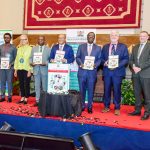
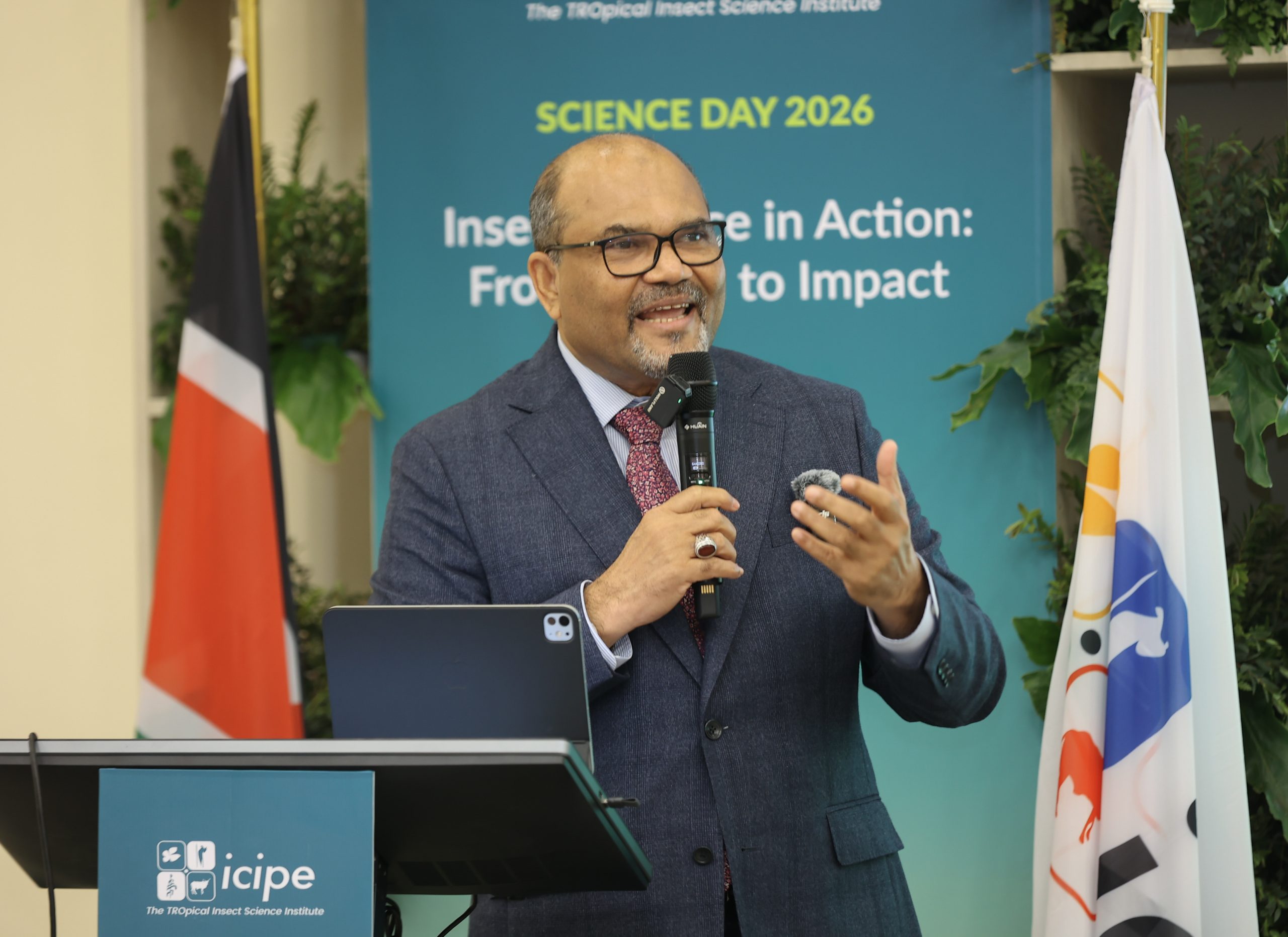
Principal Secretary in the State Department for Science, Research and Innovation Prof. Shaukat Abdulrazak addresses participants during the icipe Science Day 2026 in Nairobi on November 17, urging researchers to turn scientific discoveries into practical solutions that improve people’s lives.
By Peace Muthoka
NAIROBI, Kenya, November 17, 2026 – Scientists have been challenged to turn research findings into practical solutions that improve lives, create jobs and strengthen Africa’s ability to address its development challenges.
The call was made on Tuesday, November 17, 2026, by Prof. Shaukat Abdulrazak, Principal Secretary in the State Department for Science, Research and Innovation, during the 2026 Science Day organised by the International Centre of Insect Physiology and Ecology (icipe) in Nairobi. Abdulrazak was the chief guest and officially opened the event.
Held under the theme “Insect Science in Action: From Vision to Impact,” the annual event brought together scientists, policymakers, development partners, farmers and other stakeholders to showcase research and innovations in insect science and their contribution to agriculture, human health, environmental conservation and livelihoods.
Abdulrazak said the value of scientific research should not be measured by the number of publications produced but by its ability to solve real-life problems, strengthen economies and improve the well-being of communities. He urged scientists to move beyond laboratory discoveries and academic publications and ensure their findings are translated into practical applications.
“Science does not make sense if it does not impact society,” he said, challenging researchers to demonstrate how their work moves from scientific outputs to measurable outcomes and lasting impact.
The PS explained that science and technology had numerous applications that were often misunderstood or overlooked by the public. He cited nuclear technology used in identifying underground water sources, diagnosing and treating cancer, and developing crop varieties that can withstand drought, water scarcity and soil salinity.
He called on scientists to make research findings easier for the public to understand, saying scientific communication should use simple language that ordinary people, including grandparents in rural communities, could appreciate.
The PS further noted that science was central to Kenya’s ambition of achieving economic transformation, particularly through increased productivity, value addition, enterprise development and employment creation. He said research institutions needed to work closely with government, universities, private companies and international partners to avoid duplication and accelerate the development of innovations.
He cited the Kenya Grand Challenge initiative and partnerships involving the Gates Foundation and Science for Africa Foundation as opportunities to strengthen research capacity, support centres of excellence and encourage the development of products and services that address Africa’s challenges.
Abdulrazak also urged icipe to deepen its collaboration with other research institutions, including the Kenya Agricultural and Livestock Research Organization (KALRO), the Kenya Medical Research Institute (KEMRI) and the National Commission for Science, Technology and Innovation (NACOSTI). He said stronger scientific networks would enable institutions to share expertise, resources and infrastructure while accelerating the adoption of research findings.
Abdulrazak reiterated the need for stronger scientific partnerships, increased investment in young researchers and greater support for women in science. He urged institutions to ensure that research discoveries translate into improved agricultural productivity, healthier communities, stronger biodiversity and employment opportunities.
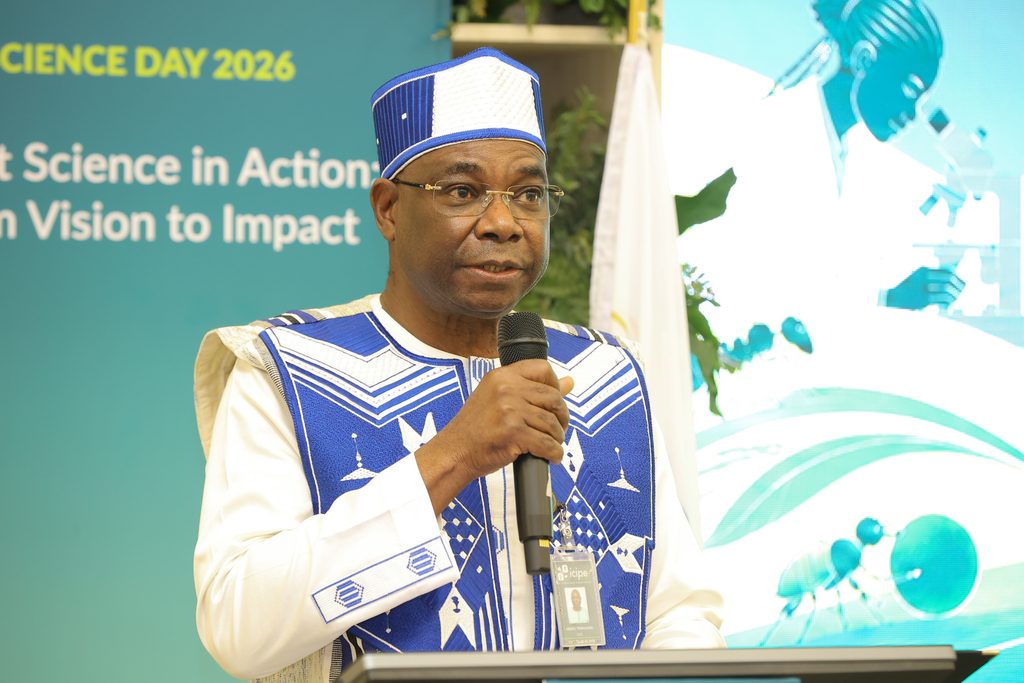
Director General and CEO Dr Abdou Tenkouano speaks during the icipe Science Day 2026 in Nairobi, where he highlighted the centre’s research innovations and its efforts to address challenges in human health, agriculture, livestock and the environment.
Speaking at the event, icipe Director General and Chief Executive Officer Dr Abdou Tenkouano said the Centre launched its Vision and Strategy 2026–2030, which focused on strengthening research excellence, expanding partnerships and translating scientific discoveries into practical solutions.
He highlighted several research programmes demonstrating how insect science was contributing to solutions in human health, agriculture, livestock production and environmental conservation. In the health sector, he said icipe was investigating the potential of Microsporidia MB, a microorganism that can infect mosquitoes, to help block malaria transmission.
In agriculture, the Centre is participating in the Red Palm Weevil Control Project, which seeks to manage invasive pests responsible for destroying date palm trees in the Middle East and North Africa. The research includes developing nature-based solutions, including biopesticides and the use of beneficial insects to control the destructive weevils.
Tenkouano also highlighted icipe’s work on nagana, a livestock disease transmitted by tsetse flies that threatens animal health, livestock productivity and the livelihoods of farmers and pastoralists across sub-Saharan Africa.
He said the Centre was developing and promoting innovations such as tsetse-repellent collars worn by livestock and specially designed traps that use colours, shapes and odours to attract flies away from animals. The technologies are being advanced for wider adoption in West and Central Africa.
The Centre is also combining beekeeping, crop production and tree planting to restore land while creating income-generating opportunities for communities. Tenkouano cited the MaYEA project in Ethiopia as an example of initiatives supporting improved land productivity and employment opportunities for young people, with more than 300,000 beneficiaries reported since 2023.
He said the achievements demonstrated the importance of taking scientific innovations beyond research institutions and making them accessible to farmers, businesses and communities.
Tenkouano further highlighted the role of partnerships with development agencies, research institutions and the private sector in expanding the Centre’s work. He said icipe had introduced a quarterly online forum to connect its innovations in pest and crop disease management with agricultural businesses, creating opportunities for commercialisation and wider adoption of research-based technologies.
The Director General also announced that 15 icipe scientists had been recognised in the 2025 edition of the World’s Top 2 per cent Scientists ranking, an achievement he said reflected the Centre’s scientific expertise and contribution to global research.
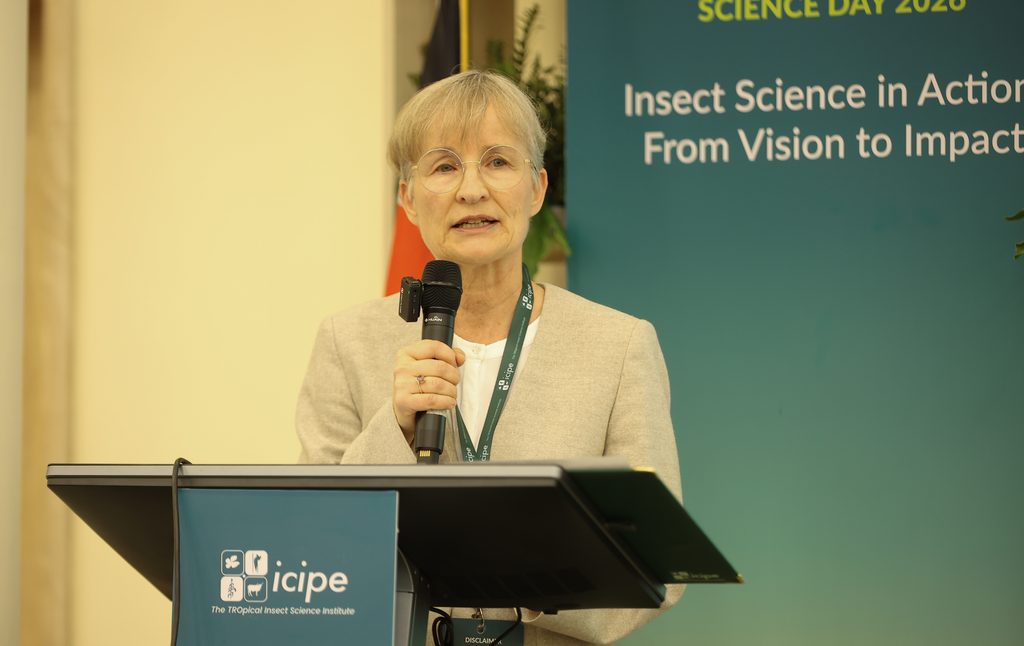
Governing Council Chair Dr Ylva Hillbur addresses participants during the icipe Science Day 2026, outlining the institution’s 2026–2030 strategy and its focus on research excellence, impact delivery and capacity development.
Meanwhile, icipe Governing Council Chair Dr Ylva Hillbur said the Centre’s Vision and Strategy 2026–2030 was anchored on three pillars: research excellence, impact delivery and capacity development.
She said the pillars were strengthening icipe’s position as a leading Africa-based centre of excellence in insect science while supporting scientific leadership, institutional partnerships and the adoption of technologies developed through research.
Hillbur noted that icipe’s work was increasingly important in addressing Africa’s development priorities, including food security, insect-borne diseases, climate resilience, environmental conservation and biodiversity. She encouraged participants to visit the research exhibition, interact with scientists and learn how the Centre’s innovations were contributing to practical change.
She also acknowledged the contribution of donors and development partners, noting that their continued support had enabled icipe to expand its research programmes, strengthen institutional capacity and extend its reach across Africa.
Faith Osier calls for African-led research and vaccine independence
The Centre’s Governing Council Vice Chair, Prof. Faith Osier, challenged African scientists to take greater responsibility for developing homegrown solutions, warning that the continent could not continue depending on other regions for essential scientific products and technologies.
Drawing from her experience in immunology and vaccine research, Osier recalled how the COVID-19 pandemic exposed Africa’s limited capacity to independently develop and manufacture vaccines, leaving many countries waiting for supplies from abroad.
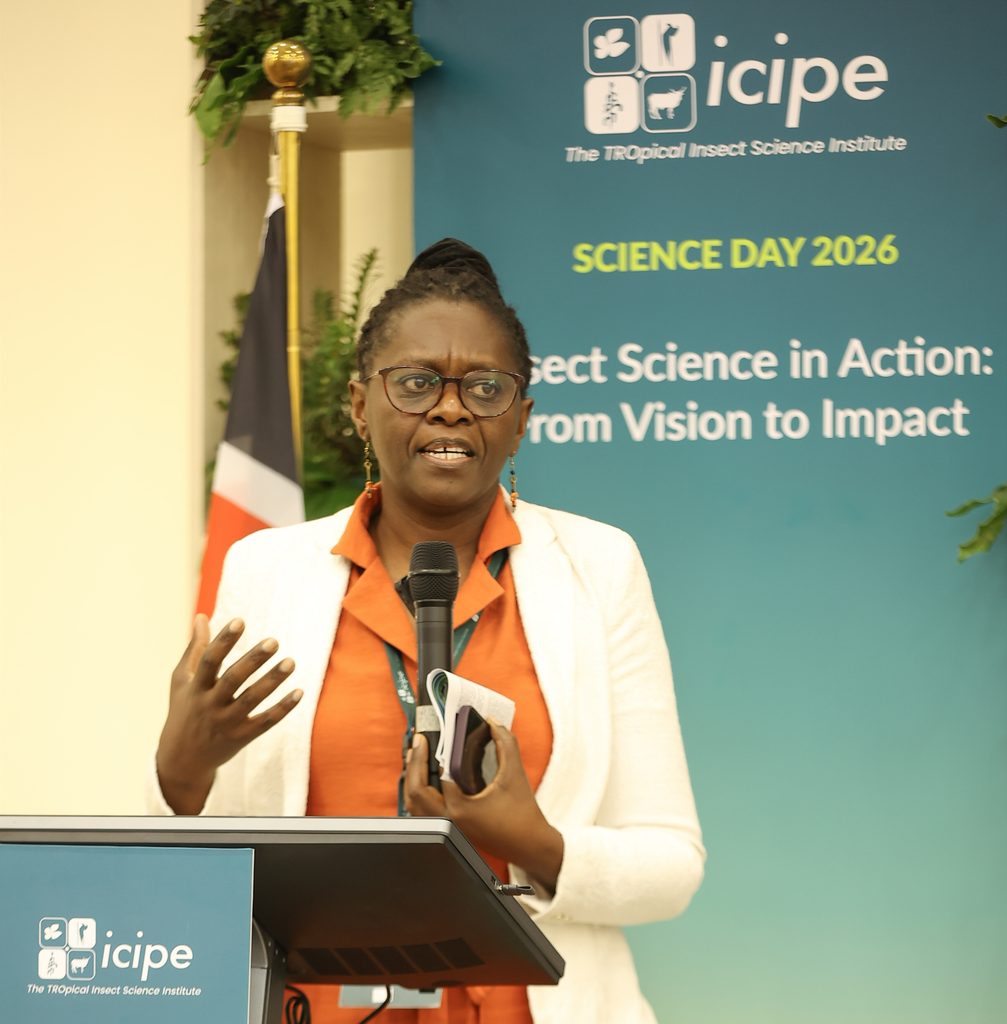
Governing Council Vice Chair Prof. Faith Osier speaks during the icipe Science Day 2026 in Nairobi, calling for greater African investment in homegrown research and vaccine manufacturing capacity
She said the experience demonstrated the consequences of depending on external manufacturers, particularly during public health emergencies, when access to essential medical products becomes a matter of urgency.
Osier argued that Africa needed to move beyond importing vaccines for packaging and distribution, commonly known as fill and finish, and invest in the ability to develop and manufacture vaccines locally from the initial research stages.
She highlighted the Chanjo Hub initiative, which seeks to build an African vaccine manufacturing ecosystem by strengthening local research, technical expertise and manufacturing capacity.
The initiative involves research into malaria immunity and the development of manufacturing expertise using messenger RNA (mRNA) technology. Osier said the team was working with the United Kingdom’s Centre for Process Innovation, with plans to transfer the knowledge and manufacturing processes to Kenya in collaboration with local institutions.
She explained that the value of the initiative went beyond producing a successful vaccine, as the technical expertise gained could also be applied to other diseases and future health challenges.
Osier said African researchers needed to use their knowledge to build scientific independence and reduce reliance on external support, particularly as global research funding becomes increasingly competitive.
“The dependency is painful, especially when a crisis hits,” she said, urging scientists to pursue greater autonomy and develop sustainable research programmes.
She also challenged research institutions to rethink their dependence on grants and explore business opportunities that could generate income and support continued innovation. She said scientists should increasingly focus on commercialising their discoveries and building enterprises rather than relying entirely on external funding.
The 2026 Science Day also provided an opportunity to showcase icipe’s research across five priority areas under its Vision and Strategy: agri-food systems, global health, environment and biodiversity, climate change mitigation and adaptation, and policy and enabling environment.
The event built on the Centre’s inaugural Science Day in 2024 and Science Week in 2025, providing a platform for researchers, partners and other stakeholders to assess progress towards its 2030 ambitions.